Friday, July 25, 2014

Book Reviews / July 2014

Part family history, part memoir, part novel The Worst Country in the World is the story of Mary Pitt, a 53-year-old widow and mother of five, who left her home in the UK in 1801 to sail across the world to live in the  penal colony of New South Wales. The settlement (Sydney) was then just thirteen years old and an experiment that seemed on the verge of failure. What made her go there?
The colony was initially a mix of military personnel, government servants and convicts. Free Settlers were needed for expansion, self sufficiency and commerce. She thought the opportunity to migrate might provide her and her family with a better future than existed at home for a penniless yeoman’s widow. .
Together with other early settlers, who lived lives of hardship and great uncertainty in a country where the climate was wild and unpredictable and daily life was a matter of improvisation and experimentation, she became a woman of some standing,


The author, Patsy Trench, is Mary’s great great great great granddaughter.
She says the facts of the story are based on careful research by herself, family genealogists over the centuries, her English and Australian cousins and most notably, her late aunt Barbara Lamble.
But she has filled in the gaps, giving her ancestors characteristics, physical and personal, they may or more likely may not have had. She invented the circumstances in which they met their spouses and their deaths. She describes the book as a ‘dramatised’ story.
For me it was a fascinating tale of early colonial Sydney and the settlement of the area around the upper Hawkesbury River, now Windsor/ Pitt Town / Wilberforce which are on the outskirts of the suburban sprawl of today's city.
Well worth reading for anyone interested in that era in Australia.
In Home Front the wife is a combat helicopter pilot, the husband a defense attorney.
He does not connect with her military life, she is at odds with his workaholicism. The only thing keeping them together are the children....just
So when she is unexpectedly deployed in Iraq a huge relationship cavern opens up with the kids left teetering on the edge.
Then she comes home severely injured with her best friend and neighbour killed in the same action.


.


An interesting novel that manages to just keep its head above the melodramatic. The battle and trauma hospital scenarios are quite compelling. The author even manages to insert a war related post traumatic stress disorder sub plot which is extremely relevant these days.
This is a story about marriage, war, loneliness, honor and hope.
I feel like this book caters to a much broader audience than Kristin Hanna's normal chick-lit dramas do and it made good reading.
Bootleg is the story about the rise and fall of the disastrous social experiment known as Prohibition.
It began with the best of intentions. Mothers, wives and civic leaders, concerned about the affects of alcohol on American families, began a movement to outlaw drinking in public places. Eventually their protests, petitions and activism paid off when a Constitutional Amendment banning the sale and consumption of alcohol was ratified.


This was supposed to end public drunkenness, alcoholism and a host of other social problems caused by grog. Instead, it began a decade of lawlessness, when children smuggled and drank illegal alcohol, the most upright citizens broke the law with impunity and a host of notorious gangsters entered the public arena.
This short but fascinating book contains period art and photographs, anecdotes and portraits of the unique characters of the era. 
Recommended.
Set mostly in an English village during World War II (although the USA South and Austria also get a 'run'), War Brides tells the story of five women from completely different backgrounds who are evacuated from London for their safety.
There is the clergyman's daughter Alice who was dumped by her fiance for the American Evangeline with a secret, Tanni, a Jewish woman who escaped from Austria as the Nazis closed in, Elsie, the Cockney-speaking Londoner and Frances a rich girl on a patriotic mission. 
But the war starts to encroach on their small world with hunger, bombing raids and the threat of a Nazi invasion being constant companions. And there appears to be a traitor in their midst.


Fifty years on at a VE Day Commemoration, four of the five women meet up in the village with more than a reunion on their minds and that is revenge.
A good story, well written which keeps you pretty much eager to turn to the next page. You might just have to suspend belief at little at some of the plot lines however.
Maybe a book aimed at female readers but, then again, maybe not.

Thursday, July 17, 2014

Moreton Bay Figs

During my exploration of Rose Bay while in Sydney I came across a nice stand of Moreton Bay fig trees (Ficus macrophylla).
The Moreton Bay fig is a large evergreen banyan tree and is a native of most of the eastern coast of Australia from the Atherton Tableland in far north Queensland to the Illawarra on the south coast of New South Wales


 It is best known for its beautiful buttress roots.
This is just one of the many native fig trees which grow around the country.


 Others start their life as epiphytes (or stranglers) and when their roots reach the ground they begin to envelope their host tree eventually killing it.
Others produce adventitious roots which hang from the branches and, when they reach the ground, thicken and appear as secondary trunks.
The fruit of these trees is very attractive to bird life and flying foxes ie. fruit bats.

Thursday, July 10, 2014

A Trip to Sydney / Rose Bay Flying Boat Base

We went to Sydney for an overnight stay to celebrate the daughter's engagement to Nick with a lovely dinner at the Chiswick Restaurant in Woollahra. The slow cooked shoulder of lamb was to die for.
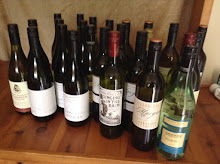
We also drank two bottles of nice wine. A Sangiovese from Tuscany and an unusual white from the Between Five Bells winery in Geelong which is a blend of almost equal qualities of Riesling, Chardonnay, Pinot Gris and Pinot Meunier. Apparently only 2700 bottles were produced of the 2012 vintage so guess we won't be able to buy a follow up bottle on the open market.
Next morning, before heading home, the co driver had a massage appointment in Rose Bay, a swish Sydney Harbour beach side suburb.
I had a few hours to fill in so walked a bit ending up at the site of the old QANTAS flying boat base.
In 1938, large luxury flying boats began to operate a 10 day service between Sydney and Europe. A ticket cost more than the average yearly wage. Today it takes around 22 hours and costs about a week's average earnings.


C Class Empire flying boats set out for Singapore via Brisbane, Gladstone, Townsville (where they stopped for the night), across the Cape York Peninsula, to Karumba, Groote Eyelandt and on to Darwin. The aircraft then crossed the Timor Sea, flying to Kupang, Bima, Surabaya and Jakarta, before finally arriving in Singapore. There, the service was taken over by British Imperial Airlines, who flew the rest of the route to London via India, the Middle East and Egypt.

QANTAS Empire Airways (and the iconic Sydney to London Kangaroo Route) was born and Sydney's first international airport was in its harbour, at Rose Bay, to the east of Sydney Harbour Bridge
After the war, these services increased access to the South Pacific but their place gradually diminished due to the wartime construction of land airports.
In 1974 the last regular Australian flying boat passenger service, between Sydney Harbour and the beautiful  Lord Howe Island, finished and the 50-year era of the Australian flying boats was over.
Rose Bay, the last major flying boat terminal in the world, closed.
Today the old base is home to a small commuter and tourist seaplane venture.

Thursday, July 03, 2014

Ready for the 4th July

Australia obviously doesn't celebrate the 4th July.
And we are yet to completely shed the British shackles with Elizabeth II still being Queen of Australia.
The last referendum in 1999 with a 95% voter turnout was 55:45 against cutting ties.
Hopefully one day it will happen!
But there is a large American expat population living in the country and many gather at their respective clubs eg. American Australian Association, regular haunts or privately to capture a bit of 'home' during major events like the 4th and Thanksgiving.
Surprisingly in our small community there are quite a few and a lady even organizes a Thanksgiving buffet lunch for one of the quilting groups in November.
There must be quite a demand for American food too during the year as an online shop, USA Foods, has been in operation for many years and has just expanded into retail premises in Melbourne.
We buy a few essentials (at extremely exorbitant prices) to satisfy our cravings.
Aunt Jemima pancake mix and Louisiana Wing Sauce are just two.
They have a huge range of Mexican grocery items as well which is also a bonus.
So I guess we will have a pancake brekkie and a chicken wing dinner with corn muffins on the side on the 4th. We will put the tiny American flags on our gate posts just to confuse the neighbours.
No fireworks however.

Saturday, June 28, 2014

Book Reviews / June 2014

From the author of Lost in Shangri-La comes another tale of war time survival and hardship, this time set in the bitterly cold Arctic region of Greenland rather than in the hot tropical jungle of New Guinea.
This book is two stories in one.
In 1942, a US cargo plane crashed into the Greenland Ice Cap. Four days later, the B-17 sent on the search and rescue mission became lost in a blinding storm and also crashed. However all nine men on board survived, and the US military launched a rescue operation. But after picking up one man, the Grumman Duck amphibious aircraft flew into a severe storm and vanished.


Frozen in Time tells the story of these crashes and the fate of the survivors. It  brings to life their battle of enduring 148 days of the brutal Arctic winter until an expedition brought them to safety.
At the same time Mitchell Zuckoff recounts the efforts of the Coast Guard and North South Polar Inc. who worked for years to solve the mystery of the Grumman Duck’s last flight and try to recover the remains of its crew.
Will they find anything in the short window of opportunity that is the Arctic summer?
A fascinating and well told story, some of it 'edge of your seat' stuff.
Really worth reading.
Australia gained nationhood on January 1st 1901. The infant government of the day wanted a navy to protect its new territory as well as achieve a naval strategic balance against the German presence in the Pacific. Germany had a considerable number of colonies in the area and a fleet operating in Chinese waters, mainly out of Tsingtao.
Despite Britain's dismissal of such an idea (another one of Winston Churchill's many follies involving Australia in both world wars), Australia's first naval fleet sailed into Sydney Harbour on 4th October 1913.
One of those was the light cruiser HMAS Sydney.
With the onset of World War 1 soon after, Sydney was used to capture German colonial assets in the region.


Meanwhile the German Pacific fleet made a run for 'home' from China across the Pacific around Cape Horn into the Atlantic (Battle of Coronel / Battle of the Falkland Islands).
They left behind the raider Emdem which proceeded to cause havoc with allied shipping in the Indian Ocean.
While escorting troop ships bound for Europe from Australia, Sydney encountered the Emdem eventually sinking her in the Cocos Keeling Islands.
First Victory 1914 is a well written and detailed history of HMAS Sydney at war and in particular its action against the raider. While disturbingly graphic at times, the author brings the crews of both ships, from the bridge to the boiler room, to life. For me it was a virtually unknown part of Australian history with emphasis of our World War 1 activity always being concentrated on the Western Front in Europe and of course Gallipoli in Turkey.
The remains of the Emden are still beached in the Cocos today. A 100th Anniversary commemoration will be held this year in November in the Islands.
What induced me to read Body Surfing I can't remember. I certainly didn't download it to my Kindle. Someone must have left the book in the house and I was looking for something light. Anita Shreve did not let me down.
It was her typical formulaic style where almost every romantic cliche seems to get a run.
The story takes place in the same New Hampshire house as the Pilot's Wife and Sea Glass.
There is the two time widowed summer time tutor looking after the family's 'slow' daughter, the two brothers each vying for the tutor's affection, the disagreeable mother and the tolerant and likable father.
All sorts of twists and turns which resolve themselves in the end.
If you like this author and genre you wont be disappointed.
For anyone interested in the American musical theatre Anything Goes is a must read.
Ethan Mordden chronicles the four eras of the American musical ie. the European prehistory, the American melting pot from which Jerome Kern emerged, the glory days from Oscar Hammerstein to Stephen Sondheim, and finally that which many consider to be its decline.


The author also dispels the notion that the American musical is purely a homegrown invention. While it is true it discovered its full potential in the multi cultural melting pot of the immigrant communities in New York, the British operettas of Gilbert & Sullivan and the European offerings of Offenbach were extremely influential.
The Irish-born, German-raised American composer Victor Herbert is credited with being one of the pioneers of the modern American musical. In addition to his role as "grammarian, innovator and debate club coach", he is said to have "reshaped the very structure of the American song, shortening the verse and lengthening the chorus until his heirs, from Irving Berlin and Kern to Rodgers and Hart and the Gershwins, had a more dramatically protean format to work with".
Being a fan of these two, "The Rodgers and Hammerstein Handbook" section was, for me, of immense interest and insight.
The author obviously has a love of words which will have many regularly 'reaching' for Kindle's online dictionary. But this is part of the charm of this book.
Loved it!

Wednesday, June 18, 2014

Blending Wine

Blending of wines, both in the red and white categories, is very common in many places around the world.
However when sold under a regional label eg. Bordeaux, it is almost impossible to know what grapes make up the wine in the bottle.
Cabernet Sauvignon, Cabernet Franc, Merlot, Malbec and Petit Verdot are the permitted red grapes grown in that area and wines are usually a blend of some of those. Cabernet Sauvignon dominates wines from the left bank of the Gironde and Merlot is the major component in wines from the left bank.
Whites from that area are usually a blend of Semillon and Sauvignon Blanc although there are a number of permitted lessor known varieties.
In contrast Red Burgundy is always 100% Pinot Noir. Of course Gamay is used for Beaujolais but that wine is marketed under its Burgundy regional name.
In my area of special interest, Rioja in Spain, a typical red wine blend will consist of approximately 60% Tempranillo and up to 20% Garnacha, with much smaller proportions of Mazuelo and Graciano.
Each grape adds a unique component to the wine with Tempranillo contributing the main flavors and aging potential, Garnacha adding body and alcohol, Mazuelo adding seasoning flavors and Graciano adding additional aromas. In some special cases the use of Cabernet Sauvignon is allowed in the blend.
Australia (and many other New World countries) generally markets wine according to its variety.

The law here says that a wine must contain at least 85% of a variety to be called a single varietal. The origin of the remaining 15% does not require identification.
Wines sold as blends must have the various component wines listed in descending order.
A typical Australian blend not found in many other places is Cabernet Sauvignon/Shiraz.
I have never considered blending here but this year decided to see what could be achieved with the higher quality wine produced this vintage.
I left the Pinot Noir as a straight varietal and looked only at a Tempranillo/Cabernet blend starting with 15% then 20% and 30% of the latter.
The tasting panel consisted of myself and the co-driver.
We both agreed that the 20% Cabernet addition made an interesting wine discernibly different from both the Tempranillo and Cabernet themselves. The lower end addition did not alter the base wine markedly and higher end addition really did nothing for the base wine.
So we shall blend off half the Tempranillo that way and will have four red wines to offer our 'customers' from the 2014 vintage.
The Semillon has been bottled and is in the 'market place' for evaluation.

Monday, June 09, 2014

Queens Birthday Long Weekend

It comes as a surprise to many that the Queen of England is also the Queen of Australia.
For a lot of Australians, however, the only benefit of this relationship is a long weekend to celebrate her birthday.
All but one of the states do this on the first weekend in June although her actual birthday is on 21st April. She was 88 this year.
It is a busy time in our local area.
There is a considerable tourist influx, mainly from Canberra and Sydney, for the three days.
There is plenty for them to do.
One of the main activities was the Winter Wine Festival, the 11th, which covers the whole Shoalhaven Coast Wine Region and includes the three wineries in our area: Cupitts, Fern Gully and Bawley Vale.


There was wine and cheese tasting, winery tours, live entertainment and gourmet dinners over three days.
Last year an estimated seven thousand people attended. This year they are hoping for ten thousand.
The Scarecrow Festival is an annual event of the weekend (for the 20th time this year) with more than 100 scarecrows popping up all around the towns of Ulladulla and Milton.
This year's theme is Seaside Scarecrows.

A festival highlight included the inaugural Billy Cart Derby held over a 140 metre downhill course.
Other attractions were a climbing wall, mechanical surfboard, petting zoo, golf and football games, cow pat guessing competition and dance demonstrations.
Lots of live music, a variety of market stalls and an evening outdoor screening of the "Wizard of Oz" rounded off a great Saturday
The Fabulous Threads Quilt Show is a biennial event showcasing the talents of the local quilters with, this year, 85 quilts and wall hangings including seven from the co driver. There is no judging, just a viewers choice on each day.


It was well attended at the time we went and there was some amazing work on show. There was a guessing competition. How many hexagons in a particular quilt....11,700 tiny pieces.
Plenty of vendors too with plenty of chairs for the inevitable group of waiting partners.
The co driver won the quilt raffle. Just what she needs: another quilt.
Despite some dire predictions from BoM about the weather it was bright and sunny most of the weekend before some persistent heavy rain showers moved in on Monday morning.
With them the cooler temperatures have now arrived.
The lengthy Indian summer looks to be over.

Tuesday, June 03, 2014

Winter Is Here

The first day of winter arrived with a fair bit of rain and a cool south westerly wind.
But really it still isn't cold for this time of year. Maximum was 19°C (66°F)
We have had the warmest autumn on record.
May's average top temperature was around 23°C (74°F).
The last 12 months has been the hottest in 155 years of records.
The weather bureau's seasonal outlook released this week indicates all of New South Wales has a high chance of abnormal dry and warm conditions this winter.
Luckily our tanks and dams are full. But we have plenty of firewood, just in case.
Our exotic deciduous trees have decided finally to change colour (in contrast to our native trees which never lose their leaves) and the grapevines are dropping their leaves.


And at last the autumn flowers are starting to make an appearance albeit 6 weeks later than normal.


We have started pruning.  Getting the Pinot Noir done first was a priority as we have some remedial work on that block to be done. We had to replace a broken end post and need to get the netting stretched tighter. Getting the canes out of the way is the first step. We noticed there was still considerable sap 'run' when cutting the canes which is a sign of the late onset of cooler weather.
The other job is bracken (Pteridium esculentum) spraying.


Bracken had basically taken over pastureland on the south side of our creek and had reduced the available cattle feed. We had started spraying last year and 'knocked over' half of it.
Bracken is a difficult weed to control as it has an extensive, spreading root system, with rhizomes or underground stems that form a vast network in the soil and give rise to new shoots. Burning and slashing live plants just encourages additional growth.


We have found specific systemic herbicides eg. Brush-Off® or Associate® (metsulfuron methyl) with an organo-silicone surfactant to improve penetration and absorption gets the best results
The window of opportunity for getting a good 'kill' is relatively small. The plant has to be still actively growing and the fronds completely expanded so the chemical is absorbed through them and translocated to the roots. For us this means autumn before the plants 'shut down' for winter.
Luckily the warm autumn has extended the growing season this year and we are just about on top of getting the rest done. Sunday's rain will delay things a little with the creek being up making getting equipment across a little difficult. Finer weather is predicted for next week.
It takes many months to find out how successful the spray program has been as these particular weeds die a very slow death. On younger plants a slight curling and browning of the newer fronds is evident after a few weeks but the more mature ones will probably not start to visibly deteriorate until spring.
Then in the densely infested areas, the dead fronds collapse in a thick 'mat' which in turn continues to retard pasture growth.
This needs to be disposed of in some way, probably slashing and burning.


Then in the newly exposed areas, weed species that have been lying dormant eg. native tussock and snake vine (above) will immediately start growing and need to be controlled.
It's seemingly a never ending cycle.
But the success we have had on the north side of the creek makes the effort worthwhile.

Saturday, May 31, 2014

Book Reviews / May 2014

In 1956 New York photographer, Alfred Wertheimer, was asked by Elvis Presley's record label, RCA, to document one day in this up and coming singer's life.
It became obvious to him that there was more to this entertainment phenomenon than one day could ever cover.
So for the following year,Wertheimer photographed Elvis's daily life among fans, friends and family at home, at performances and in the recording studio.


This book contains a host of wonderful pictures of 'The King' with accompanying text.
For me, it's the Elvis I like to remember.
A must for the Elvis fan.
Thanks to Kay for giving me this book during our last visit to the USA.
And in a serendipity moment, prints of the original pictures contained in the book were put on display at the National Portrait Gallery in our nation's capital, Canberra, soon after our return home.


The Mexican-American War is another war that changed the shape of the USA forever.
Written by John S. D. Eisenhower (1922-2013), son of the former USA president, "So Far from God" includes a detailed history of the lead up to The Mexican War backgrounding Texas Independence and its ultimate annexation as an American state.
President Polk's continuing expansionist policies ie. California, and Mexico's active interest in reclaiming Texas ultimately lead to war.
The book details the major battles, international diplomacy and the internal politics of both USA and Mexico at the time. It also provides detailed portraits of the major players including James Polk, Zachary Taylor, Winfield Scott, John Fremont and, of course, the always fascinating General Antonio Lopez Santa Anna.


In defeat Mexico was forced, under the 1848 Treaty of Guadalupe Hildago, to give up a huge tract of land (more than half its territory) which would eventually become California, Nevada, New Mexico, Arizona, Utah, and parts of Wyoming and Colorado. As well it had to recognize the annexation of Texas and accept the Rio Grande as the border.
"Manifest Destiny was not Polk's invention, but he was its ideal agent." says Eisenhower. 
Of course it didn't end there for the USA. Would the new territories be slave or free?
But that's another story.
I found it an easy read and not what could have easily been a 'dry' historical account.
When one thinks of the American Civil War, naval battles don't immediately come to mind.
But the war at sea and in the rivers eg. First Battle of Memphis (1862), saw the use of paddle driven river boats, steam warships, ram ships, sloops and cruisers.
And for the first time in any naval conflict iron clads, submarines and torpedoes appeared.


"Ships of the Civil War" is beautifully illustrated with over 120 fighting ships of the era together with their specifications and descriptive background text. One for the Civil War buff but also for those who love old ships.
Thanks again to Kay for finding this and passing it on.
Bacardi - The Long Fight is a history of the famous rum company but it is also a history of Cuba.
The two are inextricably linked.


The Bacardi company was founded in Santiago de Cuba by  Facundo Bacardi Massó, the Spanish-born son of an illiterate bricklayer in 1862. But it was his three sons, especially the eldest, Emilio, who began to build the enterprise into what it is today.
The Bacardi family has held fast to its Cuban identity for five generations even in exile from the country.
From the fight for Cuban independence from Spain in the 1860s, through the American occupation to the rise of Fidel Castro, there is no chapter in Cuban history in which the Bacardis have not played a part.
A captivating story, both historically and corporately, which is well written and entertaining.
In 1876 Lars Stavig, his wife and three children arrived in Western Minnesota as part of a major wave of immigrants to the USA from Norway. Life in Norway at the time was very tough with a doubling of population in the century before putting pressure on the limited agricultural livelihoods with only 25% of the country's land being cultivatable.


Landless farmers saw great opportunities in the New World and were a major component of the 815,000 Norwegians who migrated there between 1820 and 1920.
Lars Stavig left his mother and brother, Knut, in Norway never to see them again.
"Dear Unforgettable Brother" contains correspondence between the two brothers (and other family members) over five decades.
It is an insight into the lives of the Norwegians making a new life for themselves in Dakota Territory, near today's Sisseton SD, as well as those who stayed behind.
It also contains two essays on Norwegian life and society of the time and reasons behind the mass immigration as historical background.
For me, a wonderful read.
South Dakota Public Broadcasting (SDPB) have also made a documentary based on this book.
It is well worth watching.

Sunday, May 04, 2014

A Quick Trip to Canberra

The co driver wanted to visit an art quilt exhibition in our nation's capital so we got an early morning start to head up over Clyde Mountain for the 2 hour plus drive.
Stirls who had come down to help with some farm work accompanied us.
We dropped the co driver off at the Convention Center and headed for the National Art Gallery.


 Apart from the permanent displays, they had an exhibition of Asian Art as well as photos of mid eighteenth century Indonesia.
The former had caused some controversy. In amongst the exhibits was a statue that had been apparently looted from an Indian temple and had been sold to the galley for over $5 million. The New York agent who organized the sale is apparently in gaol in India awaiting trial for fraud.
I believe the statue has been / will be returned to India.
The most famous painting in the gallery is probably Jackson Pollock's Blue Poles.


I don't get it. Looks like a paint drop sheet to me albeit an expensive one worth $100 million.
We made our way to the Australian art section. Some of my favourite paintings are here particularly those from the Heidelberg School era. Streeton, Roberts, McCubbin and Conder were all part of the Australian impressionist movement around the end of the 19th century.
Charles Conder

Frederick McCubbin

Arthur Streeton

Tom Roberts


Stirls hadn't been to the Australian War Memorial for 40 years so we made a quick dash over there to have lunch and just had time to visit the relatively new ANZAC Hall section.


Then it was time to pick up the co driver and head back home before dusk started to fall and kangaroos on the Canberra to Braidwood part of the road became a driving hazard.
An enjoyable day all round.

Thursday, May 01, 2014

A Vintage 2014 Update

The Cabernet Sauvignon has been racked off the fermentation lees and is already showing great varietal nose and flavour as well as excellent grape tannins.
We are still waiting for the French oak influence from the mini staves to kick in.
This can take some months.
 pH was 3.7 so added 0.5 g/L H2TA.
This achieved a satisfactory pH of 3.55
The Pinot Noir is a delicate wine showing some varietal character but is, as expected, very light in colour and tannins. Experience has shown us that the influence of the French oak will change this in time.
It is a another waiting game.
The Tempranillo is a great colour with good varietal character and good tannins mainly due I think to our experiment with the Premium Barrique. The French oak influence is just starting to make its presence felt. We need to be careful it does not become "over wooded".

The Semillon yellowing (oxidated polyphenols) continued to increase although flavour was not affected.
So, after much reading and consultation with a local wine maker, I added 0.4 g/L of PVPP.
The winemaker had used this polymer in his Chardonnay and Rose over the years with little detrimental affect.
Polyvinyl-polypyrrolidone was the first synthetic fining agent used in the wine industry coming to Australia in 1972. A well known trade name is Polyclar AT
It is an insoluble high molecular weight polymer and is used in wine as specific absorbent for phenolic compounds which lead to browning and sometimes astringency/bitterness in white wine. Because it is practically insoluble in wine it considered a processing aid rather than an additive.
The powder is mixed into a few litres of wine to disperse it and this is then added to the bulk wine and mixed in thoroughly to ensure good contact between the polymer and the wine.
After a week the wine was racked off the residue which had settled on the bottom of the tank.
The result?
Much lighter in colour but not as much as I expected. Flavour seems to be unaffected by the PVPP process.
I got myself a new wine making 'toy', a filter (see pic above), to 'polish' the white wine and make it brighter.
The filter system has the option of gross, fine and sterile pads.
We drank the Semillon with dinner the other night.
Excellent drop.
When refrigerated however, tartrate crystals (actually potassium bitartrate) precipitated out of the wine and sat on the bottom of the bottle.
Commercial wineries cold stabilize their white wines to overcome this problem by a number of complex processes eg. contact process, filtration, crystal flow or ion exchange.
The problem is purely visual and does not affect the drinking quality of the wine. We won't be cold stabilizing which would be a logistic nightmare. For us it would involve refrigeration at around 0 deg C and then racking the wine off the precipitate.
Our 'customers' will just be made aware of the situation and asked to keep the bottles upright in the fridge 24 hours before consumption.

Friday, April 25, 2014

ANZAC Day 2014

Photo: Nick Moir (SMH)

Friday, April 18, 2014

Easter Greetings


Hot Cross Buns on Friday
Malteser Easter Bunnies on Sunday

Friday, April 11, 2014

My Winemaking Bible

I have often been asked via this blog site what book(s) I use to get information on my grape growing and wine making hobby.
First off I have a huge amount of material that was issued as part of my wine growing degree at Charles Sturt University in Wagga Wagga, New South Wales. Obviously that is not available to everyone.
But there was also a huge compulsory and recommended reading list that came with the course.
From that and from a viticultural viewpoint I suggest:
Viticulture Volume 1 Resources edited by B.G. Coome and P.R. Dry
Viticulture Volume 2 Practices edited by B.G. Coombe and P.R. Dry
Sunlight into Wine by Richard Smart and Mike Robinson
Diseases and Pests edited by P.Nicholas, P. Magarey and M.Wachtel
and for a non Australian but still New World perspective 
General Viticulture by A.J. Winkler, J.A. Cook,W.M. Kliewer, L.A. Lider 
From a wine making point of view there is only one book for me:
Making Good Wine by Bryce Rankine


Dr. Rankine was probably the most prominent wine scientist in Australia but was also well-known internationally.
Sadly, he passed away early in 2013.
A rundown on his distinguished career can be found here.
And of course the internet is a goldmine of information if one has the time to search.
One site that has a great deal of information for the small (or home) winemaker is the Winemaker Magazine.

Monday, April 07, 2014

Was 2014 the Vintage of the Decade?

Our wine region, the Shoalhaven Coast, has a viticultural climate classification of warm maritime.
Without going into a lot of technical detail of how this is established, it generally means warm to hot, humid and wet vintages, with increased rainfall around harvest time.
This raises the problems of diluted juice and fungal diseases.
Along with the Hunter Valley, a few hundred kilometers to the north, we have one of the highest Branas Indices for a wine growing area in Australia.
Grape growers in the region have learned to live with this and most have modified their viticultural practices accordingly.
Grape varieties suitable for the climate are normally grown. Some have even gone as far as planting fungal resistant hybrids (European + American crosses) eg. Chambourcin.

OK, I do have Pinot Noir which is a cool climate variety but only because 'they' said I couldn't grow it. I think the score is about even ie. 5 harvests and 5 'don't bothers' after 10 years. Out of those five harvests we had one outstanding wine, the others, passable.
Trellis design, vine training and pruning for open canopies that allow good air circulation and spray and sunlight penetration are important.
And most employ protective spray rather than curative spray programs.
So the 2013/2014 season (2014 Vintage) started off quite normally. It is fine to have some good rain during the early growing season. But then, from late December through January and into February the rain stayed away. This allowed the 'early' maturing varieties eg, Semillon, Chardonnay, Verdelho, Tempranillo to ripen without the threat of juice dilution and the outbreak of disease eg. botrytis. Sugar levels were high, acid levels were good and flavour components optimal.
March, usually our wettest month, was also dry up until the last week when the heavens opened up and dropped more than 200mm on us over 3 days.
But by then the 'late' maturing varieties eg. Cabernet Sauvignon, were already off the vines and bubbling away in the fermenters.

So? The vintage of the decade?
I think it could well be.

Friday, April 04, 2014

The Co Driver's Birthday

The co driver celebrated her birthday this week.
Instead of going out on the town, she wanted a special home cooked meal.
So I spent part of the the day preparing Beef Wellington and Pavlova.
The former is fillet steak topped with a herb and mushroom mix which is wrapped up in puff pastry and baked in the oven.


Pavlova is a meringue based dessert with crisp crust and a light and soft inside usually topped with whipped cream and fresh fruit. It was named after the Russian Ballet dancer Anna Pavlova.
Both Australia and New Zealand claim to have created this dessert in the 1920s during the dancer's visit to those countries.
While it is always a good source of argument (together with each country's prowess at rugby, cricket, netball as well as the respective populations' IQ), evidence is that the Kiwis are correct.
These days you can buy the bases already prepared (yuk!) or as a pre mix (just add water) but ours were made from scratch.
The fruit topping was fresh passionfruit, raspberries, blueberries and strawberries.


Wine selection was a McWilliams 'Anne' Hunter Valley Semillon 2006 and a very special bottle of Katnook Estate 'Odyssey' Cabernet Sauvignon 2005 which we picked up on our trip through South Australia's Coonawarra wine region in 2010.


All in all a great meal......even if I do say so myself!
Recipes for the many variations of Beef Wellington are here.
The recipe for individual Pavlovas can be found here.

Tuesday, April 01, 2014

Vintage 2014 Comes to an End

We harvested the Cabernet Sauvignon on the 21st March with the help of Stirls.
Picking conditions were hot and humid and got more uncomfortable as the day wore on.
Sugar level was 13.1 deg Baume and pH 3.70
No disease was apparent and the fruit was in top condition.
The grapes were crushed and destemmed and DAP, MLF culture and yeast added together with 0.75g/L H2TA and 10g/L new French oak mini staves.
We celebrated the end of vintage that evening with a nice dinner and two bottles of good wine, Pikes 2012 'The Merle' Clare Valley Riesling and a Tertini 2010 Southern Highlands Pinot Noir which was a gold medal winner at the South Coast Wine Show this year.
Fermentation started in 12 hours.
Cap was punched down every 4-6 hours.


Fermentation finished on the 29th March and the wine was drained and skins pressed a day later.
pH 4.0 so acid adjustment of initially 2g/L was necessary. Subsequent smaller additions will be likely until a pH of 3.6 or a little lower is achieved.
And 50 ppm SO2 was added as antibactericide/antioxidant together with egg white for fining purposes.
The oak chips were retrieved from the marc after pressing and added back into the wine.
So that is that for 2014.
Now just monitoring of the finished wine takes place ie. SO2 levels, level of wood influence, final rackings.
Bottling of the Semillon should be in a few months, the reds towards the end of the year.
So was 2014 the vintage of the decade, weather wise, as everyone in the local wine industry is saying?
Could just be.
Will work on a few figures to confirm that.
Time now for a bit of a rest from vineyard/wine chores for a few months until mid winter when pruning will take place.

Monday, March 24, 2014

Visit to the Buddhist Nan Tien Temple

The co driver's yoga group organized a visit to and a guided tour of the Nan Tien Temple in Wollongong, New South Wales' third largest city which is about 2 hours drive to the north of us.
So I and one other male accompanied 25 ladies on a charter bus.


This is the largest Buddhist temple in the Southern Hemisphere.
Wollongong Council donated 26 acres in the suburb of Berkeley for the project which started in 1992 and took 5 years planning and 2 years construction. 
The Fo Guang Shan Buddhist order is Taiwan based and headed by the Venerable Master Hsing Yun. 


We were given an introductory talk on the architectural layouts of each shrine before the ladies participated in a walking meditation. I spent that time wandering around the beautifully kept gardens.
Then we were taken into the main shrine and given explanations of Buddhist symbols and statues situated there and around temple grounds.
This was followed by a discussion on Buddhist philosophy and how the practice of Buddhism can influence one's daily life. A lively question and answer session followed.


Then it was time for a simple vegetarian lunch followed by a visit to the library, museum and gift shop.


A very enjoyable day resulting in a better understanding of a religion practised by an estimated 350 million people (6% of the world's population), making Buddhism the world's fourth largest religion.