Saturday, June 08, 2019

Our 2019 USA Trip / Part 2 / New York Days 1-2

After a good night's sleep we were ready to meet the day, albeit a very foggy one.
We had breakfast at 12 Tables Cafe a Mediterranean restaurant we had found last time, just down the road from our hotel. The Greek omelette and strong coffee was just what the doctor ordered.
Then, after purchasing a weekly subway ticket, we headed down to South Ferry and the Staten Island ferry wharf for the return free 'cruise' to blow out the jet lag cobwebs. We could barely see the NYC skyline or Statue of Liberty through the fog.


At the Staten Island terminal a group of six African Americans (and one Caucasian base player) entertained waiting passengers by singing oldies but goodies eg. Under the Boardwalk in Capella.
Wonderful!
The trip back was clearer and we got some reasonable views of the NYC icons.
Too early for lunch so we decided to make the short ferry ride to the 172 acre Governors Island in the heart of New York Harbour. It had just opened a few days before and businesses were setting up for the summer season so this was again free.
The island has been used as a military installation from 1776 during the American Revolution. From 1783 to 1966, the island was a United States Army post, serving mainly as a training ground for troops and as a strategic defense point during wartime. The island then was a major United States Coast Guard installation until 1996. Following its decommissioning as a military base, it was sold to the public for a nominal sum in 2003, and opened for public use in 2005. It is now used by New Yorkers as open space.
We walked around the perimeter through trees heavy with blossom, across green playing fields, passed old stately homes and decaying army barracks and got some great views of Manhattan.
And it was here we first came across a business that wouldn't accept cash, only cards or electronic payments. This is becoming quite common in NYC. Using a foreign CC for a $US2 bottle of water is not the best economic way to go.

Then it was lunch time and some of Luke's lobster and crab rolls in FiDi.
After another afternoon nap, we met up with the daughter for drinks at Cocette and then pizza with Nicko at Rubirosa in Nolita washed down with a good bottle of Le Marche Verdicchio.
This was our second visit here. It didn't disappoint.
Next morning looked like rain so we canned our planned rail trip up the Hudson Valley and, after a bagel and coffee, took the long subway ride to northern Manhattan to The Met Cloisters
We had forgotten we were told it was quite a climb up to the museum but took it easy up the zigzag path stopping often to enjoy the quiet of the parkland.
The Cloisters is quite a place (see separate post).
Back downtown, the co driver visited what could be the smallest quilt shop in the world. On their recommendation we had lunch at a hole in the wall Mexican which was great.
After another afternoon nap we had drinks with the daughter and Nicko at the Petite Boucherie in the Village and then dinner at Snack Taverna in west village.
It was some of the best Greek food I had had in a long time and the wine selection, all from Greece of course, presented a bit of a challenge. However the waiter's recommendation was excellent.
So with that another successful day came to a close.
Tuesday, June 04, 2019

Sioux Falls Sculpture Walk / Part 3

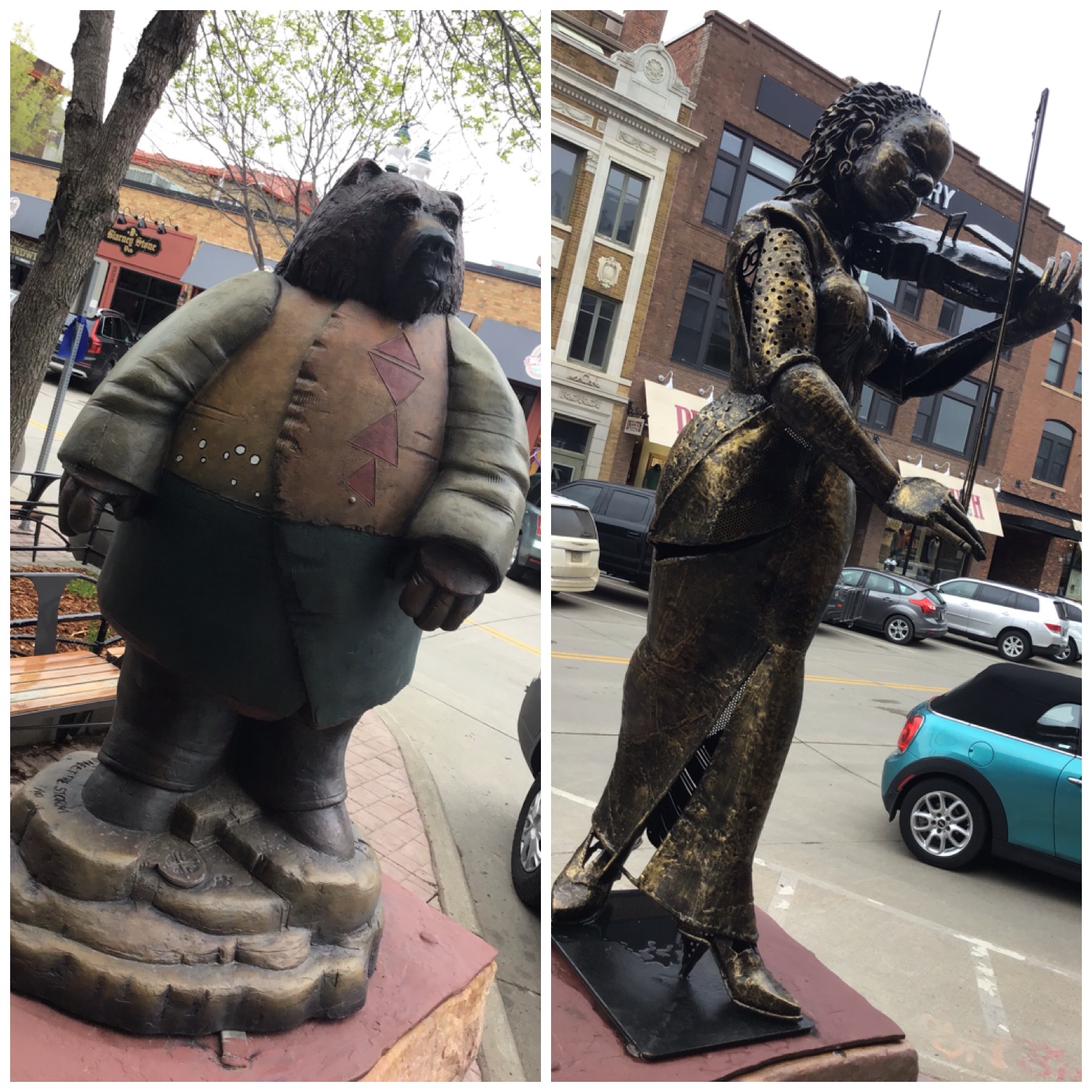
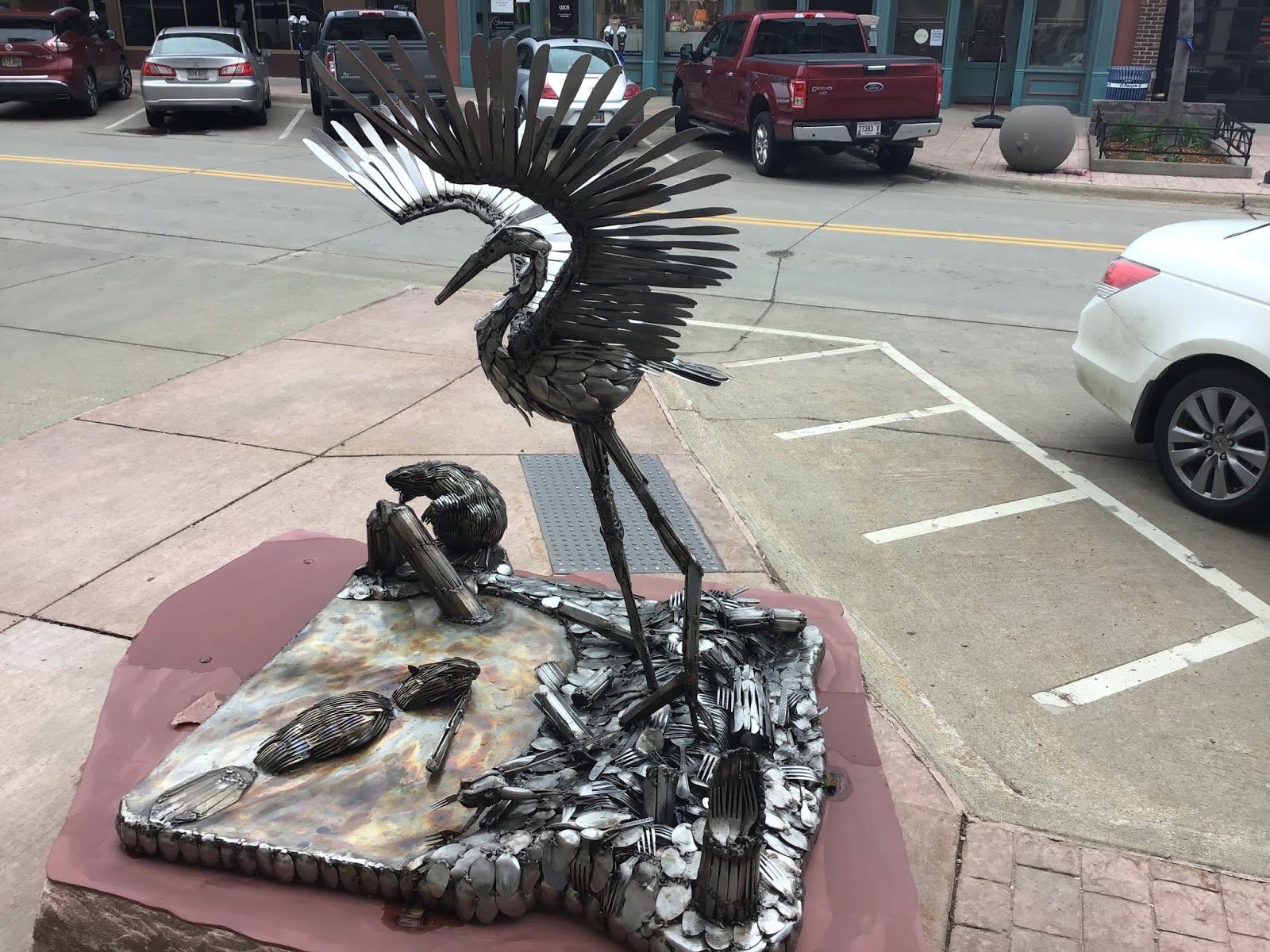
The sculpture below was one of the standouts. It is made entirely of cutlery.


And our final two favourites


Thursday, May 30, 2019

Sioux Falls Sculpture Walk / Part 1

Every time we come to Sioux Falls we do ‘the walk’. It never disappoints.
This year was the 16th time the event has taken place.
Started in 2004, SculptureWalk is the largest and most recognized annual exhibit of public art sculptures in the USA. This year there are 59 works spread around the city with the main concentration along Phillips Ave.


Monday, May 27, 2019

Fagen Fighters WWII Museum / Granite Falls, Minnesota

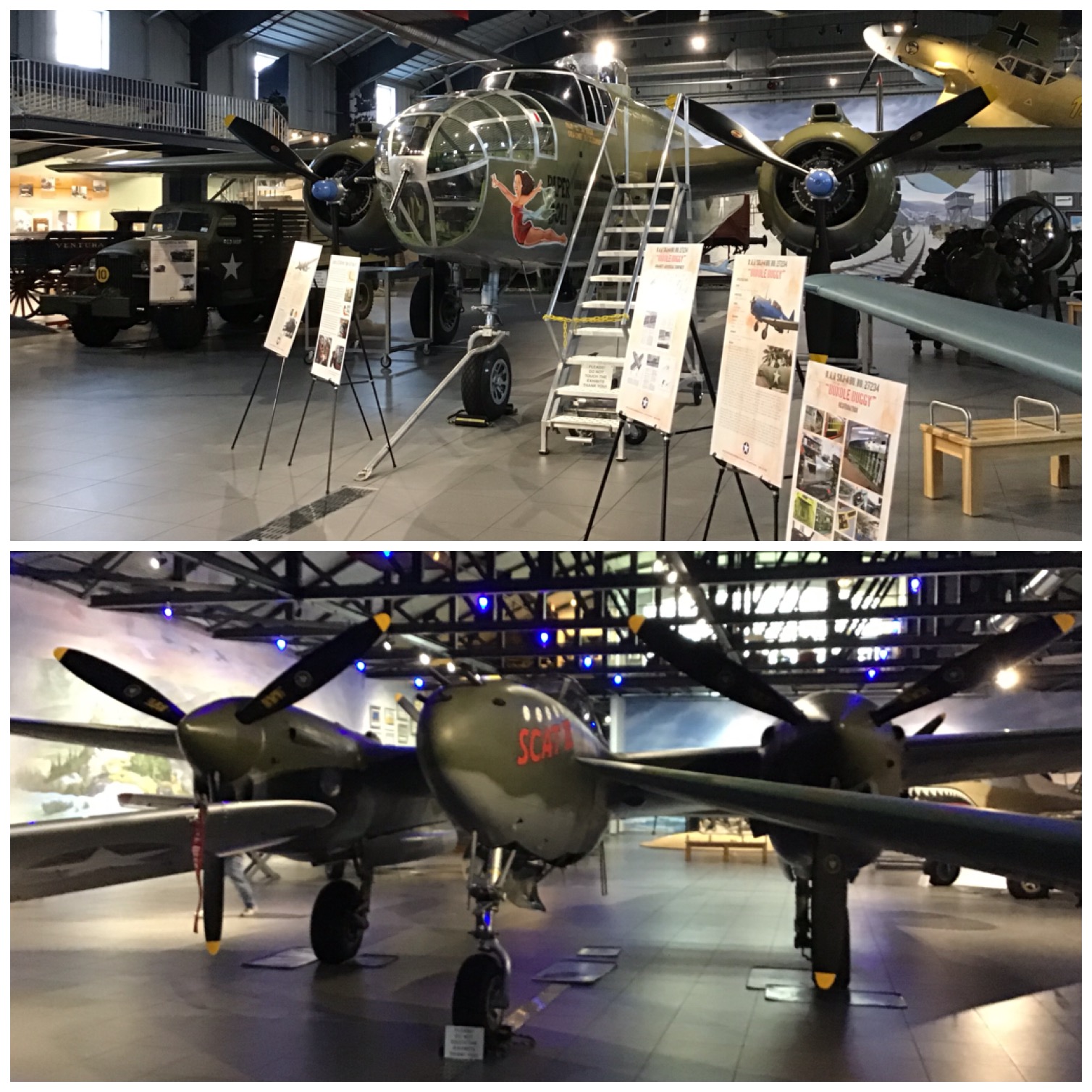
Fagen Fighters WWII Museum is home to a pristine collection of fully operational, active aircraft and memorabilia from World War II. It is situated at Granite Falls Municipal Airport a few miles out of the city. If you like old military aircraft and a history of their use during WW11, this is the place to spend a few hours at. A beautifully organised and kept museum.


Monday, May 20, 2019

Selling Cattle

In the old days selling a few excess cattle by a hobby farmer was quite easy.
You found out the date of the local sale, called up a livestock transporter who delivered the cattle to the sale yard the day before and in a week or two you would get a cheque in the mail.
Then the regulators stepped in.
Each rural property over a certain size (it varies according to district) pays a levy to a government entity which delivers the frontline animal health service in the state, safeguarding agricultural production from the biosecurity risks posed by disease and pests. They also manage travelling stock reserves, stock movement and identification and assist with drought relief. In fact the levy was waived this year because of the drought conditions.
The levy is charged on a two-tier basis, involving a general rate paid by all landholders and a supplementary animal health rate for those with stock.
Each property is issued with a Property Identification Code (PIC).
Some time ago, regulations called for ear tags, later electronic versions, identifying the property of origin of the animal via the PIC to be attached to each one.
Any movement, whether it be to a sale yard or just down the road for pasture agistment, has to be accompanied by official paperwork.

This enables disease control and traceability of stock consigned for human consumption.
It is known as the NLIS or National Livestock Identification Scheme.
Ok…..a bit of a task for the hobby farmer but not too onerous a one.
But now the MLA, Meat and Livestock Australia, has appeared on the scene.
Their mission is “to foster the long-term prosperity of the Australian red meat and livestock industry by investing in research and marketing activities.”
They want all red meat producers to be accredited to a Livestock Production Assurance program (LPA) which is an independently audited, on‐farm assurance program covering food safety, animal welfare and biosecurity. It provides evidence of livestock history and on-farm practices when transferring livestock through the value chain.
This involves seven study modules and an open book on line ‘exam’ (100% pass rate required) plus, of course, an application fee.
Producers can opt out of this step but it is made clear animals may not be accepted for sale or be subjected to lower than market prices if a vendor decides to do so.
So after a some delay and more than a little procrastination, I decided to go ahead with the process.
With so many long hours in aircraft during May/June it will be an opportune time to do the module work.
With the way climate change is developing, it may be necessary to reduce my small herd one day and the less hassle doing this the better.

Friday, May 10, 2019

Apples 🍎

Autumn is apple season and our supermarket has about 8 varieties to choose from.
The apple tree originated in Central Asia, where its wild ancestor, Malus sieversii, is still found today. Apples have been grown for thousands of years in Asia and Europe and were taken to the new world by colonists and immigrants
There are more than 7,500 known cultivars of apples, resulting in a range of desired characteristics. Different cultivars are bred for various tastes and use, including cooking, eating raw and cider production.
Worldwide production of apples in 2017 was 83 million tonnes, with China accounting for nearly 50% of the total.
Australia produces around 300,000 tonnes a year with 75% going to the fresh market. The remainder is used for juicing and processing. Only a minimal amount is exported and just under 1000 tonnes are imported from New Zealand.

Australians on average eat around 8kg/year.
All states produce the fruit and because of the varying climate zones across the country the fresh apple season lasts from late January to late May.
Many varieties of the fruit are suitable for cold storage so apples are available all year.
The top five most popular apples in Australia are: Granny Smith, Red Delicious, Cripps Pink marketed as Pink Lady®, Fuji and Gala.
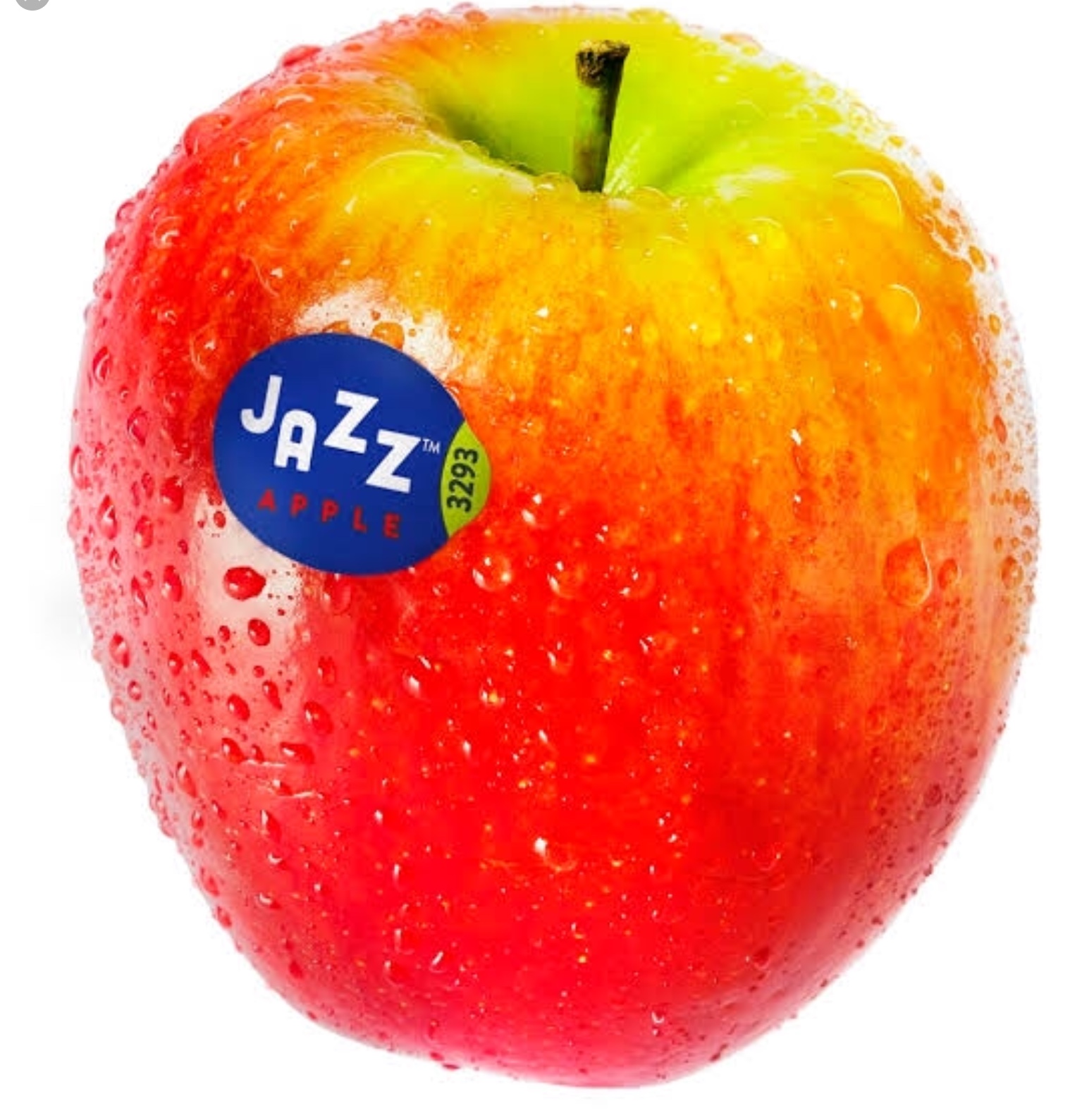
 A few old favourites are still available including Golden Delicious, Jonagold, Braeburn and Sundowner™. Some of the new apples emerging onto supermarket shelves that taste and look great include Jazz™, Bravo™, Kalei, Eve™, Modi™, Envy™, and Kanzi™ and Greenstar™.
I like Jazz™.
This is a cross between Royal Gala and Braeburn. It was developed in New Zealand.
The original cross was made in 1985 on trees at Goddard Lane, Havelock North, Hawkes Bay and was launched commercially in April 2004.


It is hard and crisp but juicy. It reminds me of the Jonathan which we used to grow in our backyard as a child. We used to get these in our supermarket but they seem to have fallen out of favour these days.
The co driver likes Pink Lady® ie. Cripps Pink.
This apple was originally bred by John Cripps at the Western Australia Department of Agriculture by crossing the Australian apple Lady Williams with a Golden Delicious.
It has a sweet-tart flavour and a firm, crisp flesh.


It also cold stores for a long time without quality deterioration.
The green Granny Smith is popular world wide and originated in suburban Sydney, Australia in 1868. It is named after Maria Ann Smith, who propagated the cultivar from a chance seedling. The tree is thought to be a hybrid of Malus sylvestris, the European wild apple, with the North American apple Malus pumila as the polleniser.


To wax or not to wax, that is the question.
For a long time apples were waxed at the packing shed as washing the fruit during processing removed the natural waxy barrier. It was thought that this barrier improved the shelf life of the apples as well as making them look more appealing (pun not intended).
According to our industry representative body, APAL, "apples with wax may last longer at certain times of year or in certain climatic conditions or retail conditions, but it won't have a significant impact."
Our two major supermarkets say that the vast majority of customers (70%) want a natural product.
So since 2016 waxed apples have been phased out. They do look a bit different ie.dull not shiny, but there is definitely no discernible taste difference.
On a personal note I really dislike those small adhesive stickers the put on the individual fruit.
A quick trawl around the Internet showed I am not the only one. Here is an example.
So apart from being difficult to remove, they are yet just another piece of plastic ready to pollute our environment.
So to keep the doctor away, eat an apple a day (and keep your vaccinations up to date!).

Monday, May 06, 2019

Our 2019 USA Trip / Part 1

A few days before our departure overseas, we drove up to Sydney, parked at the airport, then took the short one hour flight with QANTAS to Port Macquarie to visit with our friend Stirls.
A few days later we returned and booked into our hotel just across from the international terminal.
We had a reasonable dinner in the terminal before hitting the sack to get ready for an early morning rise and check in.
Next morning the formalities were very quick so we had time for a quiet breakfast before boarding.


The flight from Sydney to Houston was uneventful and arrived an hour early.
Economy class was 100% full so we didn’t have the luxury of stretching out.
I read, did a little study for my Cattle Production Accreditation (don't ask!), caught up with four movies, ate some reasonable airline food and only slept for a little while.
After immigration and customs, which took nearly two hours, we handed over our bags at transfer and headed through security and found our gate for the New York flight. IAH is a huge airport with many terminals. A lot of walking if you can’t find the Skyway train.....which we couldn’t.

It is always a bemusing contrast between airport security in Australia and the USA where the former is efficient and thorough but laid back. I think the TSA should understand they are not herding animals. But after all these years of being "barked at" that is a forlorn hope.
Arrived on time in Newark where our car was waiting to take us into Manhattan and our hotel.
So 10,000 miles and 26 hours of travel later we were ready to relax.
Did that mean bed?
Nope!
A short walk down the street to the City Winery for a light supper and a few glasses of wine.
Now another USA adventure begins.

Thursday, May 02, 2019

Port Macquarie/ Part 2

Day 3 of the trip was quilt shop day.
There were two in the area. The co driver was very impressed with the one in town, the other was out in the countryside, small and just ok. Minimal purchases made!
On the way back ‘home’, we stopped at NSW National Parks’s Sea Acres Rain Forest.
Here they have preserved a large tract of the original coastal sub tropical forest, 76ha, with access to part of it via a 1.3km board walk.


Here were some fascinating plants like the strangling fig, cabbage palms, bungalow palms and very tall trees of great age.


We didn’t see any wildlife but the area is well known for koalas, brush turkeys and reptiles such as pythons, monitor lizards and water dragons.
It was a couple of hours of interest for this lapsed horticulturalist.
We had a quiet afternoon, a nice seafood dinner and early to bed.
Next morning our flight to Sydney was delayed nearly two hours but we eventually made it to the airport hotel just after lunch.
It was time to psych ourselves up for the long trip to the USA the next morning.

Wednesday, May 01, 2019

Port Macquarie / Part 1

Just after dawn departure from home saw us at Sydney airport around 10am.
We parked the car at the international terminal and caught the train to domestic.
We had time for an early lunch, passable Mexican, before catching our little plane north an hour to Port Macquarie. We had one heck of a tail wind and were there barely before the flight attendants had time to serve and clean up the lunch time snack.
Stirl’s house renovations are finished and it looks great. The co driver was very impressed with the three seasons room. Nope, sorry, not happening down south.
Out to dinner at a lovely Japanese restaurant after drinks at the Beach House pub by the river.
‘Port’ is a much bigger town than Ulladulla and has a plethora of restaurants, bars, cafes and entertainment opportunities in comparison.

Next morning after coffee we headed for the Koala Hospital. Here they look after animals that have been injured by domestic dog attacks, car accidents and diseases initiated by chamlydia which is affecting the marsupials Australia wide. It is not the same strain that affects humans.
They do great work here treating between 50 and 100 at a time and releasing a big percentage back into the wild once they are well again.
On the same grounds is Roto house. Built by surveyor John Flynn in 1891, this 11 room weatherboard house constructed from local red mahogany was occupied by his family right up until 1979. It's still lovingly maintained by the National Parks and Wildlife Service to this day.


Travelling further south we drove up North Brother mountain outside Laurieton which gives you a wonderful view, south and north of the beaches, lakes and mountains in the area.

Then it was a great long lunch at the Sandbar CafĂŠ before heading ‘home’ for an R&R afternoon.


Thursday, April 25, 2019

Wednesday, April 17, 2019

Easter and Hot Crossed Buns

Hot cross buns are a yeasted sweet bun spiced with cinnamon, cloves and nutmeg, studded with raisins and then marked on top with a cross.
Each part of the bun has a certain meaning with the cross representing the crucifixion and the spices supposedly signifying those used to embalm Jesus at his burial.
The buns go back to the 12th Century and were traditionally only available just before Easter and were served only on Good Friday.
"Back in the day" we had to pre order them at a bakery and pick them up on Good Friday eve.
But things change.
Our supermarket, Coles, has been selling its buns months before Easter for years. This year they really outdid themselves by having them on the shelves on Boxing Day!


In protest of this crass commercialism, I imposed a purchase boycott until a few weeks out from the holiday. That has them quaking in their boots!
But wait! There’s more!
While chocolate chip and fruitless  buns surreptitiously snuck their way into the range a little while ago, this year has introduced variations flavoured with white chocolate and raspberry, sticky date and butterscotch, Belgian chocolate and cherry and banana and caramel.
Coles competitor, Woolworths, has even launched a hot cross bun flavoured ice-cream.
All I can say is BOOOOOOOOOOO!
Just leave some things the way they are!
I know....grumpy old man syndrome.

Sunday, April 07, 2019

The James Craig / An Iron Hulled Barque

I am very fond of old sailing ships or so called ‘Tall Ships'.
There are around thirteen in Australian waters.
But we don't see too many around here as our harbour is more than likely an unsuitable port.
Among them is a replica of the Endeavour, Captain James Cook's 1770 vessel of discovery sailing around the country and then there is the James Craig, the genuine article, built in 1874 in the UK and originally named Clan Macleod.
She carried cargo around the world and rounded Cape Horn 23 times in 26 years. In 1900 she was acquired by Mr J J Craig, renamed James Craig in 1905 and began to operate between New Zealand and Australia until 1911.  
She eventually fell victim to the advance of steamships and in later years was used as a collier and later laid up, then used as a hulk, until being abandoned in Tasmania where in 1932 she was sunk.
Her restoration began in 1972, when volunteers from the Lady Hopetoun and Port Jackson Marine Steam Museum, now the Sydney Heritage Fleet, refloated her and towed her to Hobart for initial repairs. She was then brought back to Sydney under tow in 1981 and her hull placed on a submersible pontoon to allow work on the hull restoration to proceed.


Over twenty-five years, the vessel was restored and repaired by both paid craftspeople and volunteers and relaunched in 1997. In 2001 restoration work was completed and she now goes to sea again.
She is one of only four 19th century barques in the world that still go regularly to sea.
James Craig is currently berthed near the Australian National Maritime Museum and is open to the public.
She takes passengers out sailing on Sydney Harbour and beyond with open ocean voyages to Newcastle, Melbourne and Hobart


She is crewed by a compliment of 16 and maintained by volunteers from the Sydney Heritage Fleet. The cost of maintaining her approaches $1 million a year and the ship relies on generating income from visitors, charters, events, and regular fortnightly daily sailings with up to 80 passengers.
She is always a wonderful sight.

Tuesday, March 26, 2019

Bushfire Aftermath

With the fire out, National Parks finally open the road to our beach so we decided to have a look at the damage.
It was obvious when we got to the forested part of fire ground that the intensity of the fire had not been that great.
It had not reached the tree tops and therefore not 'spotted' too far in front of itself.
The road had been a natural fire break.
It was a bit of a different story in the coastal heath up to the dunes near the beach.
All the under storey and low lying bush had been burnt.

But they had stopped the fire heading south to the camping ground and a reading spot (picnic table) was still there surrounded by green bush.
The beach was as beautiful and pristine as always and looked great in the autumn morning light.

And it was amazing to see that, with just that little bit of rain we had, regrowth had already started.
There was just the hint of a green on the ground as the plant life sprang back to life
Many native Australian plants need fire to regenerate. Banksias are a prime example and a couple of species are prevalent in our coastal heath.

Fire opens the hard cones and spreads the seeds which then germinate in the nutrient rich residue of the fire.
It will take a couple of years and, apart from the blackened tree trunks, it will be difficult to notice that a fire has been through the area.

Friday, March 08, 2019

End of Season Bushfire

Early on Wednesday morning, the co driver noticed smoke rising from the National Park over the highway.
I check my Fires Near Me app and sure enough there was a small bushfire near the lake.


We thought nothing much of it at first but as the morning passed it was evident from the increasing smoke that it was developing.


Soon we knew we may have a problem on our hands. Luckily the winds were light and not blowing in our direction but it was obvious that it was getting bigger. The app map confirmed this.


As darkness fell a huge red glow spread across the eastern horizon.
Around 2am the next morning I awoke and the glow had turned bright orange and the light flooded our bedroom.
I checked the map again and sure enough the fire had taken off, jumped the lake and was heading for the village to our north. They were under a yellow alert ie.initiate evacuation plan. The firefighters had lit a back burn on one of the fire trails just over the lake to combat the spread of flames, hence the intense light.


A back burn is a deliberate fire lit in front of the bushfire along a natural (lake, river) or man made (track, road) fire break. This fire is then 'sucked' towards the bushfire by that fire's own air consumption, against the wind, eventually giving the more intense main fire nothing to burn.
This stopped the northerly spread and the alert was withdrawn.
Next morning, Thursday, the fire to the south east was still intense and due to a change of wind, heading towards us.
Water bombing helicopters were continually flying over us to the fire.
The app indicated that the firefighters were beginning a back burn along a track directly over from us and we were told by another source that the increased smoke this would cause should not be a worry.
Helicopters continued their 'attack' until 7pm when the sun began to set.
It was obvious from new app maps that the back burn had done the job but there was still an intense red glow in the sky during the night as the two fires met and burnt out.


This morning, Friday, the smoke plumes had gone but the helicopters, en masse, are back helping fire fighters on the ground mop up.
Fallen trees and burning logs have to be doused, especially around the perimeter, as any small fires left burning or smouldering can easily start a new fire if weather conditions change.
How this fire started in cool, calm autumn conditions is anyone's guess.
A campfire that got away or deliberately lit? The latter is sadly not unknown.
In any case, 220ha of National Park has been burnt out and a huge amount of beautiful wild flower habitat and native vegetation destroyed especially along the northern part of our beach.
But thanks to the Rural Fire Service there was no property damage.
Rain, up to 30mm, is predicted for tomorrow.
We can only hope.
Update: 10th March
No rain at all yesterday. Warm to hot and dry conditions predicted for the next week. There is no activity in the air over the fire ground but the roads in on both sides of the lake are still closed so assume they are still working on shutting it down completely.
Update: 11th March
Today we are covered in smoke. From the new app map it seems that the fire, while still under control, continues to be active as the back burns consume the last of the combustible material within the fire ground.


Update: 18th March
68mm of rain over 24 hours and the fire is finally out.

Tuesday, February 05, 2019

Thunderstorms

This summer we have experienced more than our fair share of thunderstorms.
They usually arrive late in the afternoon and put on an exciting light and sound show.
Sometimes lightning strikes are very close. Our neigbour had some damage done to their entire electrical network and appliances due to one.
What has been strange about this season is that while many have been accompanied by wind and torrential rain as is normal, many have not ie. dry storms.
The other night we experienced around seven hours of continuous lightning and thunder.
So what causes this high-voltage show and how can you track where it’s happening?
Our Bureau of Meterology (BOM) says it begins within a developing thunder cloud.
Within the cloud there are millions of tiny ice crystals and super-cooled water droplets rubbing up against each other as they move up and down.
This causes a positive charge to develop at the top of the cloud and a negative charge at the bottom. The negative charge at the bottom of the cloud moves closer to the ground through a faint, negatively charged channel in a series of steps called ‘leaders’, while coming up from the ground are a series of positively charged channels known as ‘streamers’.
Photo: Maree Clout

When one of the positive steps connects with the negative streamer, a powerful electrical current races from the cloud to the ground, and this is when we see the lightning bolt.
Lightning heats the air around it to a temperature of approximately 30,000 °C, which is hotter than the surface of the sun. This rapid heating makes the air expand extremely quickly in a shock wave that we hear as thunder.
And how close is a lightning strike.
Count the number of seconds between the strike and the thunder and then divide by three. The result is the approximate number of kilometers (divide by 5 for miles).
Pretty scary as we have had lot of simultaneous lightning and thunder recently.
The amazing pic used in this post is by photographer Maree Clout. She has a Facebook site called Jervis Bay Through My Eyes which has some lovely photographs of our area.
This is the link: https://www.facebook.com/MareeCloutPhotography/