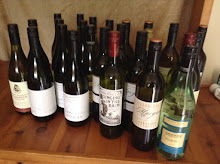
Friday, October 31, 2014

Book Reviews / October 2014

The Beach House is set in the small mythical beach side Queensland town of Sunset Point where nothing much happens.
And the locals just like it that way (which is pretty much the same where we live).
So when an outsider with grand plans to build a large resort which threatens to demolish an iconic local landmark, the beach house, battle lines are drawn (again, something similar is happening in our area).
Jessica is a young newspaper journalist who wants to make her mark by covering the resultant court case. However her editor boss wants a human interest story.
She finds five people and some associated lessor characters who have stayed at the house on vacation and writes about them.
Her research establishes that staying at the beach house has changed the lives of every one of those five although they are not connected in any way apart from interaction with the town's resident life guard. He is the link which binds all the stories together.
While the book is almost a collection of five short stories it turns out to be a well written novel with easy flowing prose which brings together a group of characters we probably all 'know' and can relate to.
And the result of the court case? You will have to read the book!
Highly recommended.
Dave Berg was Jay Leno's co producer for 18 years and has written "an insider's view of the Tonight Show".
Behind the Curtain reveals the most memorable hi jinks and celebrity diva moments from the show's history.
It also recounts things said on the show or behind the scenes causing some celebrities to boycott the show.
But more interesting is Jay himself and the way he is, the way he works and the way he interacts with others. Berg describes Leno as a hardworking boss who rarely took time off, who battled to overcome dyslexia, and only lived off income he earned as a stand-up comedian. There is even a chapter on his car collection


There is a little background on the Leno v Letterman 'war', the Helen Kushnick era plus a sober account of the ill-conceived decision to move Jay Leno to prime time, and to install Conan O’Brien as the host of The Tonight Show, only to have Leno return several months later.
A good read, well written, that I feel might just engender even more respect for the show's host.
When you fly a fair bit, it is always interesting to find out what goes on behind the scenes in the airline industry.
Confessions of a QANTAS Flight Attendant is a supposed exposé of the lives of the public face of Australia's national airline.
There are plenty of these types of 'flight attendant' books around.
While it was an interesting enough read, there were no real surprises about their day to day jobs in the air.
However an insight into the lives of staff during their rest periods in various overseas destinations was a bit of an eye opener. Five-star hotels, huge food allowances, daytime lazing around the pool and night-time tabletop dancing with Bollywood stars, anyone?


The author obviously had his problems with Qantas and his version of their treatment of him after an injury caused by a workplace training incident does not paint a pretty picture. But most Australians would not be surprised at this. The demise of the reputation of a once revered national icon continues to this day.
As Ian Woods, a former Qantas pilot and aviation analyst says in a recent article "it's only too clear that everyone has a different view of what's wrong with Qantas and how to fix it. "Qantas is at war with its workforce", "the unions are driven by bloody-minded self interest", "shareholders haven't had a dividend for five years", "the product is tired and old", "management gets paid far too much for the continuing failures on their watch" are some of the kinder things I've heard said in recent times."
Disclaimer: I haven't flown Qantas for at least 25 years.
Anyway, a light weight and fun read for those who have an interest in this subject
According to the pundits Outlander (or Cross Stitch) is a book of mixed genre ie. historical fiction, romance, mystery, adventure and science fiction/fantasy.
It is extremely popular and has been made into a TV series.
Claire, on her second honeymoon (the first was disrupted by World War II) in the Scottish Highlands with her husband in 1946 is 'transported' to the pre second Jacobite Rebellion era (the Forty-five) in the mid 1700s.
Despite the opportunity to return to the present, she decides to stay in the past having been captivated by the dashing Highlander, James.


Sorry, but I didn't like this book at all. Attaching a fairy tale to an important event in Scottish history which would change that country, and maybe the world, for ever, just didn't sit well with me.
But if you are into murder, domestic violence, rape, torture, sodomy and other assorted acts of violence, not to mention a face to face meeting with the Loch Ness monster (yes, really!), then this the book for you.
There are another seven books in this series.
I won't be reading them.

Thursday, October 23, 2014

Spring Comes and Goes

We always know it's spring when the Bottlebrush (Callistemon sp.) come into flower.
This year the season started off warm but I was reluctant to put the firewood away knowing we might get one last blast of winter. But with temperatures reaching the mid to high 20s (°C) for a week or so, we thought we were safe.
But, no!
A low pressure system  formed off the coast a few days later and we had around 300mm of rain in two days accompanied by southerly wind gusts of over 100km/hr.
At one stage we got 60mm/hour over 2 hours.


Our creek flooded again but there were no trees down and no fence damage. However we lost a considerable number of new shoots off the Pinot Noir. The rows' orientation (east-west) meant the vines copped the full force of the wind.
Sydney wasn't spared either with flash flooding, wind damage and a huge surf eroding beaches. They received 30cm of snow in the Blue Mountains and the main road west was cut for 12 hours until it melted. No one has snow clearing machinery in this part of the world. Exactly a year ago this area was fighting disastrous bush fires so you just never know.
We have started our fungicide spray program for the season. Due to the heavy rain the first two sprays were only a week apart. Hopefully we can revert to the basic 2 weekly application from now on.

Tuesday, October 14, 2014

Fungicides for Grapes

The three most common fungi affecting grape vines in our area are downy mildew (Plasmopara viticola), powdery mildew or oidium (Uncinula necatora) and botrytis or grey mould (Botrytis cinerea).
Downy Mildew oil spots on upper and white down on under side of leaf


Powdery mildew


Botrytis affected bunch


We spray commercial fungicides in an effort to prevent these diseases plus one that cures any outbreak of downy mildew.
In a protective spray program, fungicides are applied to the grapevines at regular intervals largely dictated by the weather eg. lengthy or intense rain incidents can reduce the time between sprays.
In curative programs sprays are applied only after conditions that are conducive to disease outbreak have occurred eg. 10:10:24 for downy mildew where >10mm of rain over 24 hours when the temperature is >10°C.
Sprays differ with regards to their mobility within the plant.
Some sit on the leaf surface where the spray droplets have fallen and do not move.
So any unsprayed area or new growth is not protected.
Some spread out over the leaf surface and move inside the leaf tissue. These are known as locally systemic or translaminar. New growth is not protected.
Others spread out over the leaf surface and move inside the leaf tissue and enter the plant through the stem and move upwards via the xylem to new growth. These are systemic. New growth (within reason) is protected.


How do the chemicals sprayed work or, more technically, what is their mode of action (MOA) ?
Fungicides kill by damaging the cell membranes of the fungus or inactivating critical enzyme or protein production or interfering with vital metabolic processes such as respiration.
So fungicides are grouped according to their MOA and may or may not have similar chemical structures.
What is the extent of the activity of the various chemicals?
Some are active only against a single enzyme or protein of the fungus or just at one point in its metabolic process. These are known as single site fungicides.
Others are active on numerous functions of the pathogen and are known as multi site fungicides.
It is important to be aware of the MOA of single site fungicides. Continually targeting pathogens at the same 'site' eg. overusing the same chemical, can eventually lead to resistance.
Multi site fungicides do not have this disadvantage.
For our preventative program we use the multi site activity copper oxychloride (M1) against downy mildew, wettable sulphur (M2) against powdery mildew, chlorothalonil (M5) against botrytis (and downy mildew). We also use a systemic phosphonate (33) as a downy curative when weather conditions have been particularly difficult, not an unusual situation in our warm maritime climate.
The basic plan is copper and sulphur every two weeks, chlorothalonil at 80% cap fall and just before bunch closure.
A full list of AWRI approved chemicals for 2014/15 as well as a spraying strategy to reduce the risk of resistance is available here.

Wednesday, October 08, 2014

"Glory Glory to South Sydney"

After a 43 year drought, my Rugby League team the South Sydney 'Rabbitohs' has won the NRL (National Rugby League) Premiership.
In a tough game on Sunday night they beat the Canterbury Bulldogs 30 - 6 in front of 88,000 fans.
To say it was an emotional time for all those supporters who have stuck with them through thick and thin is an understatement.


Monday, October 06, 2014

A Welcome Reptile Visitor

With spring here and the weather warming up, the reptiles of the area are coming out of hibernation and are starting to move about.
The unwelcome are the red bellied black snakes and to a lessor extent the monitor lizards (goannas), some up to 2m long.
But it's nice to see the small geckos and copper tails scurrying around and helping keep the insect population under control.
We have seen few blue tongues sunning themselves after emerging from their burrows which have been quite prevalent in the vineyards this year.


Blue-tongued lizards are the largest members of the skink family. They grow to about 60cm (2 ft) in length.
They are very slow moving and feed on a variety of plants as well as snails and beetles.
When threatened, blue-tongues open their mouth wide and stick out their broad blue tongue. This display, together with the large size of the head is meant to frighten off predators. They also hiss and flatten out the body to making themselves look bigger. A frightened blue-tongue may bite if it is picked up. The bite can be painful, break the skin and leave a bruise but there is no venom, so not that dangerous. As kids we used to keep them as pets.
Their natural predators are large predatory birds eg. Kookaburras and large snakes. Unfortunately introduced species like feral and domestic cats and dogs are also a danger. They will eat snails and slugs poisoned by snail baits and can be poisoned themselves and are no match for domestic lawn mowers.
We will be keeping an eye out for their well being in future when working around the place.

Tuesday, September 30, 2014

Book Reviews / September 2014

Michelle is engaged to marry Steven. The couple spend a lot of time with Michelle's best friend, Beth. Three days before the wedding, Steven tells Michelle she is being dumped and that he is about to marry Beth.
What to do?
The honeymoon cruise already is paid for, so she decides to take a honeymoon for one!
On board the ship, Michelle meets Kirk and a wonderful, steamy two weeks in paradise ensues.
But what the heck, she will never see him again.


Back in the real world, after her vacation, she finds out she may lose her job because her firm is not doing so well.
But they are sending in a new management team to sort things out
And guess who her new boss turns out to be?????
Light and fluffy.
A quick, good fun read
And all for $0.99!
Wines of France is a great series of little books.
In this one everything you ever wanted to know about Burgundy wine is here.
From the various regions to individual vineyards and vintages.


This is a book that would make a great travel companion on a tour of the area.
One for the serious wine person.
Balmain is an inner western harbour side suburb of Sydney.
But in 1800s it was on the fringes of the burgeoning colonial town.
This novel (a mixture of fact and fiction) is based on the author finding a photo of 8 year old, Sophie, who lived and died around 100 years ago in the old Balmain weatherboard cottage where he had lived.
Who was she and what happened to her?


We discover that Sophie had disappeared with a childhood friend in 1908 and was never seen again.
The book traces the journey of the discovery of Sophie and her family, from their first arrival in Sydney, over five generations, until the mystery is finally solved.
I really liked this book.
Recommended.  
Falling for Rain is a formularic romantic novel set in Canada.
A successful business woman returns to her home town after 10 years absence to settle her estranged father's estate.


And guess what? Her adopted brother who has remained behind still has the hots for her and as it turns out, she for him.
But her selling the farm to developers who are in cahoots with her entirely despicable business partner will not only displace and upset the plans of  'the brother' but will upset the town as well.
And there is a family skeleton hiding in the cupboard to boot!
But we just know everything will turn out well in the end.
An easy but less than riveting read.
And it turns out the author, Meadow Taylor, is actually two anonymous writers.
Sometimes two heads are not better than one.

Wednesday, September 24, 2014

Fish

Batemans Marine Park is one of six such reserves in New South Wales.
It was established by the state government in 2006 and covers 85,000ha (330sq.ml), extending from Murramarang Beach, near us, at Bawley Point in the north to Wallaga Lake in the south.
It stretches to three miles offshore and includes all the estuaries, creeks, rivers and lakes (except Nargal Lake) to the limit of tidal influence.


Trawling, long lining and dredging are prohibited from the entire park and some other forms of commercial fishing are also limited to protect the region’s biodiversity.


Unlike marine parks in other states, the Batemans Marine Park puts very small restrictions on recreational fishing. So a new legal size and bag limit sign for all fish (and invertebrates) has gone up at our local boat launching ramp.
I had no idea there were so many fish species in the area.


Seeing the great white shark mentioned as a threatened and protected species must raise a few eyebrows within the local surfing community however.
That species was suspected of killing a surfer not too long ago at Byron Bay on the New South Wales north coast.
But I guess in the end we are in their territory when we enter the ocean. Thankfully in my 40 odd years of surfing I had only three close up and personal encounters with sharks which were three too many. How many others I didn't know about is, of course, another question.
So with the warmer weather approaching, it might be time to break out the fishing gear and head for the beach when the tides are right, the surf is not too big and some nice gutters have formed.


Also the two small islands, Brush and Belowla, just offshore from two of our beaches have been declared protected seabird breeding sites. These are home to a small colony of fairy penguins among many others.
Setting foot on these islands could cost you a substantial amount of money.

Friday, September 19, 2014

Alba an Aigh

One of my ancestors was a signatory to the Declaration of Arbroath dated 6th April 1320.
The document, a letter to Pope John XXII, was intended to confirm Scotland's status as an independent sovereign state.
On 18th September 2014 the country had the chance to vote in a referendum on breaking away from the United Kingdom (which came into being in 1707) and achieving independence.
The result was 55% NO and 45% YES.
My interest in this?
Although Australian by birth, I have 50% Scottish blood running in my veins.
My late father was fiercely nationalistic despite living the majority of his life 17,000km from his homeland and had little time for 'the English'.
He would not have been happy with this decision.
But it seems the head ruled over the heart.

...for, as long as but a hundred of us remain alive, never will we on any conditions be brought under English rule. It is in truth not for glory, nor riches, nor honours that we are fighting, but for freedom – for that alone, which no honest man gives up but with life itself.

Monday, September 15, 2014

Hazard Reduction Burn (HRB)

It is almost five years to the day when were under major threat from a bushfire.
Since then we are a bit sensitive to any sign or smell of smoke.
While sitting at the beach this morning, the co driver noticed a lot of smoke coming from the general direction of our property.
On arriving home it was apparent that a big fire was very close.
A quick check of the Rural Fire Service's  app "fires near me" established that it was a hazard reduction burn in the state forest between us and the village to the north.


During winter and early spring, if the conditions are right, the RFS deliberately lights fires in strategic areas that become buffer zones during the fire season. They are slow burn fires which reduce the fuel load on the forest floor taking out undergrowth and fallen timber.
This fire came right up to our neighbours' northern boundaries.
The RFS have their trucks and teams patrolling the area so it's seldom these fires cause any problems although a few have been known to 'get away' when weather conditions unexpectedly change.
So I guess it will be a bit smokey around here for the next few days.

Thursday, September 11, 2014

Toys for Boys

When I first bought the property around 25 years ago, and knowing absolutely nothing about rural life, I asked around about what was considered essential equipment.
The most frequent answer was a decent chainsaw.
They were needed to cut fallen trees off fences and access roads, to cut fence posts, strainers and stays and to provide firewood for winter. 
So I invested in a Husqvarna Rancher.


And how right that recommendation was.
Never ever be without a chainsaw when living in country Australia.
And don't buy a cheap 'toy', get a reputable brand with a bit of grunt that has good local service backup.
They are pretty dangerous things to use so a course in safety is prudent. Amazing how much you can learn on a one day course from preventing kickback to ensuring an escape route when felling trees, to be aware of 'pressure points when cutting up fallen trees, to wearing appropriate clothing and protection gear. As well there are pre and post usage checks to be made to keep the saw running safely and smoothly.
Small engine and chain maintenance courses are not bad things to sign up for either.
Anyway, after a quarter of a century of use, my first chainsaw was playing up to a point of frustration and was no longer repairable.
So I bought a new one, same brand and updated model.
Husqvarna 455 Rancher (3.4 cu.inch / 55.5 cm³; 3.5 hp / 2.6 kW; 18" / 46 cm bar; 13.01 lbs / 5.9 kg).
It runs like a charm.

Sunday, September 07, 2014

Touriga Nacional

Touriga Nacionnal is a Portugese red grape variety (cultivar) of the species Vitis vinifera (European grape vine).
It is traditionally used in blends for Port.
But more and more it is finding a niche as a red table wine grape in the Douro and Dão in Portugal.
The grape berries are very small and therefore have a high skin to pulp ratio which heightens the amount of extract in the wines.
The grapes can produce intense, very aromatic wines with high tannin content.


My old wine school, Charles Sturt University, produced a table wine from this variety in 2013 which was a break away from the usual fortified wine route ie. a Tawny
Tawny is the name given to Australia's most popular fortified wine style, previously referred to as 'Tawny Port'. Australia agreed to discontinue the use of the term 'Port' in line with international labeling agreements, with 'Port' now used exclusively by the Portuguese.
During the Touriga production at CSU the crusher broke down, and with no spare parts being available on the long Easter break, the grapes were processed in the old fashioned way 'by foot'.
After fermentation the wine spent 6 months storage in old French hogsheads.
The bottle back label says "This is not a shrinking violet"
Other comments in the wine notes included "bolshy in its birth, it has become a bit of a beast, needing some serious food to keep it under control.........making it is exciting, because it takes a lot to persuade it to behave. We know it can be good, it just doesn't want to!"
How right they were!
WOW!
14.9% alcohol (you don't often get much higher than this with a table wine), intense black fruits flavour and lots of tannin.
A really big wine that was well matched with our grilled steak one night followed up by slow roasted lamb shanks the next.
For us it was an interesting wine but the high alcohol tended to dominate. Between that and the tannin the fruit was a minor component. However it is always good to try something new occasionally but this one won't be on our repurchase list.
The wine is sold under their Letter Series label and is called PTO.
Why PTO? I can't quite work that out.
More information on CSU wines and wine making here.

Tuesday, September 02, 2014

Spring!

August (last month of winter) and September (first month of spring) are usually our driest months of the year.
But August saw around 200mm (average 90mm) rain dumped on us in a couple of rather intense bursts.
Our creek flooded a number of times but luckily the coastal lake that it flows into is currently open to the sea (not a common event) due to some heavy winter surf activity and the excess water did not hang about too long.
During the latest downpour the cattle were stranded on the wrong side for a while but eventually found their way across.
Our coastal lake. Sandbar cutting access to sea which is normal


So we will have a good soil moisture content ready for the warmer temperatures to get the grass growing and the vines started.
We have already noticed bud swell and some bud burst in the early varieties.
Another feature of August was the number of frosts. We usually have 2 or 3. This year we had at least 8 and some were quite severe.
Australia experiences radiation hoar frosts rather than the advection type. We had the cold, clear, low humidity and still nights that are just right for such events.
As a result, pasture grass, especially in frost hollows, was 'burnt off' and we had to buy hay for the cattle to supplement their winter feed for a few weeks.


The results of our autumn weed (bracken) spraying program were very positive with a good 'kill' (a nice sea of brown) resulting.
A minor downside is that we have to decontaminate the sprayer very carefully as the herbicide we use for the bracken is very potent (application rate: 10g/100L) and any residue could harm the vines when our fungicide spraying starts.
This process involves multiple flushing, bleach additions and recirculation/agitation and then more flushing.


Wine wise we are still racking and monitoring sulphur levels of and oak influence on the reds. All three look good so far. With those and the  planned blend we should see the four ready for consumption by the end of the year.
The white wine has proved very popular around the neighbourhood.

Wednesday, August 27, 2014

Book Reviews / August 2014

Just This Once is another in my light reading category.
What attracted me was the Rugby theme (and, at the time, being free on Amazon).
Hannah is an American who is jaded by business and being 'a mother' to her siblings.
She needs a holiday.
She heads off to New Zealand for three weeks relaxation at the beach


She gets into trouble in the surf and is rescued by Drew who just happens to be the All Black's (NZ national rugby team) captain.
Things 'progress' from there.
Drew knows she is right for him, Hannah thinks he is right for her but they dance around one another for quite a while.
Then Hannah bites the bullet and heads for a more permanent stay in New Zealand.
Her trials and tribulations with a new culture, almost a new language and the obsessive rugby culture make entertaining reading. 
Will this relationship work out in the end? I think we all know the answer to that.
Apparently there are five subsequent titles in this "Escape to New Zealand" series and even a prequel.
A fun book.
The author has set herself a daunting task with The Untold Stories of Broadway. She is documenting a theatrical and social history of Broadway by theater via interviews with anyone who has had a connection with the precinct ie, actors, directors, writers, ushers, doormen, dressers, ticket sellers etc etc.
This is Volume 1 and covers only 8 venues of the 40 currently in existence.


There are hundreds of stories, some just a few lines long, in this book which tell of what goes on behind the scenes in professional theatre, not only on stage but in the dressing rooms, in the rehearsal halls, on the road and even in the restaurants in the surrounding area. These are interspersed with the author's own experiences as a student trying the break into the industry and working her way up to producer.
It's a intriguing tale of the changing scene of Broadway over a century with its huge successes and disastrous flops, of stars who became household names and those less famous who form the backbone of a such a creative industry.
One for the musical theatre fan.
I look forward to the next installment.
The only contact I have had with Mormons are the clean cut missionaries on the street or at the door.
Not having any religious affiliation, I usually give them a pleasant but firm brushoff.
There have been a few programs on television about them lately and of course Mitt Romney's run for the US presidency increased awareness. Most of the TV programs concentrated on the polygamy aspect of the religion but a few later ones were more into the patriarchal dominated family life which for an outsider is a bit disturbing.
So I decided to learn a bit more.


The Mormons gives a rather cynical overview of Mormonism and pulls no punches as to the life and times of the questionable Joseph Smith Jr., of the religion's foundation, of its development, its beliefs as well as the current situation in the church (or churches, given the high number of factions), not to mention its hugely successful and not always honest business arm. The book is well written and ostensibly fact driven but I am sure there is plenty in there that Mormons would either disagree or have problems with.
My take?
A religion based on fraud.
Talking of loony religions, Scientology is surely near the top of the heap. Well really I should not dignify that organization by calling it a religion when it is obviously a cult.
(let's sell these people) A Piece of Blue Sky exposes the cult's founder L. Ron Hubbard’s false claims of being a war hero, a nuclear physicist, an explorer and a protege of Eastern gurus.
It exposes the cult as a moneymaking scam posing as a religion.
It also exposes the malevolence of Scientology.
First published in 1990, the book was subject to controversy and a number of court cases. At one stage it was withdrawn from sale .
Now we have this new, unexpurgated, unabridged version.
The author joined the cult in 1974, aged 19, and left in 1983 after the new leadership of David Miscavige began taking the organization down an even more tough and ruthless route than its late founder.
He achieved a considerable high level of 'education' (OT5) within the cult so it is assumed he knows what he is talking about. Of course Scientologists debunk the whole book as lies and libel and consider it a disenchanted "divorcee" dumping on an ex partner.
But the evidence presented in the book to back up the claims is very convincing and the narrative ranges from things plain laughable to scary and concerning.
I think I know whom I believe.
While the previous book deals mainly with the founder of Scientology, Blown for Good is a more up to date tale (2009) of the organization.
Author Marc Headley presents an insider's view of life within Scientology. Brought up in a Scientology family, he began work for the cult at the age of 16. He spent 15 years at their secret Religious Technology Centre (Gold Base), a 200ha property located near Gilman Hot Springs in California. It is here that several Scientology executives, including David Miscavige, live and work. Therefore Gold Base is Scientology's international administrative headquarters.


This is a story of virtual slave labour, starvation, humiliation, physical and mental abuse, brainwashing, imprisonment and much more, all going on in a compound surrounded by razor wire and guards in the 'land of the free'.
It is a fast-paced, page-turner of a book and one which will have you shaking your head in disbelief. Just when you think things could not get worse, they do!
And as for Tom Cruise? Read the book!
Is it all true? A swathe of corroborating evidence from many other sources confirms that most of it, sadly, is.
Both the author (and his wife) eventually escape the cult but not without trauma.
By the way, the term "blown" is like the military AWOL.Once someone is 'blown', their Scientologists friends and family members are no longer allowed to communicate with them in any way.
And finally, in my research on the cult, I came across this balanced article on Scientology in Australia written by Walkley Award winner Malcolm Knox which is well worth taking the time to read.

Monday, August 18, 2014

More Winter Vineyard Work - Pruning

After finishing up the Pinot Noir block, we turned our attention to the Tempranillo, Semillon and Cabernet Sauvignon.
All these varieties are trained to a bilateral cordon (two permanent arms) and are spur pruned (see pics below).
Spacing for the former two is 3m x 2m  (rate of 1666 vines/ha) and for the latter 2m x 2m (rate of 2500 vines/ha)
Other chores included net mending, some end post stay replacement and trellis wire tensioning.
Under vine weeds were also sprayed off.
Now all the blocks are 'sealed off ' and we await bud burst which can't be too far way now for the 'early' varieties.
Vine to be pruned with last season's leafless shoots -  now called canes
 Spur with two canes - low (nearest cordon) and high (furthest from cordon)
Step 1: High cane completely removed
Step 2: Low cane reduced to two buds
Step 3: All other unwanted canes removed
Two budded spurs along vine cordon at approx hand span distance apart
Completed spur pruned vine
Pruning finished for the year


So why prune?
Fruit is only produced on new shoots which come from buds formed on the previous season's shoots (canes).
Therefore it's necessary to reduce the number of buds producing new shoots to manage the quantity and quality of fruit ie. by reducing number and size of canes.
Not getting too technical but this relates to the balance between vegetative and fruit growth.
Pruning also maintains the form and the size of the vine. By limiting the number and position of new shoots on a vine it aids canopy management ie. how the shoots are positioned on a trellis with their limited number prevents shading of leaves and bunches allowing good access to sunshine (photosynthesis). It also promotes air movement and aids good spray penetration within the canopy as disease control measures.
However there are many more aspects to pruning and canopy management with large chapters in viticulture books devoted to it as well as stand alone publications on the subject available.

Tuesday, August 12, 2014

Winter Vineyard Work

After a few months off to do other farm chores, mainly fence repair/maintenance and weed spraying, August was time to prepare the vineyard blocks for the 2015 vintage.
We started according to the potential bud burst of the variety.
This means, for us, working on the Pinot Noir first followed by Tempranillo, Semillon and then the Cabernet.
Stirls was down for a few days so we got a lot of pruning done. In the Pinot block we replaced a broken end post, re tensioned the wires, raised, mended and restretched the permanent netting as well as sprayed off the just emerging under vine weeds.


Our Pinot is spaced at 2 x1m  (a rate of 5000 vines/ha) with a unilateral cordon. This is a token attempt to somewhat replicate the system used in Burgundy, the home of this grape variety. While Burgundy vine planting densities range between 8,500 and 10,000/ha, it is the vine spacing rather than the row spacing that is relevant. Restricting the growth of each vine ie. a 1m cordon is said to improve grape quality with the plant putting all its effort into increasing flavour and colour into a small amount of fruit.
Reduced row spacing better utilizes precious land eg.in the Grand Cru vineyards of France, as well as the sunlight which would fall, 'wasted', on grass rather than on vines. But both these aspects are not too much of a concern for our small operation and wider rows certainly makes vineyard maintenance easier.
But this is where the comparison ends. Our climate (warm maritime) and soil type (acid sandy loam) couldn't be more different than Burgundy.


The cordons are two bud spur pruned. Each cordon has approximately 6 spurs.
This means potentially a vine will have 12 shoots, each producing two bunches.


Surprisingly when finishing off this stage of the project I noticed that despite it only being the first week of August we already have bud swell.
This has been increasingly occurring earlier in the season with all varieties each year since I first planted the Cabernet nearly two decades ago.
Who said climate change does not exist?


One of our peach trees thinks it's spring too!!


Sunday, August 03, 2014

FINALLY!

After years of frustration and despair our team, The Waratahs, have finally won a Super 15 Rugby Championship against The Crusaders from Christchurch, New Zealand.
In an exciting game, last night, in front of 62,000 fans the game came down to a last minute 42m penalty kick which was slotted over to the the joy of us all.
Final score 33 - 32
Click here for video highlights.

Friday, August 01, 2014

Fencing

Fencing, around and within the property, needs constant attention and maintenance.
We need to keep our cattle contained, especially off the highway, and the neighbours' animals out.
Major fence damage can occur with trees and large branches coming down across the wires and when termite attack or rot affects the wooden posts and strainers.
Having cattle on the property we use barbed wire (usually four strand high tensile) rather than plain wire.
Repairing and restraining barbed wire is a prickly business and you never come away from a job without a little bloodletting.
The traditional method is the use of a chain strainer.


I don't particularly like to use these. They can be dangerous. Over straining high tensile wire past breaking point is not always a pleasant experience.
But there are other options.
I like to use Strainrite tensioners developed in New Zealand.
They are simple to install by wiring them to a strainer post and then winding the barbed wire onto the ratchet with a spanner or wrench. Any subsequent restraining is made easy by tightening the ratchet another notch or two.
I use these for the trellis wires in the vineyard as well.


There is also a innovative and cheap straining device developed by a small Australian rural engineering company, Kriesl and Co, called a TwitcherTM.


You simply fit the Twitcher (L) onto the wire around the middle of the span and use the orange applicator (R) to wind the wire around it.
Again subsequent restraining is a breeze with just an additional half or full turn.


For critical boundary fences we use an additional electric fence based on a 12V battery charged energizer feeding around a 8000 volt pulse down a wired tape.


This is a very effective deterrent for any wayward cow looking for greener pastures.
And accidentally touching the tape doesn't do 'the farmer' much good either.