Thursday, October 22, 2009

An October Update

October has been all about the weather. Rain and more rain. Not heavy but steady although regretfully not enough. About 100mm in total, but it has been slowly filling up the water table and turning the grass green. No runoff as yet so the dams are still not in a good state but the spring is again running.
It was also unseasonably cold for Spring. We had the fire going most evenings for the first half of the month which is unusual.
We have been full steam ahead with some long delayed in-house projects as well as getting our vegetable garden prepared, this year with irrigation installed to see us through until Autumn. We finally got lettuce, rocket, chillies, capsicum, zucchinis, shallots and 3 different types of tomato planted.
The grape vines are looking ok although about ten 15 year old Cabernet Sauvignon vines at the shallower end of the vineyard have been very slow to shoot due to the drought conditions. I finally succumbed to some temporary irrigation via a water weeper hose. This is made from 60% recycled rubber and is very porous letting the water seep out at a regulated rate along its whole 15m length. It seems to operate well despite the lower water pressure (gravity feed) from one of the water tanks. Will be interesting to see how those particular vines react to the additional moisture given that we have now been having considerably warmer weather.
The Semillon, Tempranillo and Pinot Noir have shot fairly evenly, albeit it extremely early, and are all in flower.
They had their first fungicide spray in the third week which was later than normal due to the wet weather and I was concerned that a primary infection of downy mildew might have been apparent.
But nothing.
When I went to buy some downy curative spray, 600g/L phosphorous acid, from the local agent they were out of stock due to other growers buying up more than normal quantities due to the longer wet spell. But maybe they didn't need it after all.
Other than that, we are waiting to get back into the surfing again. The water temperature is not too conducive at the moment at a coolish 18 deg C. In fact it was so cold that the powers that be called off the open water swim at the recent Masters Games in Sydney (13 deg C!) much to the disappointment of the many athletes who have travelled from all over the world to participate. But the warm current (the yellow) seems to be heading down our way according to the CSIRO.
Looks like we left South Dakota just in time. They had snow there the week after we left. From the looks of the already parched country around us and the predictions of the weather experts, it will be a dry and hot season coming. Farmers in our area have been granted special water rights and rates to keep them going through this unprecedented dry period. And I noticed during my last weekly boundary fence inspection that the red bellied black snakes are out and about; so that's a sure sign that Summer is just around the corner!
We have about 2 months of quiet left before the tourist invasion of the area starts so we are going to savour every minute of that.

Wednesday, October 07, 2009

The Bridges of Madison County

In 1992 Robert James Waller wrote a short novel called "The Bridges of Madison County" which was subsequently made into a film a few years later by Clint Eastwood, starring himself and Meryl Streep. The book has sold an amazing 50 million copies world wide. An epilogue titled "A Thousand Country Roads" was written by the author in 2002 following much pressure from readers demanding a sequel.
The story is set in and around the small town of Winterset in Iowa and is a narrative about love and choices and consequence. I really like the film but up until now had never read the book.
We visited the area for a day from Indianola, IA.
There were originally twenty covered bridges but only 5 remain (plus one replica). The bridges were covered by order of the county board of supervisors to help preserve the flooring timbers which were more expensive to replace than the timber covering the sides and the roof. Most of the construction work was done by farmers to pay their poll taxes. The bridges were usually named for the nearest resident.

The Imes Bridge is the oldest remaining covered bridge built in 1870. It was first located over Middle River near Patterson but has been moved a number of times ending up east of St. Charles in 1997.

The Holliwell bridge was built in 1880 by Benton Jones and is located over the Middle River just southeast of Winterset. It is the longest of bridges measuring 122 feet. The interior is a good example of the intricacy of the timber work that is a feature of all the bridges.

The Cutler- Donohue bridge was moved from its original position over the North River near Bevington to Winterset City Park in 1970.
Winterset has another claim to fame.
It was the birthplace of John Wayne and his small four roomed house is open for tours and has a large collection of the actor's memorabilia.
We liked Winterset and its surrounds. The county has a population of around 14,500 and is set in a rolling terrain with wooded hills, small streams and rivers as well as corn and bean fields. The town lives off the film's popularity but the day we were there it was quiet and sleepy. The courthouse which sits in the middle of town is quite impressive. It was constructed in 1876 from the limestone of the area with the dome rising 122 feet above the central square.
The Northside Cafe, in existence since 1876, is the restaurant in the film where Robert Kincaid stops for coffee and offers Lucy Redfield a stool. The cafe is popular with film buffs and there were few in there taking photos. You can still take a seat where Clint Eastwood sat - it's the fourth stool from the front of the restaurant.
Unfortunately the cafe lives on that reputation rather than that of its food but it was fun to be there.
We explored the small town, had good coffee and found a second hand bookstore overflowing with bargains. I picked up a copy of the novel in pristine condition. The co-driver also found an apparently famous store in the quilting world, Fons and Porters.
The Hogback bridge is in its original position in a lovely valley just northwest of the town. Hogback gets its name from the limestone ridge which forms the west end of the valley. By this time the dust of the limestone back roads had covered our red car in a thick white layer. This turned out to be the norm and most cars we saw parked in the main street or on the country roads were similarly affected. Sorry Mr. Enterprise but we really did have to go off the tarmac to see everything.
The Roseman bridge has been in the same location since 1883. This is the best known bridge and played a prominent role in both film and book. The interior is covered in graffiti from romantics from all over the world. This is the bridge Robert Kincaid is looking for when he stops at Francesca Johnson's for directions. It is also where Francesca leaves her note inviting him to dinner. Also known as the "haunted" bridge, Roseman is where two sheriff's posses trapped a county jail escapee in 1892. Uttering a wild cry, it is said the man rose up straight through the roof of the bridge and disappeared. He was never found, and it was decided that anyone capable of such a feat must be innocent.
This was a most enjoyable day with the warm late summer weather making things even better.
I am glad we took the time to visit the area, basically on a whim, and were so well rewarded.
I have now read the book and was quite amazed how closely the film script adapted by Richard LaGravenese from the novel follows the original story. I guess when you are on a good thing.....
And as pure coincidence, the movie was running on our "Movie Greats" channel when we returned to Australia. Of course we watched it again.
And she still didn't get out of the truck!!!!!

Tuesday, October 06, 2009

USA 2009 / Part 2

We crossed the border into Iowa a few hours after leaving Elkton, SD and it was good to see the Missouri River again and drive through our old haunts of Sioux City and environs. We turned east on the I680 and headed in the direction of Des Moines. Looking for a place for lunch we came across the small town of Walnut in the wonderfully named Pottawattamie County. The town was designated as Iowa's Antique City in 1987 and there are more than 15 separate antique shops in this town of 900 people. But none are open on Mondays. However Aunt B's cafe' was open and she does a mean burger with fries and great rhubarb pie (with ice cream of course). And any town where tractors pull into the main street parking spaces among the cars is ok by me.

After a slight detour to the town of Adel (for a quilt shop visit, naturally) with its wonderful county courthouse, we arrived at our destination of Indianola just south of Des Moines for a two night stay. Our B&B was on acreage outside this thriving agricultural centre and we saw white tail deer feeding on the lawn and smelt a skunk outside our bedroom window during the night. There was a really good Mexican restaurant in town and as well as a cafe', Winn, run by the son of Vietnamese refugee whose only concession to his ethnic cuisine was egg rolls (Chả giò or spring rolls). Otherwise it was steak and pizza and an excellent salad bar. After three weeks in the mid west you can see were were starting to crave some genuine Asian food.

Next day we headed for Madison County (see separate post) and the Summerset Winery. The latter was the first winery in Iowa and we were warmly welcomed and encouraged to try all their wines. They grow nine varieties of American native and French hybrid grapes on their 12 acres. Most of the wine produced is semi sweet. The whites are far better than the reds, which due to the short growing season are quite thin and acidic. But it was interesting to get another slant on wine growing particularly in a very cold climate area which is so different to ours.
Next day we headed east on Highway 92 (I like avoiding the Interstates where possible) and took a small detour on the advice of our B&B host. Crossing the dam wall of Lake Red Rock which holds back the Des Moines River on its way south to the Mississippi, we arrived in Pella. This is a town with a long Dutch heritage of which they are justly proud. Founded in 1847 by immigrants escaping religious persecution in their homeland, the town has a distinct Dutch look about it and development of this theme has been done with great taste.
It was also the childhood home of Wyatt Earp and the now home of the Pella Corporation, a large manufacturer of windows and doors. We enjoyed a longer than expected stop here to enjoy the Glockenspiel, a walk around town, some old and interesting architecture and some really good coffee. I window shopped the many bakeries but resisted!
Next stop were the Amana Colonies which are a group of settlements of the radical German Pietists who fled religious persecution in Germany around 1842. They originally set up a community in New York State, eventually arriving in Iowa in 1854. The area in the Iowa River valley comprises seven villages. Often mistaken as Amish, these people lived a very strict communal and religious life until the 1930's when the reality of their critical economic situation brought on by the Great Depression forced them to rationalise their lifestyle.
We found the Colonies to be a little disappointing. It was hard to find anything culturally significant but rather commercial enterprises willingly gouging the tourist dollar. And despite their German heritage, we ate what would have to be the worst pseudo German food I have ever tasted. Luckily Annie's B&B in Amana village was one of the better places we have stayed in.
Back in South Dakota we started making our final rounds of visits. I had an afternoon's gambling at the local casino with my gambling buddy, Lisa. The winnings paid for some quilting supplies. And Karen and Emmet went with us one night to a Bingo session. We had fun but only one of us had any success albeit pretty small. Emmett has a unique way of growing tomatoes ie. upside down in buckets. We will try this at home this year.
He also has a barn filled with the some of the cheapest lucerne (alfalfa) hay I have come across. One seventh of the price I pay. To say I had hay envy was a understatement.
There is also a pretty silo on his property which is fairly typical of those in the area.

The area around Trent, Flandreu and Brookings where we mainly hang out is from our point of view, flat. Think the aircraft buzzing scene from "North By NorthWest". The main crops are soy beans and corn. Thousands of hectares stretching as far as the eye can see.
As Autumn approached the bean fields started to turn yellow and the corn started to dry out. The roads were beginning to fill up with combine harvesters and big trucks taking the grain to the elevators at the many railheads or to the ethanol plants. This disturbed the resident deer who frequent the fields in great numbers so one had to be very careful travelling the country back roads at night.
Soon it was time to head back to Minneapolis for our flight home. We made a short overnight detour to the Mall of America in Bloomington but I think we were shopped out. It took us only 3 hours to cover the biggest shopping mall in the USA and spend $37.
The flight home was uneventful. One hundred percent full and cramped did not make for the most comfortable journey so we were glad to reach Sydney twenty four hours later, pick up our car and head for home. On a sombre note, while driving along one of Sydney's major roads, a car coming way too fast in wet conditions in the other direction spun out on a curve, mounted the median strip and literally flew towards us. How we missed it or it missed us, I will never know. I just managed to squeeze between it as it landed and a parked car with centimeters to spare.
I think we are lucky to be still here!
The day we arrived back, Ulladulla had 60mm rain. This was basically the only rain in the area since we left. All looked pretty brown and dry as we drove in. However follow up rain in the last week is changing the landscape dramatically. Apart from the huge blackened burnt out areas around us, a green carpet is beginning to form. The vines are looking healthy and despite the loss of some condition the cattle are not looking too bad.
So now it's back to work!

Monday, October 05, 2009

USA 2009 / Part 1

So it was welcome back to the land of driving on the wrong side, upside down light switches, people driving with mobile phones stuck in their ears, huge meal servings, tipping and cheap petrol. Our three days in Minneapolis were taken up with the Minnesota State Fair, book and clothes shopping and catching up with some of our favourite fast food outlets and restaurants eg. Chipotle, Coldstone Ice Cream and of course, Caribou coffee.
After picking up our hire car (thanks for the free upgrade, Enterprise!), we drove immediately to the park and ride station for the fair. What a great service. Ten minutes by free bus to the front gate.

The fair was above expectation. Reminded me of what the Sydney Easter Show used to be like. Apart from the carnival area (Midway) and the ‘terrible’ fair food there were great livestock, agricultural and horticultural displays, wonderful arts and crafts exhibits, live entertainment catering to all tastes and a smattering of less artery clogging food to eat.
There was even a Christmas Tree competition and the Minnesota Grape Growers Association had an impressive display with featured vineyards, tastings and lectures during the day.

We solved the mystery of Australian Battered Potatoes that we had seen advertised on the fair web site. They turned out to be our potato scallops (a fries substitute at fish and chips shops) but with the added 'incentive' of being either smothered in melted cheese or the choice of dipping sauces. The stand seemed very popular.

We spent most of the day there but passed on the deep fried onion flower, third of a pound of bacon marinated in maple syrup and deep fried (on a stick), deep fried Snicker bars and the 2kg (64 oz.) bucket of fries. Grilled brats and Summit beer were more to our liking.

I loved the corn exhibition. Ears of corn up for prizes! I never did find out what the criteria for awards were but there were lots of entries and the judging seemed quite intense. The portrait of Barack Obama made from various grains, better known as crop art, was a highlight.

It was also great to catch up with Cindy too, share a bottle of wine or two and a laugh or six.
Then it was off south to Sioux Falls, SD and surrounds. After the family got over their initial shock of our visit, we got into the full swing of catching up, get togethers and late summer goings on in the area.
One was the Sidewalk Arts Festival downtown with hundreds of stalls featuring crafts, fine art, folk art and of course, food. I had my first taste of funnel cake and kettle corn. Both great! It was a bit strange to see an "Opals of Australia" vendor there but he was getting a lot of interest. There were also plenty of quirky items.

Of course we continued our restaurant/fast food pilgrimage: Culvers Butter Burgers and frozen chocolate custard, Mexican at Chevys, Incas, Puerto Vallarta and Guadalajara (Mexican food in Australia is pretty ordinary), a BIG breakfast at Perkins even at 10pm, lunch at the Phillips Avenue Diner, a Brutus Burger at Applebees and the traditional jalapeno burger at Steve’s Bar washed down with numerous MGD's. And we found also some other interesting and new places to eat. Then there was the clothes shopping at Cabelas in Mitchell about an hour’s drive away. No summer specials (too late!) but I managed to stock up on essential items to get me through the next year.
Not all meals were out, we had great BBQ's and special dinners at home as well.
Karen's surprise 50th birthday cake prepared by Kay tasted as good as it looked.

You will have noticed by now I was keeping my sugar and fat intake at a reasonable level.
After a few weeks of disturbing the family's day to day lives, we decided to take a break and travel down to Iowa to see the Bridges of Madison County and the Amana Colonies. So we made the necessary B&B bookings and headed south along the I29.

Friday, September 18, 2009

September Update

We have been in the USA just over 3 weeks visiting family and friends and taking a break in central Iowa to see the bridges of Madison County and the Amana Colonies.
More details on our adventures in later posts.
The flight over with Virgin Australia was excellent. The fourteen hours from Sydney to Los Angeles passed fairly quickly with nice food, good service and reasonably comfortable seats.
Both United and QANTAS definitely have some competition on their hands with this new airline.
Despite a 7 hour layover in LAX and a rather uncomfortable flight on Northwest's redeye to Minneapolis, we arrived in good condition jetlag wise.
After a few days there, we picked up our rental car and drove the 5 hours to Sioux Falls and began our round of surprise visits. All went according to plan with everyone reacting in the expected way to our sudden appearance on their doorsteps.
But we have been warned not to do it again!

PHOTO: Gerry Ricketts / September 2nd edition of Milton Ulladulla Times
Our departure from the south coast was delayed by another bushfire emergency to the north of us. This one got to within a few kilometers of our home and again we were on evacuation alert. Thick smoke covered our valley and there was the incessant throb of water bombing helicopters overhead all day. The highway north had been cut. We were wondering if we would be able to leave on our trip and maybe would have to give up our non refundable tickets. However the fire was brought under reasonable control on the shores of Lake Tabourie the following day.
We made the decision to leave with the support of our neighbours but our trip to Sydney was a long affair due to the enforced detour south and west around the fire area. Reports from our region in the following week indicated that things were ok in our immediate vicinity and there was even a small amount of rain. However there were two more fires in the Batemans Bay area to the south of us which had also endangered property.
The hottest driest winter on record was certainly producing unwanted consequences.
As an epilogue to "our fire", a grazier in the area has been charged with letting a hazard reduction burn get out of control and will face court in October.

Tuesday, September 15, 2009

Ulladulla / A Short History

Ulladulla is located 300 km south of Sydney. It is a coastal holiday resort, a "seachanger" destination (someone who makes a significant lifestyle change by moving to or near the sea), a retirement centre and a fishing port. The local economy is supplemented with dairying, timber getting and tourism. This is "our" town or rather the one we visit most for goods and services.
There are a number of theories about the origins of 'Ulladulla' as a place name. The indigenous word is variously given as 'ullada ullada' and 'Woollahderra' supposedly meaning 'safe harbour'. A somewhat dubious story is that the word 'Ulladulla' is a compromise between the Aboriginal title and the phrase 'holey dollar' which was a form of currency in NSW from 1814 until about 1824.
For the 20,000 years prior to white settlement the coastal area was occupied, depending on the source read, by the Dhurga, Walbanja and/or Wandandian Aborigines. Middens and caves used for shelter confirm their occupation of the land. When Captain Cook travelled up the coastline in 1770 he noted, at Bawley Point, south of Ulladulla, people on the shore who 'appeared to be of a black or very dark colour'. On April 21 he sighted Pigeon House Mountain, to the west of the present town. He described it as 'a remarkable peaked hill, which resembled a square dove-house, with a dome at the top, and which for that reason I called the Pigeon House'. The aboriginal name for this landmark is Didhol or Dithol which means woman's breast due to the distinctive shape of the mountain.

In 1827 Thomas Florance surveyed the coastline from Lake Burrill to Narrawallee, naming much of what he saw. He anchored his boat, "The Wasp" in what is now called Ulladulla Harbour and it became known, for a while, as Wasp Harbour.
The first land grant in the area was issued in 1827 to Reverend Thomas Kendall (1778-1832). He settled north of the present township of Milton, calling his property 'Kendall Dale'. There he ran cattle and harvested timber using ticket-of-leave men (convicts on parole) for labour. Kendall travelled often from Ulladulla to Sydney but was drowned when his small boat, "The Brisbane", was wrecked off Jervis Bay.
His grandson, Henry Kendall, was born on the estate in 1839. Although he only lived there for five years the people of Ulladulla helped to launch his literary career when they instigated, by public subscription, the publishing of his first book, "Poems and Songs", in 1862. He was to become one of Australia's most distinguished contemporary poets.
An area called 'The Settlement', upon the site of present-day Milton, was occupied by farmers. Creeks, rivers, gorges, mountains, lakes and swamps made access by land problematic so the settlers began to use the harbour, imaginatively known as 'The Boat Harbour', for the shipment of produce. There were no breakwaters nor any jetty at this time, just a chain by which ships were secured.
Other land grants were issued in the 1830’s and the site for a village was surveyed in 1837. With an abundance of red cedar in the area, much in demand for the construction of furniture, Ulladulla prospered as a timber port in the 1840’s.
The first houses consisted of a sapling framework with strips of dried bark for covering. As families developed (until 1850 there was only one white woman living at Ulladulla Harbour) larger slab houses were erected.
Shipbuilding was also undertaken from about 1840 by David and James Warden on the beach inside Ulladulla Harbour. The promontory known as Warden Head is named in their honour.

Other early industries included dairying, wheat-growing (destroyed when 'rust' hit the south coast in the 1860s), pig-rearing, honey, maize and vegetable-cultivation, a tannery works at Millards Creek and the mining of silica and quartzite which was loaded on a wharf at Bannister Point and shipped out for usage in the blast furnaces of Newcastle north of Sydney.
In 1856 the population of Ulladulla was around 300. A road was marked out in 1858 although it was not suitable for laden wagons. That same year a wooden jetty was built by private subscription, being replaced by a government wharf in 1865.
A lighthouse was erected at the end of the wharf in 1873 and was relocated to Wardens Head in 1889. It is still there today serving the local fishing fleet as well as recreational boating.
A regular passenger and cargo service was established from 1852 by the Illawarra & South Coast Steam Navigation Company (ISCSNC), which serviced most ports on the South Coast and continued until its closure in the 1950’s.
Fishing has always been a popular occupation in the area and shipbuilding returned to the port just before World War II and continued for many years. The Ulladulla Fisherman Co-operative was formed in March 1956. Today Ulladulla is a peaceful, relaxed seaside town that is a pleasure to live near. The harbour, with two boat ramps, is nestled between two enclosing headlands. With a couple of notable beaches, seven lakes nearby and a hinterland of state forest, mountain ranges and national parkland it is ideal for all aquatic activities, camping, bushwalks and scenic drives.
My thanks to the Sydney Morning Herald, the Milton Ulladulla and District Historical Society and local historian, Cathy Dunn, for providing much of the background information for this entry.

Monday, September 07, 2009

A Surprise Trip

By the time you read this we would have been in the USA for almost a week.
Despite being an almost annual soujorn to see family and friends, we hadn't planned to go this year due to the economic downturn. However competition on the Pacific route has increased with the introduction of direct daily services by Delta Airlines and Virgin Australia in addition to the usual United Airlines and QANTAS flights. This substantial increase in the number available seats plus the decline in passenger numbers saw some very low fares being offered over the last few months.
We couldn't resist so picked up two 'cheapies' on VA from Sydney to Los Angeles.

Then, after a few hours cooling our heels at LAX, we planned to pick up the North West 'red eye' to Minneapolis. Normally we fly into Sioux Falls, SD but in keeping with the budgetory nature of this trip it was much cheaper to fly to the Twin Cities, pick up a car and drive the 5 hours to our final destination. After a few days getting over jetlag, that is. We were wanting to visit with family in Hudson WI anyway so it was killing two birds with one stone.
Now the big thing was, none of the family knew what was going on.
We have planned just to turn up on their doorstep.
They were just told that we were heading north for a few days break and would be out of touch.
So it will be interesting to report on their reactions to our sudden appearance.
We both like surprises!!!!!!!!

Friday, August 28, 2009

BUSHFIRE!

Well what an afternoon and evening this has been! I spoke too soon in the last post about the bushfire behind us being under control.
This fire which had been burning for a week and was supposedly put out a few days ago, suddenly sprang back to life and headed our way. About 3pm the sky turned dark red and the smoke billowed black and I knew we were in trouble. This was confirmed when kangaroos and wallabies came bounding out of the bush heading east.

So I began to pack up the essentials while the co driver raced home from town.
The fire engines arrived, all 5 of them, and went at first to protect the two houses up the road behind us. The fire roared out of the northwest pushed along by a pretty stiff wind just past our back neighbour's house and headed in our direction. The fire engines and the co driver arrived at our place at the same time so while we were busy throwing stuff in the car, they got to work rolling out hoses etc.

They said it should just miss us and we didn't need to leave but all of a sudden it was in the bush on our western boundary sounding like a jet plane. Luckily it decided to shoot down the creek gully and the firemen got to work keeping it in the bush and away from the house. It burnt across the south west corner of our property and headed for another neighbour. Meanwhile a secondary fire started on our southern boundary and was burning east through some pretty thick undergrowth and trees. Luckily it didn't get to far before it was brought under control.
The main fire just missed our southern neighbour and jumped the highway into the national park and headed for the coast. At 9:45pm, we could see a huge red glow in the sky to the east. We guessed it was time for the people at Bawley Point to be worried.

The firemen (and women) spent a few hours mopping up and putting out the inevitable spot fires and burning logs. All the time you could hear tree crashing down around us in the forest. The firemen call them widow makers.
So they left us breathing a little easier. Well as easy as the copious residual smoke allowed.
After a snack and some wind down time, we went to bed but I was feeling uneasy so got up to check around and found the fire down in the creek had flared up again and was heading up hill against the wind towards the house.
Luckily the firees were still mopping up around the homes behind us and they sent 2 trucks down immediately to deal with my new fire. It is now out but there are so many smouldering logs in the bush and the wind refuses to drop and embers are spraying out everywhere. So I won't be going back to bed tonight. It is now 2am. Added to that there is still a big fire just across the highway in the NP. Luckily the wind is blowing it away from us. It has all been a bit scary. This was my second bad fire here and it's not the best experience!

I will checking for fence damage at sunrise. I managed to get the cattle into the yards early in the piece so they wont be able to wander off if any of the fences are gone....and i think there would have to be some destroyed.
So we are now all hoping for some decent rain to put all the burning logs and stumps out.
To be threatened by fire in winter is something we have never considered a possibility.
The only positive is now we have a huge fire break around us for the summer period.

Thursday, August 27, 2009

An August Update

Pruning is finished and the task of burning the cuttings off continues.
Some people just run their slasher over the cuttings or maybe use a side cast slasher mower which throws the chopped up canes onto the row as mulch.

I don't particularly like this method as I am concerned that any residual disease remaining on the canes could flourish next season. Fungus spores are very hardy and a bit of warmth and moisture in Spring will have them starting the growth cycle all over again.
We have to get all burning off done usually by the end of August, including that on other parts of the property eg. hazard reduction burns, because of fire restrictions that come on early Spring. The Rural Fire Brigade monitors the situation very closely and although permits can be obtained out of season, any illegal fires, apart from causing potentially property damage and even death, can land you a heavy fine or even a jail sentence. Certainly we would never want to see a repeat of the disaster that happened in Victoria earlier this year.
Other vineyard duties include spraying off winter weeds, tying down replacement cordon arms, monitoring and spraying for scale if necessary and repairing torn netting. The new vine shoots will be very attractive to the local kangaroo and wallaby population so the nets really need to be secure at ground level. The drought seems to have brought in additional numbers of these animals, some of them quite large, so we are paying special attention to keeping them out of the vineyard. A property just down the road seems to have inherited about fifty which have taken up residence in one of the paddocks and are visible most mornings. The Rural Lands Protection Board and National Parks have discussed a culling program but whether that happens this year is not clear. They are concentrating on getting rid of the feral dogs at the moment which are causing a few problems with new born calves and lambs.

The feed situation for the cattle is now critical as it is at this time every year. We have increased the level of hand feeding to get them through until September when the grass usually starts growing again. A 'by product' of this situation is that the cattle put a lot of pressure on the boundary fences looking for feed. This not only can upset the neighbours if they suddenly see a herd of strange cattle in their back yard, but any escape onto the busy highway would not bear thinking about. This means a constant vigil on boundary fence condition and monitoring of additional electric fences in the more critical areas. Trees and branches down over fence wires or the electric tape is a constant problem. August and September are our windiest months.
We also have to make sure electric fence batteries are well charged. I use heavy duty 12V car batteries which with the help of an energizer can put 5000 to 6000 volts down the line. This is usually enough to deter the most determined bull. Having being zapped a few times by accident (or carelessness) and nursed a sore arm as a result for a few days I can sympathize.
For the first winter ever we have not been troubled by mice in the house. We had baited substantially outside this year in Autumn but I think there is another reason. Winning trainer Bob, our neighbour (now known to some as seldom winning trainer Bob, as his success with his stable of horses at the track lately is minimal) has a farm cat who lives in his barn. She has taken to visiting our place on a regular basis having probably diminished the rodent population at home and in our stables. The few times I have been in charge of feeding her when Bob has been away, she has always lashed out and has clawed me a few times. I had christened her 'Horrible' because of her attitude problem much to the bemusement of both Bob and Judy. But it would seem she has redeemed herself somewhat this year. But not enough for a name change.

And talking of bush fires, one has burnt out about 220ha (600acres) of rugged mountain terrain about 4km (2miles) behind us. We had thought it might have been a National Parks controlled hazard reduction burn getting away from them but apparently it was deliberately lit. The fire has been pushed along by 40-60km hour westerly winds during one of the warmest, driest Augusts in history. We had three days of water bombing helicopters overhead plus lots of smoke.
It seems to be under control now. But it is worrying that we have had a fire threat this early in the year. It doesn't auger well for the summer.

Thursday, August 20, 2009

Grog Shop Visit Brings Back Some Memories

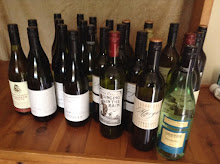
The local supermarket, one of the two major chains in town, has a bottle shop (liquor store) attached. They generally sell run of the mill wines with a few specialties so it’s not the place I usually go looking for wine on a regular basis. Occasionally they will have some decent specials, two for the price of one, 10% off six bottles or a really cheap range of cleanskins. I was there last Sunday giving it my monthly once over when I was told that all red wines were 30% off if I bought six. That sounded a good bargain to me so while the co driver cooled her heels people watching outside (what I do during quilt shop visits, so it's fair), I did a slow wander up and down the rows. I came across a bottle of Wynns Coonawarra Shiraz. That brought back a flood of memories.
My parents were always wine drinkers at mealtime. This was unusual for an Australian family in the 1950’s as most people either drank beer with food and fortified wines eg. sherry, port, muscat, after.
I was allowed my first sip at around 12 years old, a small glass of red wine diluted with 50% water. When we moved to Brisbane from Melbourne we ate out a lot. Something to do with the tropical climate and hot kitchens, I believe. My parent’s favourite restaurant was on Wickham Terrace and was called Chez Tessa. The menu contained some of the standard 1960’s fare eg. Chicken Maryland, Carpetbag Steak, Steak Diane and Coq au Vin were a few I remember. And of course there was always Bombe Alaska as a dessert. And they had a pretty substantial wine list which I think was a major attraction from my parent’s point of view. The 1960's had seen a major shift in wine production in Australia from fortifieds to sweet and sparkling table wines (Barossa Pearl, Sparkling Rhinegold, Starwine) and later in the decade to a preference for red wines of the fuller bodied Bordeaux style. This boom in red wines was sparked by a large increase in immigration particularly from Italy and Greece as well as a strong economy.

We went to Chez Tessa for my 16th birthday and I was allowed my first glass of undiluted red wine, Wynns Coonawarra Hermitage. Hermitage was the old name for Shiraz then, mirroring the use of the Shiraz grape in wines of the Hermitage Region of the Rhone in France. So that was the beginning for me of a life long love affair with wine. And nearly 50 years on I now had a bottle of the same brand to reminisce with over dinner.
Tasting Notes from Wynns: Wynns Coonawarra Estate winery is located on the world famous strip of 'Terra Rossa' soil that produces fruit with exceptional quality. Launched in 1952 as Coonawarra Estate Claret, this wine has long upheld Wynns Coonawarra Estate's reputation as a producer of premium Coonawarra Shiraz.
Typically the Wynns Coonawarra Estate Shiraz has aromas reminiscent of ground black pepper, mulberry and raspberry, through to blackberry at the riper end of the spectrum. Oak is used to mature and increase the wine's complexity, without dominating its distinctive cool-climate character. A medium bodied wine with a lengthy finish that will age gracefully in the tradition of the original Wynns Hermitage.

Thursday, August 13, 2009

Screw Cap Update

Back in early 2008, I wrote about the popularity of the screw cap in the Australian wine industry and the storage/maturation trials that were in progress using this closure particularly in the high end red wine market.
Today I read that Henschke Wines conducted a trial on their top end 'Hill of Grace' wine in 2002. Positive results have convinced the company to put 100% of the 2005 vintage of this wine under screw cap.
Current vintage 'Hill of Grace' sells for around $A560 a bottle.
Management said that 95% of customer complaints were cork related and the decision to make the move would end this situation.
They said " Classic cork is history. There is no place for it in the wine industry due to its inconsistency and unreliability. The screw cap will be the way of the wine closure until better ones are developed. We will be using them on all our top-end wines"
The trials revealed that the aroma, flavour, balance and structure were significantly better under screw cap compared to cork.

In another development, Australian bottle manufacturers have started to discontinue production of many lines of bottles with a cork mouth finish due to a lack of demand. This is forcing some wineries who are persisting with cork to look overseas for supplies. However the cork industry is trying to fight back. A major Portuguese manufacturer has released a certified organic cork which is produced in a process of washing and disinfection that is 100% chemical free and is claimed to give TCA levels (the corking "culprit") which are below 1Ng/l. Too late, I fear.

Wednesday, August 12, 2009

Exploring the Shoalhaven Coast / Part 4

Continuing the exploration of our local area, we headed north on a cool, dullish day to Sussex Inlet, a small coastal township situated beside a narrow winding stretch of water that connects the Tasman Sea (Pacific Ocean) to St George's Basin, one of the area's largest coastal lakes (407 sq. km). A population of more than 4,000 permanent residents lives in the town and the adjoining areas of Berrara, Cudmirrah and Swanhaven to the south.
With its long beaches, lakes and waterways the area is a popular tourist centre with the main activities being swimming, fishing and boating.

Once occupied by the Dhurga Aborigines, the first European settler was Jacob Ellmoos, a migrant from Schleswig-Holstein in Prussia. Ellmoos arrived in Sydney in 1878 then sailed and fished his way south. During one fishing excursion he came across Sussex Inlet and was impressed by the combination of plentiful fish stocks and the beautiful and peaceful area. After being granted 40 ha (100 acres) of land on the eastern side of the Inlet, he proceeded to bring out his parents and siblings.
The family erected a guest house, 'Christian's Minde' in 1896, the only one of its kind between Port Hacking, at the southern end of Sydney, and Eden at Twofold Bay. The name means 'Christian's Rest' after Jacob's brother, Christian, who died of pneumonia after surviving several hours in the water when his boat overturned in St George's Basin.
After lunch of a great open hamburger (with the lot) and chips at Joannies Cafe' in the one and only main street, we set off exploring. On the inlet itself we found a few areas suitable for fishing and plenty of places to launch boats for the trip upstream to the Basin. There was a lot of bird life around too. At one place there were a few friendly pelicans who came to visit. Obviously they knew where to be. There was a set of fish cleaning tables on the water's edge next to the boat ramp. No wonder they looked so healthy. I think they were a bit disappointed we didn't have anything to offer.

We were thwarted in our efforts to get to the southern shore of the Basin ( I don't think there is any access by public road) so drove south to the smaller satellite communities on the coast. Here the beaches were all but deserted. Much of the area is in the northern part of the Conjola National Park and there was definitely a hint of Spring in the air with some of the native wildflowers coming into bloom including Banksia, Wattles (Acacia sp.) and Tea tree(Leptospermum sp.).


But is was disappointing to see amongst the ground cover some domestic garden "escapees", like the purple Pig Face (Carpobrotus rossii), in a National Park. Even more concerning was a thriving group of the dreaded daisy like Fireweed (Senecio madagascariensis). Originally from Madagascar, Fireweed is an invasive plant, quickly colonising heavily grazed or neglected pastures as well as cultivated or disturbed land during the autumn to spring period. It competes strongly with existing plants for light, moisture and soil nutrients, particularly phosphorus and nitrogen. Fireweed can sometimes be poisonous to livestock, particularly cattle and horses.
This scourge is gradually creeping south from the Hunter Valley. I had an outbreak a few years ago (probably came in in some hay) and it took some effort to eliminate it. Even this year I found one lone plant growing near one of my dams. With each plant capable of producing 25,000 to 30,000 seeds in a single growing season and its ability to propagate vegetatively, it is important to get rid of it as soon as possible. It has been declared a noxious weed in New South Wales so I have reported my discovery to the 'powers that be'. Will be interesting to see if I hear back.
Driving further south past another inland coastal waterway, Swan Lake, we came to the end of the road at Berrara with a nice view looking back along the beach towards Bendalong and Pigeon House Mountain (Didhol) in the background. And even more amazing to see were two whales about 200m offshore lazily playing together, slapping the water with their huge fins and slowing raising their heads to blow out a stream of spray. We waited expectantly for a long time, camera at the ready, for a breach or at least a tail slap or two but unfortunately nothing.
So I guess that just about finishes this winter's exploration of our area. There are a few more places to see, especially around the southern shores of Jervis Bay as well as closer to home but maybe we will leave those until next year.