Tuesday, September 01, 2015

A Week to Forget / Follow Up

I was able to do an inspection of fences north of the creek when the flood waters started to recede.
Miraculously there was no damage apart from accumulated debris around posts and hanging off wires. The eastern boundary fence had debris on the top wire which is 1.2m (4ft) high so it was quite a torrent of water that went through. A major electric fence had been washed away but was easily retrieved and reset.
On Saturday the co driver and I finished off the new 'swamp fence' by installing the additional star pickets. It was undamaged.
Part of the Swamp Fence


We had the chance then to inspect the southern fences. Apart from a small wash away there were no other problems. The creek was still running high and fast and one misjudged crossing saw our gum boots filled with water. But we worked on regardless of cold feet and the squishiness (both of us from pioneer stock, obviously).
The Swamp


On Sunday we got the cattle back from the neighours through the boundary fence cocky's gate, lured by lucerne (alfalfa) hay, without any problems. The creek had dropped enough for them to get over.
We had a little talk to them and suggested that better behaviour in the future would avoid a trip to the sale yard and the inevitable BBQ.
And we took the opportunity to fix the wash away while on that side of the creek.
So that was that.
Back home!


Thanks to the (unknown) alert motorist, who made sure our cows were safe, we averted what could have been a nasty incident.
The greatest loss of the whole event was a big stack of seasoned and split firewood for next winter that I had been collecting for a year.
Gone, never to be seen again.
So now we just wait for everything to dry out.
Today is the first day of spring so with all the recently acquired soil moisture and a bit of warm weather the grass should start jumping out of the ground. That will be even more incentive for the cows to stay home.

Wednesday, August 26, 2015

A Week to Forget

Things started badly when I got an urgent phone call from my neighbour.
All my cattle had got out and had been herded into her place from the edge of the highway by a passing motorist.
This is our worst nightmare scenario.
I was puzzled to where they had got through as we had just repaired and strengthened the southern boundary fence.
A little investigation found they had made their way through a large swamp area that had always been considered impenetrable as it is extremely boggy with a mass of 3m high sword grass and entangled melaleuca scrub. It has never been fenced, even by the previous owner.
Well, after 25 years, that myth was finally debunked!
It was impossible to join up the two sections of boundary fence through the swamp due to the terrain so we had to fence off the entire area. This was a major job estimated to take 3 days.
My neighbour agreed to keep my cattle at their place while this was attended to. I transported hay over there to keep them fed.
So the co driver and I , with a lot of help and expertise from Neighbour Bob, got to it. Indeed on the afternoon of the third day we had it basically finished albeit tired, sore, insect bitten and barb nicked. We were short a few star pickets. They could be sourced and put in the next day. Then we could get the cattle back.

Or so we thought.
That night the heavens opened up and for three days we endured over 300mm (12.5inches) of relentless rain.
A deep low pressure system had formed off the coast and was not going anywhere.
Our creek flooded for what was probably the second worst time.
So not only can't we finish the 'swamp fence' but the cattle are 'stranded' on the other side of the flooded creek and who knows what other fence damage the surging water has done.
All we can do is sit and wait for the rain to stop (it's mainly showers now) and the flood water to recede.
But we are not too badly off compared to some others.
The areas to the north of us have had a lot more rain and many houses have been evacuated. Roads are cut in many places. A dam was, at one stage, in danger of collapsing.
Reports can be found here.

Sunday, August 16, 2015

Book Reviews / August 2015

Continuing on with my list of Amazon freebies, I thought A Saucy Murder with a wine country theme might convince me to read more murder mysteries.
Unfortunately this was not the case.
This book falls into my 'silly' category.
Very simplistic plot, with lots of suspects, wanting the reader to believe, initially, a sauce (that everyone ate but with only one consumer dead) could be the murder 'weapon'.
Plus the author seems to be a bit of a food snob and a brand name dropper.


You should never judge a book by its cover but the cartoon nature of this one was a dead giveaway as to the contents.
A lightweight time waster.
At the age of three Leslie White was taken from a workhouse and put into a children's home by his single mother. He spent twelve years there. He went "into service" at the age of 15 and worked his way up in various aristocratic households.
But he got sick of serving the rich and famous for little financial gain and moved to Switzerland to become a waiter at two important hotels earning substantially more money. It was here he met whom he thought would be the love of his life but WWII intervened and he was forced to leave. He never saw her again.
He joined the army and was evacuated from France during the dark days of the conflict at the time of Dunkirk before being sent to Italy. In between while stationed on the Isle of Mann he met his future wife.
From Workhouse to Vienna is a long book with a great deal of detail, much of it trivial and unfortunately repetitive, which can lead to skimming. But that aside it is an interesting insight into life in Britain between the wars. The plight of the British working class and the divide between the rich and poor in the 1920s and 30s is laid bare.


The final chapters concern Les's army service during World War II in a special services unit that operated behind enemy lines.These vividly describe the hardships and perils of war. Written by the author from discussions with and notes from Les, I found this book fascinating from a social history point of view.
The poignant letters from him to his wife and subsequently her and a daughter he had never seen are a worthwhile inclusion.
All the book needs is a good editor.
The Man Who Never Was should not be confused with the 1953 book (and 1956 film) of the same name. That was a (almost) factual account of Operation Mincemeat during WWII. This book is also about WWII but is fictional and covers far different subject matter. Why the author would use the same title is a mystery to me.


The book has two time lines, one at the end of WW11 and the other 40 years later.
In the 1980s during the demolition of an industrial complex a body is found in the foundations. From the objects found near the remains it appears this is a German Luftwaffe pilot who had been in a nearby POW camp.
The police of the day begin what seems to be an ordinary murder investigation.
But it isn't.
Something more sinister has taken place and the British secret service becomes involved.
Keeping the plot and the characters straight takes a bit of effort with this book but it is worth the effort.
HRC: State Secrets and the Rebirth of Hillary Clinton covers the period from her surprising defeat in the 2008 Democratic primary through her reconciliation with the Obama Democrats, her appointment to and tireless work as Secretary of State, the demise of Osama bin Laden, the reelection of Obama with Bill Clinton 'on board', the Benghazi Affair and her stepping down in early 2013 for what was to be her preparation for another run at the presidency.


Lots of details and names (too many for the outsider?) to absorb in this one. But it does give some insight into the behind the scenes political manoeuvring within the USA system as well as the trials and tribulations of a major power's world diplomacy agenda.
Some have described the book as a four hundred page Hillary 'love fest'. It is easy to see where that opinion comes from.
Probably a book for the political junkie or one for those who want to know a little more about the mindset of the person who could possibly be (given the dubious quality of the gaggle of the 17 GOP candidates) the next president of the USA.
Australia is one of the few countries which has attended every modern Olympic Games.
Dangerous Games is the story of the team of 33 (29 men and 4 women) who made their way to the Berlin games of 1936.
It is also a story of the rise of National Socialism in Germany and the use of the Olympics as propaganda tool to legitimize the NAZI regime.
Olympic sports in Australia in the 1930s were recreational past times with those excelling doing so only from natural raw talent.
There were few facilities eg. no cinders tracks; no freshwater swimming pools, not many coaches, no money and little government interest.
The team was supposedly selected on times/heights/distances based on world standards but really was influenced by state rivalry. The country was only 35 years old and colonial attitudes still prevailed to a point where many of 'the best' missed out.
So it was a boat full of innocents and a minimal support group who set sail for the long six week journey to Europe.


What they experienced when they got there opened their eyes to how sport was viewed by other world nations at the time. Turns out it was already a business and success was a matter of national pride rather than an athlete's individual achievement. Baron Pierre de Coubertin's Olympic ideals were already in decay.
Author Larry Writer says "I came to believe that there was room among (the) excellent literature on the XIth Olympiad for a book about the seldom recounted experiences of the Australian team who competed. Who was in the team? How did they fare? What did they think of Hitler and his Nazis, and of Jesse Owens? Of each other? What was it like to be in old Berlin before it was destroyed by war?"
This, and more, he has achieved in an entertaining,well researched, interview based book.
Recommended for the sports nut and the historian.
And Leni Riefenstahl's stunningly photographed Olympia, the propaganda film of the Berlin games, can be viewed in its entirety on YouTube.
Update 10/11/2016"Probably a book for the political junkie or one for those who want to know a little more about the mindset of the person who could possibly be (given the dubious quality of the gaggle of the 17 GOP candidates) the next president of the USA."
How wrong (sadly ) was I!!!!!! 

Sunday, August 09, 2015

Another Trip to Canberra

Early morning start with the temperature down around 0°C which is very low, even in winter, for our part of the world.
The drive heads west from Batemans Bay along the Kings Highway up over the Clyde Mountain pass, through Braidwood and Bungendore and onto the capital.
I always enjoy the first part of the trip through the foothills of the Great Dividing Range. The scenery of the tall, straight and mottle barked Spotted Gums with the Burrawang understorey is unique to the south coast of New South Wales. It then changes into dense temperate rainforest as you start the climb.


The Kings Highway is notoriously narrow and winding and is the scene of many accidents. They are working on widening the road but the pass cut into the side of the mountain always presents problems with numerous landslips occurring, especially after heavy rain. They are constantly shoring up the mountainside. The pass section of the road is very steep with numerous hairpin bends and has quite a few safety ramps that are used by heavy vehicles which have lost control of speed or when their brakes have failed.
For a look at the road check out this YouTube video of the descent (speeded up to 40km in 7 minutes).
Note the landslip fences. For the concerned, the speed signs are in km/hr, not mph. And yes, we do drive on the 'other side' of the road.
When we got over the mountain pass the frost was so heavy it looked as though it had snowed. There was even some black ice.
Between the top of the pass and Canberra the scenery (and vegetation) once again changes dramatically with forest giving way to sparsely wooded rolling plains. This is sheep and cattle country.
It is also kangaroo country and the roadside is always littered with road kill. It can be a bit daunting driving this road at either dawn or dusk when these animals are active. Some are very large and can cause a lot of damage to a car when hit. Many of the carcasses have crosses sprayed on them as animal welfare volunteers check them out for joeys (babies in the pouches) who may be still alive. The cross signifies a check as been done. I noticed a few wombats had suffered the same fate.
Our main aim this trip was to visit the Canberra Quilt Show.
There was some amazing work on display. I liked the art quilts but many of the traditional ones had such intricate work there must have been hours (days/months?) of work involved.
Some examples:


The co driver has more show quilt pictures on her blog.
Then after another Chinese meal in Dickson for a late lunch it was back home down the pass 'pre kangaroo time'.

Thursday, August 06, 2015

Sharks!

By now I guess most people have seen the video of the shark attack on Australian surfer, Mick Fanning, during the final of the Jeffreys Bay WSL competition in South Africa last month.
By some miracle he was uninjured.
This is every surfer's nightmare.
There have been a number of fatal shark attacks in Australia this year.
They appear to be on the increase and shark sightings are more common place.
Surfers in our area have reported a lot more shark activity.

I had been surfing since the early 1960s and only gave it up a few years ago due to a recurring shoulder injury. During that time I had three close up encounters with sharks. The most memorable one was at Angourie on the north coast of New South Wales many years ago. This is a point reef break and the water is dark.
There was just my mate and I in the water. He suddenly yelled "feet up" and a big shark circled us on the surface twice before a swish of the tail and he was gone. We caught the next wave into the beach.
Surfers are constantly aware of the danger and you are subconsciously always keeping an eye out. But you can't let it 'get to you' or you would never go in the water.
I substituted my surf board with a belly board and the co driver and I had fun for a few years doing this.
But last year I began to feel shark phobia creeping up on me and now I am happy not to go into the water. Fifty years of denial may have finally caught up.
The co driver has suggested some therapy and has offered her crocheting skills. I have politely refused the offer.


Monday, July 27, 2015

Australian Vintage 2015 Report

The Winemakers' Federation of Australia has released its 2015 Vintage report.
In summary:  
2015 Winegrape Crush
The 2015 Australian grape crush is 1.67 million tonnes, just a 0.4% increase from last year’s crush of 1.66 million tonnes.
This figure is just below the 8-year average of 1.70 million tonnes.
The slight increase in overall crush is attributable to Riverina’s increase in yields, offset by lower yields in Murray Darling and most cooler temperate regions.
Crush by Variety
The 2015 red crush stands at 835,500 tonnes and the white crush stands at 834,000 tonnes.
Compared to last vintage, the 2015 red crush has decreased by 4% or 30,751 tonnes and the white crush has increased by 5% or 37,524 tonnes.

The top three red varieties by crush were Shiraz, Cabernet Sauvignon and Merlot, together accounting for 85% of the total red crush. Shiraz continues to dominate with 47% of the total red crush though with a 6% decrease from last year.
In the whites, Chardonnay still dominates the white crush at 45%, an increase of 28,726 tonnes from last year. Sauvignon Blanc remains in second place with 11%, followed by Pinot Gris/Grigio.
Crush by State and Region
Looking at the raw crush data by state/regions, Murray Darling-Swan Hill accounted for 382,000 tonnes or 25% of the total crush, New South Wales at 332,000 tonnes or 22%, Victoria at 60,000 or 4%, South Australia at 717,000 tonnes or 47%, Western Australia at 30,000 or 2%
ACT, Queensland and Tasmania contribute under 1% of the total crush.
Full report here.

Saturday, July 25, 2015

A Trip to Canberra

As mentioned previously, we needed to go to Canberra for the co driver's citizenship business.
To make the trip more relaxed we went the day before and stayed at our favourite hotel, the Aria, in Ainslie.
On the way up we stopped in the historic town of Braidwood and had lunch at The Albion. This is an old country pub that has been converted to a cafe/restaurant.
The food here is 'modern' Australian and is always good. Very popular for a family Sunday lunch judging from the crowd.
Ainslie is next to the suburb of Dickson. This is a well known Asian restaurant hub in Canberra and there are multiple choices.
We selected Rasa Sayang which is a bit of an institution having been around for almost 30 years.
They specialize in Malaysian cuisine and it did not disappoint.
The Beef Rendang and Kung Po chicken together with coconut rice were delicious.
We also snuck in a shared steamed dim sum starter.
Next morning we headed into the CBD (downtown) and had our usual great breakfast at Debacle.
They had moved a few doors down the same street into new modern premises and have maintained the same high standard. It is basically a bar and while it apparently 'rocks' in the evening, it caters to the breakfast and coffee crowd in the morning.
While the co driver was at the Department of Immigration, I drove up to the top of Mount Ainslie to once again enjoy the view across Lake Burley Griffin with many of Canberra's national attractions (Australian War Memorial, Anzac Parade, the new and old Parliament Houses) and the mountain ranges (some with a touch of snow) surrounding the city in the background.
I wasn't alone.
Two bus tours full of noisy school kids must have also had an early start to their day.
Then on the way home, after some yarn shopping in Manuka, we again stopped in Braidwood for lunch at the famous bakery. What else would the 'new' Australian want to celebrate her recently acquired status with other than a meat pie and then lamingtons for dessert.
What you notice when you have driven up the winding Clyde Mountain pass from the coast onto the Great Diving Range in winter is the significant drop in temperature. Canberra was -4°C in the morning. We have had a particularly cold winter this year with snow falls in places where it usually doesn't. Major roads have been closed for significant periods (no one has snow clearing equipment) and many schools have had 'snow days'.
This has made the news all over the world. The picture below was in a German newspaper (thanks Dieter) and is of a vineyard in the Orange District of New South Wales. Orange is no stranger to snow however. I studied horticulture at the University there and was snowed on a few times doing pruning practicals in the apple orchards.
Photo: Bill Shrapnel, Colmar Estate, Orange


Tuesday, July 21, 2015

The Co-Driver Becomes an Aussie

The co driver first came to Australia in 2001 and visited quite often after that.
Deciding to stay for longer periods she had to negotiate the tricky business of extending the limited stay tourist visas mainly by paying for an extension or, when that option was no longer available, flying from Australia to New Zealand and back.
Then an application for permanent residency saw both of us involved in extended 'negotiations' with the Department of Immigration which finally, after a long and sometimes frustrating struggle, resulted in a temporary then permanent residency visa. The latter has to be renewed every five years.
The next step was obviously citizenship which the Australian government encourages all qualifying permanent residents to apply for.


Being seasoned veterans of the Department of Immigration form maze (this one only had 22 pages!), we submitted all the necessary paperwork and information.
We must have done everything right as we very quickly got acknowledgement back.
On Sunday we drove to Canberra, the nation's capital, for her interview and citizenship test early the next day.
All went well with the former and she passed the latter with flying colours.
She was in!
The final step is to attended the citizenship ceremony organized by the local council (county) where she will take the pledge and receive her certificate from the Lord Mayor. A date has yet to be finalized.
Then she will officially be an Aussie.
Next step will be obtaining an Australian passport. This will make travel in and out of the country a lot easier.
She also will need to register to vote as voting is compulsory in Australia.
Both the Australian and USA governments recognize dual citizenship so she also remains a citizen of the latter.

Thursday, July 16, 2015

Book Reviews / July 2015

Every now and again I trawl through Amazon's free Kindle book listings. It can take some time selecting what may be of interest and can be a hit and miss affair. Seeing we were going to spend many hours in planes in June and, needing some lightweight reading distraction, I went through the exercise.
Below are some of the results of the search.
Adventures in Spain introduces us to a young Scottish lady who leaves her teaching position in Glasgow to pursue a lifetime ambition of living in a foreign country and becoming immersed in its culture and language.
She moves to Spain during the Franco years and teaches in a bilingual school as well as tutoring English privately.


As is typical of this genre, you will get a chuckle and perhaps even a laugh out loud moment as you read about her inevitable language problems, the memorable and sometimes quirky people she encounters and the situations she gets herself into.
Travel along with Sandra as she becomes a married woman and mother during the turbulent years of Franco's regime and the Spanish transition to democracy (La Transición) following his demise.
Normally I am not 'into' murder mysteries but Rosemary for Remembrance came with lots of positive feedback.
It is the story of a young attorney investigating the death of her elderly client's sister in what appeared to be a hit and run.
The thing is it happened more than 50 years before and the inquest then listed the death as misadventure.
The client is convinced it was murder and wants the matter cleared up before she dies.
From initial inquiries it is obvious that there has been some sort of cover up. Many of the dead woman's contemporaries are still alive and the attorney's investigations stir up a hornet's nest to a point where she is in danger.
I have to say I really liked this book with all its twists and turns, some great characters and a good blend of present and past narrative.
Recommended.
Sometimes you should really take note of an Amazon category when deciding on books but, after looking through 30 or so web pages, the brain tends to numb. I found out half way through that The Art of Falling fell under 'Women's Romance'  (I know, in hindsight, the cover says it all) so it is what it says on the label.


Entertaining, light and fluffy. A feel good read with all the usual cliches of the genre.
Back in September 2013 I reviewed the first book in the Ben Hood series by Australian author Drew Lindsay. Black Mountain Affair is the second book and written in the same style. Again a bit of reality suspension is needed but the characters are larger than life, the dialogue and humour genuinely Australian as is the North Queensland setting.


The plot may be a bit contrived to include an Aboriginal Australian theme but who cares.
An entertaining and worthwhile read if you have a few hours to spare.
I grew up with The Three Stooges, Abbott and Costello and Martin and Lewis on the big screen. They were standard fare at the Saturday matinees. And Laurel and Hardy re runs were on TV.


This book covers all their careers and personal lives and is an interesting insight into these legends of comedy.
One for the fans.
Bridget  is the story of  the author's great grandmother Bridget Vaughn Wilson who left Ireland penniless in 1851 to escape starvation during the potato famine.
She spent most of her subsequent life in Savannah GA, where she faced many tragedies and experienced many events we now read about in history books eg. The Civil War. Despite being labeled an historic novel this story is true and is the result of many years of research by the author.


Although a relative short book, I found the background to the great surge of Irish emigration to the USA, the horrific conditions endured during the journey and the struggle to begin a new life in a foreign country fascinating.
Flowers in the Snow is a story of the racial divide in 'the South' during the 1960s through the eyes of a young girl with a social conscience. But living in a small segregated town with her KKK father and subjugated mother not only puts her in conflict with her parents but also with the rest of the white residents especially after she defends an elderly black man who is beaten for drinking out of a whites only water fountain.


This is the time of the Civil Rights Movement where those who felt threatened by this wave of change employed the Jim Crow system of "terror as a means of social control".
Despite being a fictional work, a great many of the reviews from readers who had lived through this ugly period of USA history complimented the book on its authentic content.
It is at times violent and confronting but it is also a love story about those thrust together at a time of conflict.
And the unexpected twist at the end is a bonus.
An excellent book and incentive to read the following two in the series.

Thursday, July 09, 2015

Some of the Daughter's Honeymoon Photos

SINGAPORE


DUBAI


PARIS


NEW YORK CITY

Wednesday, July 08, 2015

A Winter Date Day

We had been advised that our power would be off from 8am to 4pm on Wednesday due to power line relocation brought about by the major roadworks on the highway at the end of our road.
We decided to do a date day in town.
So it was into Milton for breakfast.
We often go to Brown Sugar in this village where we get good coffee, a breakfast roll (egg plus bacon plus tomato sauce) for me and a breakfast bowl (scrambled eggs, smoked salmon, quinoa and grilled mushrooms on a bed of fresh spinach) for the co driver. The place was crowded and we needed to sit outside on a beautiful but unseasonably cold winter's morning. But the sun was shining and we were out of the breeze and it turned out to be quite cosy.
Next I took the co driver up to local retirement home where she visited our neighbour, Norma who is now in care. She is the owner of the race horses on the property behind us we sometimes help feed.
Then it was into Ulladulla where we spent a few hours in the new library. It is part of the reconstructed civic centre that had its first birthday last week. All very modern with all the latest gizmos. Gone are the days when libraries were quiet stuffy places.

We both had a hankering for Thai food and went to one of our favourite eateries, Yes I Am (get it?) for lunch. I had stir fried chicken and fried rice and the co driver, stir fried chicken with basil and chili. Excellent as always.
After lunch we drove down to Bawley Point where one of our acquaintances runs very swish holiday cabins. She also makes cheese and bakes bread as a sideline. Her feta with various added fresh herbs is great. We like the chili and garlic as well as the rosemary. We asked her to make chili and lime this time round as an experiment. This with a slice of fresh multi grain soda bread with a glass of cold Riesling would make a nice pre dinner snack (although on this day we didn't need one).
We were home a little before the power came back on which gave us time to stoke up the fire in preparation for another cold evening.
Another successful date day.

Thursday, July 02, 2015

Dan the Man

Living in a rural area limits the ability to purchase a wide range of good wine locally.
The supermarket wine shops and those attached to the pubs have a limited and pretty much a run of the mill range.
So we usually source our wine during our trips away or order it on line from specific wineries or specialist wine shops.
One of the latter is Dan Murphy's.
They belong to the Woolworths chain of supermarkets and have a huge selection from around the world at very competitive prices.
Their shops are a pleasure to browse through.


Founded by Daniel Francis Murphy, son of a wine merchant in 1952, there are now over 140 stores Australia wide and are known affectionately by wine people as "Dan the Man".
The nearest stores to us were a few hours drive away, either in Canberra or Wollongong, so we relied on their on line service which, for the most, was reliable and quick.
But I like to browse physically not virtually.
Woolworths applied for a Dan Murphy's licence in Nowra an hour's drive north of us.
There were plenty of objections from the local community who didn't want another source of cheap liquor in the town and from the established liquor retailers who were afraid their businesses would come under pressure from this aggressive competitor. This from a town of 35,000 who will soon have three McDonalds outlets!


The approval was held up for some years but eventually granted under some strict conditions.
Work started on the stand alone store early this year.
And now it is open!!!!!
We stopped by on our way home from Sydney on Monday.
WOW!
An oenophile heaven. 
Now I know how the co driver feels in a quilt shop. And here she has to wait for me rather than the other way around.
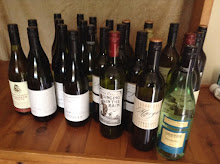
I bought a selection of Pinot Noir (Australian and New Zealand) in my on going quest to find the best under $20 (there are 86 in this category at Murphy's) as well as some unkown Rioja reds of various classification (Rioja, Crianza, Reserva).
The results of these purchases will eventually turn up on "Our 2015 Wine List" on the blog side bar.

Thursday, June 25, 2015

Trip to Bali / The Daughter's Wedding / Part 3

A miscellaneous collage of pictures from the trip that didn't make the other posts.


Wednesday, June 24, 2015

Trip to Bali / Singapore Stopovers

I first visited Singapore in the mid 1960s. It had just gained independence having been ousted from the Federation of Malaya after only three tenuous years in that relationship.
This was my first introduction to Asia.
It was a bit of a culture shock for an Australian coming from the somewhat cloistered pseudo British environment of the suburbs of Melbourne then Brisbane.
But I found it fascinating and loved the organized chaos. The place was always buzzing. Crowded streets and lane ways, vibrant markets and the street hawkers, a bustling harbour as well as the colonial architecture and diverse racial mix. And then there was the food like chicken rice, hokkien mee and chilli crab
In many subsequent visits over the last 50 years I have seen the city grow and change.
Development comes at a cost of course and many of my favourite places have gone.
The old has made way for the new.
But it is still an exciting city to visit.
The Singapore I remember from the 1960s


Singapore Today


This trip we spent one night on the way to Bali and two on the way back to Sydney.
On the outward leg we made a quick trip to Emerald Hill Road to see a little of  the preserved Singapore and have a cold beer at No.5 then dumplings at Din Tai Fung.

Next morning we tried to beat the heat with an early morning start to visit Arab Street and potentially buy some quilt fabric.
But most of the shops were closed until 10am and it was particularly steamy in the narrow streets.
We waved the white flag after visiting the mosque (sadly covered in scaffolding) and headed for an air conditioned coffee shop.


On our return after Bali, we ventured down to Marina Bay for some hawker food and to watch the Super Tree Grove light show. In the early days food hawkers used to roam the streets with their carts selling all manner of food. Due to health reasons they were taken off the streets and relocated in licensed hawker centers. Now known as food centers, these exist all over Singapore, some with a long history. Every local you talk to has a favorite or one where one specialized dish can be sourced. The center at the huge Marina Bay Sands shopping complex must be one of the least traditional but the food there was good.
On our last visit to Singapore we stopped by Gardens by the Bay and the Super Tree Grove but missed the light and sound show.
This time we didn't.


WOW! Impressive.
The pictures below only give a hint of how spectacular the show is. Check out YouTube for any number of videos of the entire show.


Next morning we headed for the Singapore Art Museum and its annex the Q8.
The exhibitions which focus on contemporary art in Singapore, Southeast Asia and Asia in this lovely old building, a restored 19th century mission school, were extremely impressive. Paintings, sculpture, photography, video and mixed media were represented.
These included Thai artist Kamin Lertchaiprasert's 366 small Buddhist-inspired wood sculptures - one for each day of a leap year. This was a favorite.
Image: Ralf Tooten Photography


And it is quite a surprise in a darkened room to suddenly come face to face with a "sick" Fidel Castro in a hospital bed. He and four other now dead communist leaders (Lenin, Mao, Hồ Chí Minh, Kim Jong-il) have been sculptured in silica gel by Chinese artist Shen Shaomin and are eerily life-like.
Strait Times Photo: Neo Xiaobin


Q8 was a children's activity center with all sorts of hands on things to do. The kids there, mainly kindergarten and day care groups, were having fun. So did we!
Then it was a short walk to the National Museum of Singapore.
There they had an exhibition on the 700 years of Singapore history plus an in memoriam exhibition to the late Lee Kuan Yew the first Prime Minister and founding father of modern Singapore.


Time for lunch at one of our favourite restaurants (under our hotel), Osaka Ohsho. This is a Japanese fast food chain that specializes in gyoza but has other yummy stuff as well. You order via a computer at the table. And at the front counter there are plastic replicas of all the available food. Love this place!


After a pleasant afternoon siesta we met up with the newlyweds for dinner.
A small restaurant in Mong Kok, Hong Kong, with its diminutive dumplings was started by former Four Seasons Hong Kong dim sum chef Mak Kwai Pui.
Named Tim Ho Wan, it was a sensational success earning a Michelin star.


Now branches have opened up all over, including Sydney. There is one in Singapore and we all wanted to try it. They don't accept bookings so everyone lines up outside and are given a clip board with a menu to tick off what you want to eat. We got a table very quickly and the food started arriving.
This is without doubt the best dim sum restaurant I have ever been to. The baked BBQ pork buns were to die for.
The other dishes were not far behind. The co driver even tried the chicken feet.


Where else can you eat at a Michelin star restaurant for $20/head including drinks?
Next morning we were up early for our uneventful flight to Sydney.
It was pouring rain and cold on our arrival. We had again booked at the International Airport hotel with the intention of visiting the Sydney quilt show the next day. But the weather was so bad when we awoke, we bagged on that and decided to drive home.
Sunshine and blue skies eventually welcomed us a few kilometers from our final destination.