Wednesday, August 22, 2012
Thursday, August 16, 2012
A Fishing Trip to Narooma
The co driver had a quilting class in Moruya about an hour’s drive south so, after dropping her off, I continued on for another 45 minutes to Narooma to do a bit of fishing.
It turned out to be a pretty nasty day with a cold howling southerly wind so, looking for some protection from the elements, I headed down to the small harbour.
Narooma sits at the entrance to Wagonga Inlet which now empties into the sea through a man made breakwater. The bar is notorious for boating accidents and this day it was in full flight with huge waves crashing over it. No one would be heading out to sea this day except maybe for Marine Rescue.
The view from the end of the breakwater along the rugged coast was quite beautiful despite the bad conditions.
Out to sea, about 8km offshore, is Montague Island.
This is a unique NSW south coast destination being a nature reserve which is accessible only by boat for day tours or for an overnight stay in the island's accommodation in the restored lighthouse keepers quarters.
The island lies within the Batemans Marine Park and features thousands of years of ongoing Aboriginal heritage and over 125 years of lighthouse history.
The lighthouse was built in 1881 and automated in 1986 and then demanned in 1987. It is 21 metres tall and the light is 80 metres above sea level with a nominal range of 20 nautical miles (37 km)
It has the state’s largest little penguin colony, approximately 12,000, as well as a fur seal colony. The seasonably variable wildlife includes Crested Terns and Shearwaters (mutton birds).
Obviously the rough conditions had upset the local seals. There were a few splashing about in the relative calmness behind the sea wall and one was even asleep on the rocks.
I headed back to the wharf and spent a few hours casting into the boat channel.
Suddenly my line went taught and it took some effort to reel it in. But it was deadweight. Seaweed or a snag of some sort I thought.
But no, it was huge red octopus!
I had no chance with the light gear I was using to get it up onto the wharf so thought I might have to cut the line. Finally after quite a struggle with much squirting of water and black ink, he managed to get himself free.
So it was sausages for dinner, not calamari.
It turned out to be a pretty nasty day with a cold howling southerly wind so, looking for some protection from the elements, I headed down to the small harbour.
Narooma sits at the entrance to Wagonga Inlet which now empties into the sea through a man made breakwater. The bar is notorious for boating accidents and this day it was in full flight with huge waves crashing over it. No one would be heading out to sea this day except maybe for Marine Rescue.
The view from the end of the breakwater along the rugged coast was quite beautiful despite the bad conditions.
Out to sea, about 8km offshore, is Montague Island.
This is a unique NSW south coast destination being a nature reserve which is accessible only by boat for day tours or for an overnight stay in the island's accommodation in the restored lighthouse keepers quarters.
The island lies within the Batemans Marine Park and features thousands of years of ongoing Aboriginal heritage and over 125 years of lighthouse history.
The lighthouse was built in 1881 and automated in 1986 and then demanned in 1987. It is 21 metres tall and the light is 80 metres above sea level with a nominal range of 20 nautical miles (37 km)
It has the state’s largest little penguin colony, approximately 12,000, as well as a fur seal colony. The seasonably variable wildlife includes Crested Terns and Shearwaters (mutton birds).
Obviously the rough conditions had upset the local seals. There were a few splashing about in the relative calmness behind the sea wall and one was even asleep on the rocks.
I headed back to the wharf and spent a few hours casting into the boat channel.
Suddenly my line went taught and it took some effort to reel it in. But it was deadweight. Seaweed or a snag of some sort I thought.
But no, it was huge red octopus!
I had no chance with the light gear I was using to get it up onto the wharf so thought I might have to cut the line. Finally after quite a struggle with much squirting of water and black ink, he managed to get himself free.
So it was sausages for dinner, not calamari.
Monday, August 13, 2012
The Olympic Games Wrap Up
Well, it's all over!
Two weeks of great sport, a few upsets, the usual controversy and, as always, a little bit of scandal.
London did a great job and thankfully the English summer didn't live up to its reputation.
Our satellite television coverage could not be faulted. Every sport, every heat and final, every medal presentation covered over eight channels. For us the action was live throughout the night and into the early morning due to the 9 hour time difference with replays during the day.
Despite all good intentions we did not manage one overnighter. We are getting old!
My favourite moments?
Usain Bolt, the Jamaican sprinter burning up the track in the 100m, 200m and 4 x100m relay, the latter in world record time.
Kenya's David Rudisha's 800m win in world record time dragging everyone behind him in the race to personal bests and national records.
USA swimmer Michael Phelp's four golds and two silvers in the pool to add to his previous impressive collection.
Australian junior athlete Steven Solomon, controversially picked to run the 400m over more fancied runners who qualified for both semi final and final with personal best times. One to watch for the future.
Australia did not do as well as expected. We really never do. Fifteen gold were predicted but that was always a big ask.
We ended up with 7 gold, 16 sliver and 12 bronze medals and number 10 in the rankings.
We always have high hopes for many athletes and somehow take it personally when they don't perform.
But this time round, the media really got stuck into many of them.
For some reason 'A Silver' was considered a failure. It was obvious from many comments that the general public did not share this view.
It took our long jumper, Mitchell Watt, a silver medal winner to give the media a bit of a serve about their attitude.
So now we wait on the dust to settle and the inevitable post mortems.
But for me it's what happens on the track, in the pool, on the field etc. that counts, not the bean counters' performance analysis.
Only another four years to go until Rio!
Can't wait!
Two weeks of great sport, a few upsets, the usual controversy and, as always, a little bit of scandal.
London did a great job and thankfully the English summer didn't live up to its reputation.
Our satellite television coverage could not be faulted. Every sport, every heat and final, every medal presentation covered over eight channels. For us the action was live throughout the night and into the early morning due to the 9 hour time difference with replays during the day.
Despite all good intentions we did not manage one overnighter. We are getting old!
My favourite moments?
Usain Bolt, the Jamaican sprinter burning up the track in the 100m, 200m and 4 x100m relay, the latter in world record time.
Kenya's David Rudisha's 800m win in world record time dragging everyone behind him in the race to personal bests and national records.
USA swimmer Michael Phelp's four golds and two silvers in the pool to add to his previous impressive collection.
Australian junior athlete Steven Solomon, controversially picked to run the 400m over more fancied runners who qualified for both semi final and final with personal best times. One to watch for the future.
Australia did not do as well as expected. We really never do. Fifteen gold were predicted but that was always a big ask.
We ended up with 7 gold, 16 sliver and 12 bronze medals and number 10 in the rankings.
We always have high hopes for many athletes and somehow take it personally when they don't perform.
But this time round, the media really got stuck into many of them.
For some reason 'A Silver' was considered a failure. It was obvious from many comments that the general public did not share this view.
It took our long jumper, Mitchell Watt, a silver medal winner to give the media a bit of a serve about their attitude.
So now we wait on the dust to settle and the inevitable post mortems.
But for me it's what happens on the track, in the pool, on the field etc. that counts, not the bean counters' performance analysis.
Only another four years to go until Rio!
Can't wait!
Wednesday, August 01, 2012
August Update
Life as we know it has come to a bit of a standstill. Over the next two weeks we will become nocturnal beings glued to the television for all the excitement of the Olympic Games in London.
But we have worked extremely hard over the last month getting things on the farm in order so we could take some time off.
The spray program against the bracken seems to have gone well with huge amounts dying off over the last few months.
Because of our late nights we needed extra firewood so we have been attacking some of the larger fallen trees around the place.
Cutting it up with the chain saw is an easy job but splitting it into usable size is a harder one.
I am well supervised by the co driver who obviously has inherited some lumberjack skills from somewhere and is sensitive to the dangers of dealing with big trees, even those lying on the ground.
Suffice to say that one did roll suddenly (luckily away from me) during the cutting so her concern is justified.
We also revamped the Pinot Noir vineyard. The initial netting height was too low making it uncomfortable to work under and somewhat limiting the growth of the vines. It was also in two pieces which meant constant repair work along the seam.
So with the help of Stirls, we took off all the old (and rotting) netting, put in higher stakes and threw one piece of 10m wide netting to cover the whole area. Now we can work in comfort and the vines will be able to grow longer shoots ie. extra leaves, to improve their fruit ripening capability.
Stirls also helped in the clean up/burn off which gets rid of all the non usable fallen timber and is part of a bush fire prevention tactic recommended by the authorities. This is a huge job and he will be back soon to continue. We need to do as much as we can before fire restrictions come back on on the 1st October.
And last but not least, the vegetable garden has been dismantled and will be left to return to grass. I managed to salvage a lot of star pickets during this exercise despite it meaning a lot of extra work. But as my father used to say "many a mickle makes a muckle".
Phew! Enough work already!
Where is the remote?
But we have worked extremely hard over the last month getting things on the farm in order so we could take some time off.
The spray program against the bracken seems to have gone well with huge amounts dying off over the last few months.
Because of our late nights we needed extra firewood so we have been attacking some of the larger fallen trees around the place.
Cutting it up with the chain saw is an easy job but splitting it into usable size is a harder one.
I am well supervised by the co driver who obviously has inherited some lumberjack skills from somewhere and is sensitive to the dangers of dealing with big trees, even those lying on the ground.
Suffice to say that one did roll suddenly (luckily away from me) during the cutting so her concern is justified.
We also revamped the Pinot Noir vineyard. The initial netting height was too low making it uncomfortable to work under and somewhat limiting the growth of the vines. It was also in two pieces which meant constant repair work along the seam.
Stirls also helped in the clean up/burn off which gets rid of all the non usable fallen timber and is part of a bush fire prevention tactic recommended by the authorities. This is a huge job and he will be back soon to continue. We need to do as much as we can before fire restrictions come back on on the 1st October.
And last but not least, the vegetable garden has been dismantled and will be left to return to grass. I managed to salvage a lot of star pickets during this exercise despite it meaning a lot of extra work. But as my father used to say "many a mickle makes a muckle".
Phew! Enough work already!
Where is the remote?
Saturday, July 28, 2012
Marmalade Making 101
Following up on the citrus season blog, the co driver armed herself with various recipes, a boiler, fruit, sugar and jars for her first attempt at marmalade making.
After looking at the recipes, it was decided that the double cooked version might be a little too adventurous for a first attempt so she settled on a mixed fruit version.
The oranges, lemons and grapefruit were all finely sliced and added with water to the boiler.
Pips, discarded peel and pith were put into a muslin bag and also put in.
After a few hours of boiling the sugar was finally added.
Now came the hard part.
When will it be ready? No one wants runny jam.
The pectin test is the conventional way.
There are varying ways of doing this. After a few unsatisfactory attempts, we finally settled on the method in the Australian Women's Weekly Cook Book published way back in the dark ages! All the measurements are imperial in the book which is a little disconcerting at first for us who have struggled for the last 45 years to forget all that stuff. No problem for the co driver however who is by now well and truly bimetrological.
So she put some saucers in the fridge and after 30 minutes spooned a little jam onto one and then back in the fridge. A few minutes later she ran her finger through the jam until finally by saucer #5 it was gelling and crinkling to the touch.
Then she waited a thin skin began to form on the jam in the boiler (this ensures the fruit pieces stay in suspension in the jar) then filled the jars that had been sterilizing in the oven.
Then on with the lids!
This morning I had some on toast!
Delicious!
Now she is ready for the double cooked version.
After looking at the recipes, it was decided that the double cooked version might be a little too adventurous for a first attempt so she settled on a mixed fruit version.
The oranges, lemons and grapefruit were all finely sliced and added with water to the boiler.
Pips, discarded peel and pith were put into a muslin bag and also put in.
After a few hours of boiling the sugar was finally added.
Now came the hard part.
When will it be ready? No one wants runny jam.
The pectin test is the conventional way.
There are varying ways of doing this. After a few unsatisfactory attempts, we finally settled on the method in the Australian Women's Weekly Cook Book published way back in the dark ages! All the measurements are imperial in the book which is a little disconcerting at first for us who have struggled for the last 45 years to forget all that stuff. No problem for the co driver however who is by now well and truly bimetrological.
So she put some saucers in the fridge and after 30 minutes spooned a little jam onto one and then back in the fridge. A few minutes later she ran her finger through the jam until finally by saucer #5 it was gelling and crinkling to the touch.
Then she waited a thin skin began to form on the jam in the boiler (this ensures the fruit pieces stay in suspension in the jar) then filled the jars that had been sterilizing in the oven.
Then on with the lids!
This morning I had some on toast!
Delicious!
Now she is ready for the double cooked version.
Tuesday, July 24, 2012
The Mystery of American Cherries
A little while ago I mentioned that USA cherries were in local supermarkets and were very cheap.
They have become even cheaper.
Last week we paid the equivalent of around $US4.00 lb.
I sent my dedicated shopper spy in the mid west of USA out to find the prices there.
They range between $US2.49 - $3.49 lb on special but the normal price seems to be $US4.00 lb or maybe a little higher
So how come they can be exported all the way to Australia (you would have to assume by airfreight), go through all the rigours of quarantine inspections/treatments and then be distributed around the country for about the same price?
Are the good citizens of the USA subsidizing our out of season cherry consumption?
Not that I am complaining.
They are just great!
They have become even cheaper.
Last week we paid the equivalent of around $US4.00 lb.
I sent my dedicated shopper spy in the mid west of USA out to find the prices there.
They range between $US2.49 - $3.49 lb on special but the normal price seems to be $US4.00 lb or maybe a little higher
So how come they can be exported all the way to Australia (you would have to assume by airfreight), go through all the rigours of quarantine inspections/treatments and then be distributed around the country for about the same price?
Are the good citizens of the USA subsidizing our out of season cherry consumption?
Not that I am complaining.
They are just great!
Saturday, July 21, 2012
Citrus Season
Winter is citrus season. The supermarkets and fruit shops are full of oranges, mandarins, grapefruit, tangelos, cumquats etc.
But every self respecting gardener in our area has a citrus tree of some sort.
Our neighbours have oranges, limes and grapefruit and next door Gail makes some of the best double cooked marmalade in the state, maybe even the country.
We have three lemon trees just loaded with fruit this year.
But every self respecting gardener in our area has a citrus tree of some sort.
Our neighbours have oranges, limes and grapefruit and next door Gail makes some of the best double cooked marmalade in the state, maybe even the country.
We have three lemon trees just loaded with fruit this year.
There is one problem with our lemons though.
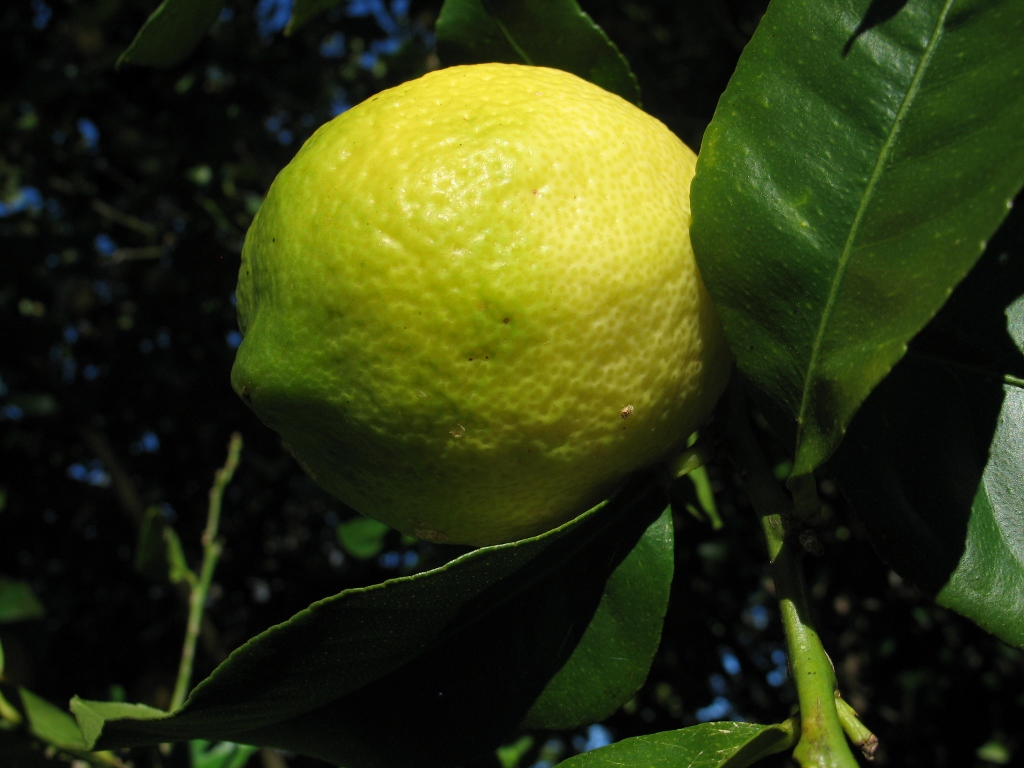
They look a little funny. They are a bit distorted with spiky skins and scabby marks.
This is a result of being infected with citrus scab (Elsinoe fawcettii). This fungus causes the fruit to distort and grow very thick skins.
It also attacks the leaves and twigs of the trees.
To combat the disease, regular sprays of a copper based fungicide are needed. Our Ag Department says that by neglecting to spray the trees they will eventually stop producing and eventually die, probably after 10-12 years.
But really, the juice and flesh of the fruit are unaffected and it is such a hassle spraying against this disease ie. getting the timings right, I just don't bother. Our trees have been flourishing for 20 years plus!
And surprisingly some fruit is completely unaffected.
Gail says she is too busy to make her marmalade this year (a young son just at school plus a one year old can do that to you) but she has agreed to give the co driver her marmalade recipe plus some oranges so she can have a try.
Will keep you posted on the result.
They look a little funny. They are a bit distorted with spiky skins and scabby marks.
This is a result of being infected with citrus scab (Elsinoe fawcettii). This fungus causes the fruit to distort and grow very thick skins.
It also attacks the leaves and twigs of the trees.
To combat the disease, regular sprays of a copper based fungicide are needed. Our Ag Department says that by neglecting to spray the trees they will eventually stop producing and eventually die, probably after 10-12 years.
But really, the juice and flesh of the fruit are unaffected and it is such a hassle spraying against this disease ie. getting the timings right, I just don't bother. Our trees have been flourishing for 20 years plus!
And surprisingly some fruit is completely unaffected.
Gail says she is too busy to make her marmalade this year (a young son just at school plus a one year old can do that to you) but she has agreed to give the co driver her marmalade recipe plus some oranges so she can have a try.
Will keep you posted on the result.
Tuesday, July 17, 2012
Mother and Daughter Doing Well
Plants propagate in a number of ways, either naturally eg. seed or with man’s assistance eg. cuttings.
Sexual reproduction by seed generally does not produce a daughter plant with same characteristics as the mother plant although there are plenty of exceptions particularly in cereal crops eg. lines.
Asexual or vegetative reproduction however does and the daughter plant is always an exact replica of its mother.
Examples of asexual reproduction include cuttings (stem, leaf, bud and root), grafting and budding, layering (simple, mound, air) all of which are mostly carried out by man.
But plants can also reproduce vegetatively themselves eg. runners, suckers, crowns, bulbs.
We have a very old Camellia plant (C. japonica) growing in our garden.
It produced a sucker (adventitious shoot) which was growing about 1m away from the mother on her horizontal root system.
So as an experiment, I chopped it off leaving a piece of the mother plant root attached, dug it up and replanted it in a pot.
It grew well for a couple of years and this winter it produced its first flowers which, surprise surprise, are exactly the same as its mothers.
Sexual reproduction by seed generally does not produce a daughter plant with same characteristics as the mother plant although there are plenty of exceptions particularly in cereal crops eg. lines.
Asexual or vegetative reproduction however does and the daughter plant is always an exact replica of its mother.
Examples of asexual reproduction include cuttings (stem, leaf, bud and root), grafting and budding, layering (simple, mound, air) all of which are mostly carried out by man.
But plants can also reproduce vegetatively themselves eg. runners, suckers, crowns, bulbs.
We have a very old Camellia plant (C. japonica) growing in our garden.
It produced a sucker (adventitious shoot) which was growing about 1m away from the mother on her horizontal root system.
So as an experiment, I chopped it off leaving a piece of the mother plant root attached, dug it up and replanted it in a pot.
It grew well for a couple of years and this winter it produced its first flowers which, surprise surprise, are exactly the same as its mothers.
Saturday, July 14, 2012
Trip to Orange / Part 3
Sunday morning broke cold and crisp but sunny and we headed out to the Ophir area just north of Orange.
Gold was first discovered here in 1851 and was the first major gold find in Australian history. There is still a working mine in the area.
It's a pretty place in the gorge where the Summerhill and Lewis Ponds Creeks meet and there are walks for those who want to explore the old workings and tunnels. But you need to keep to the tracks. Old shafts abound and not all are documented.
For the old miners, who worked around 500 claims, the gold ran out 10 months after the initial discovery and all that is left of the township now are remnants of some buildings and a grave yard.
An early advocate of screw cap closures, the university now puts all its sparkling wine under crown seal replacing the wired cork ( Mon dieu! Sacrilège!!!!)
We liked their 2011 Sauvignon Blanc made from fruit grown in their Orange campus vineyard, the 2007 Cabernet Sauvignon/Merlot made predominantly from Hilltops fruit, 2009 Cabernet/Shiraz from Orange and 2010 Tempranillo from Tumbarumba with its minimalist "T" label.
And getting a 25% discount for being an alumni member was icing on the cake. Since its inception in 1977, the CSU winery has been awarded over 28 trophies, 98 gold, 18 silver and 483 bronze medals in national wine shows.
The next stop was Ross Hill Wines on the slopes of Mt. Canobolas. They had two wine ranges, one fruit driven and one with a little more winemaker's input. The winemaker, Phil Kernery, was running the cellar door and it was interesting to listen to his philosophy.
'Good wine starts in the vineyard' was a catch phrase not high on his list.
We tasted through both ranges and appreciated in this case the complexity that the winemaker's input can introduce. In many cases I have found that too much of it, especially in the whites, can overpower the fruit in a negative way. But that was not the case here. The Pinnacle 2011 Pinot Gris and Sauvignon Blanc were simply wild yeast fermented yielding wines of intensity, complexity, fine texture and length.
The Pinnacle 2010 Pinot Noir was naturally fermented by wild yeasts, macerated on skins for 4 weeks and matured in 25% new French oak for 10 months. A very light style but the intensity of flavour and the length were amazing.
The Pinnacle 2010 Shiraz for me, was the red wine of the trip.
The tasting notes say " hand picked and naturally fermented by wild yeasts in small open fermenters at our brand new Wallace Lane winery, matured in small French oak for eighteen months, this wine is powerful, aromatic and densely layered, showing the capacity of the Orange region for growing multi dimensional reds of great character"
Can't argue with that!
During our discussions, we found out that Ross Hill makes Hedberg Hill's wines and that there was stock of the late harvest Riesling we liked so much being prepared for release in their cool store. Phil called Peter up and we 'bid' for two bottles on a cash basis.
Peter kindly agreed.
So after a tour of the winery that was the end of our wine tasting adventure. We wanted a simple meal that night so found a new Japanese restaurant in town, Mr.Sushi King which, despite the hokey name, fitted the bill exactly.
Next morning we headed home via Canowindra through more beautiful country to Cowra and then basically back along the route we had come with all our booty clinking away in the back of the car.
So with our Hunter Valley trip a few weeks ago and now this one, we are well stocked up.
Plenty of wine to put down and lots for current drinking.
Life is pretty good!
Gold was first discovered here in 1851 and was the first major gold find in Australian history. There is still a working mine in the area.
It's a pretty place in the gorge where the Summerhill and Lewis Ponds Creeks meet and there are walks for those who want to explore the old workings and tunnels. But you need to keep to the tracks. Old shafts abound and not all are documented.
For the old miners, who worked around 500 claims, the gold ran out 10 months after the initial discovery and all that is left of the township now are remnants of some buildings and a grave yard.
Back in Orange we sought out the new Charles Sturt University Winery tasting rooms. The University in Wagga Wagga has its own vineyards and a working winery as an essential part of their Viticulture and Wine Science degree courses. They not only use their own grapes, including those grown on the Orange campus, but also bring in fruit from other cool climate areas of New South Wales. These include the Hilltops region around Young through to Tumbarumba in the Snowy
Mountains and down to Gundagai.
The nicely appointed tasting rooms had just opened with an enthusiastic crew in place so we got right royal treatment tasting all the way through their range from sparklings, whites, reds to rose'. We didn't venture into their fortified range.An early advocate of screw cap closures, the university now puts all its sparkling wine under crown seal replacing the wired cork ( Mon dieu! Sacrilège!!!!)
We liked their 2011 Sauvignon Blanc made from fruit grown in their Orange campus vineyard, the 2007 Cabernet Sauvignon/Merlot made predominantly from Hilltops fruit, 2009 Cabernet/Shiraz from Orange and 2010 Tempranillo from Tumbarumba with its minimalist "T" label.
And getting a 25% discount for being an alumni member was icing on the cake. Since its inception in 1977, the CSU winery has been awarded over 28 trophies, 98 gold, 18 silver and 483 bronze medals in national wine shows.
The next stop was Ross Hill Wines on the slopes of Mt. Canobolas. They had two wine ranges, one fruit driven and one with a little more winemaker's input. The winemaker, Phil Kernery, was running the cellar door and it was interesting to listen to his philosophy.
'Good wine starts in the vineyard' was a catch phrase not high on his list.
We tasted through both ranges and appreciated in this case the complexity that the winemaker's input can introduce. In many cases I have found that too much of it, especially in the whites, can overpower the fruit in a negative way. But that was not the case here. The Pinnacle 2011 Pinot Gris and Sauvignon Blanc were simply wild yeast fermented yielding wines of intensity, complexity, fine texture and length.
The Pinnacle 2010 Pinot Noir was naturally fermented by wild yeasts, macerated on skins for 4 weeks and matured in 25% new French oak for 10 months. A very light style but the intensity of flavour and the length were amazing.
The Pinnacle 2010 Shiraz for me, was the red wine of the trip.
The tasting notes say " hand picked and naturally fermented by wild yeasts in small open fermenters at our brand new Wallace Lane winery, matured in small French oak for eighteen months, this wine is powerful, aromatic and densely layered, showing the capacity of the Orange region for growing multi dimensional reds of great character"
Can't argue with that!
During our discussions, we found out that Ross Hill makes Hedberg Hill's wines and that there was stock of the late harvest Riesling we liked so much being prepared for release in their cool store. Phil called Peter up and we 'bid' for two bottles on a cash basis.
Peter kindly agreed.
So after a tour of the winery that was the end of our wine tasting adventure. We wanted a simple meal that night so found a new Japanese restaurant in town, Mr.Sushi King which, despite the hokey name, fitted the bill exactly.
Next morning we headed home via Canowindra through more beautiful country to Cowra and then basically back along the route we had come with all our booty clinking away in the back of the car.
Plenty of wine to put down and lots for current drinking.
Life is pretty good!
Thursday, July 12, 2012
Trip to Orange / Part 2
Orange has a long history of fruit growing particularly apples, cherries, stone fruit
and grapes.
The modern development of the wine industry in the region began in the early 1980s and by the late 1990s there were 1350 ha under vine.
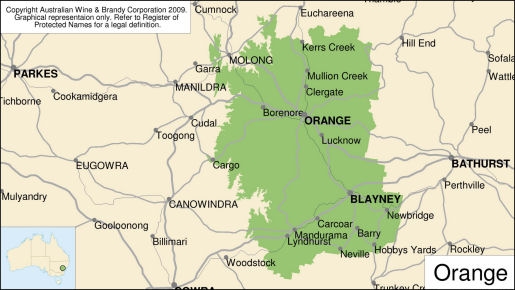
The Orange Wine Region is one of the few in Australia officially defined solely by altitude and is the area above 600m in the local government areas of Orange, Cabonne and Blayney. This is basically a circle around the city of Orange. The area is ideal for grape growing and wine making due to a combination of geology, soils, climate and temperature.
Together these factors combine to produce grapes and wine of distinct flavours and colour.
More details on the Orange Region terroir can be found here.
Our first stop was Hedberg Hill Wines.
Peter Hedberg was a lecturer throughout my course at Orange and was instrumental in getting me interested in grape growing and convincing me to continue studies of viticulture and wine making at Charles Sturt University in Wagga Wagga.
He established the vineyard at the Orange campus and my Cabernet Sauvignon vines are from cuttings taken from that vineyard.
We tasted the entire range of Peter's cool climate whites with the 2010 Viognier (2 gold and one silver medal so far) and 2011 Sauvignon Blanc (one bronze medal so far) being outstanding. Then it was onto the reds. My favourite was the 2011 Tempranillo. Typical savoury flavor with fine tannins and good length.
There was also a late harvest slightly botrytized Riesling dessert wine but it was not quite ready for commercial release. Both the co driver and I loved this wine.
Then it was on to Printhie Wines near Molong.
They have two ranges of wines, one a cheaper fruit driven style, the other, more complex.
We liked the fruit driven 2011 Sauvignon Blanc better than its dearer brother but the more complex 2011 Riesling and 2009 Pinot Noir were great wines.
The vineyard sits on rolling hills at the far reaches of the region with the ancient extinct volcano, Mt. Canobolas just visible on the horizon. A perfect place to taste and relax and try to get warm in the midday sun.
After a quick late lunch in Molong we drove up to the top of Mt. Canobolas which at nearly 1400m dominates the area. It's a rough road for the last few kilometers but worth it when you get there. The views of the surrounding area, almost 360 degrees, is stunning especially if you ignore the communication towers that litter the mountain top. And to our surprise there were still remnants of snow lying among the trees on the shaded south side of the mountain as a result of last week's snow storm.
Then it was a quick trip back to our accommodation to get ready for our dinner out at the Racine Restaurant. This was a great meal in a nice intimate room with good service. The wine list prices were not OTT and we were happy to select a Hedberg Hill Tempranillo that went well with my venison starter and baked salmon main.
Then it was 'home' again for another bottle of wine and a few games of 'quick' scrabble.
The modern development of the wine industry in the region began in the early 1980s and by the late 1990s there were 1350 ha under vine.
The Orange Wine Region is one of the few in Australia officially defined solely by altitude and is the area above 600m in the local government areas of Orange, Cabonne and Blayney. This is basically a circle around the city of Orange. The area is ideal for grape growing and wine making due to a combination of geology, soils, climate and temperature.
Together these factors combine to produce grapes and wine of distinct flavours and colour.
More details on the Orange Region terroir can be found here.
Our first stop was Hedberg Hill Wines.
Peter Hedberg was a lecturer throughout my course at Orange and was instrumental in getting me interested in grape growing and convincing me to continue studies of viticulture and wine making at Charles Sturt University in Wagga Wagga.
He established the vineyard at the Orange campus and my Cabernet Sauvignon vines are from cuttings taken from that vineyard.
We tasted the entire range of Peter's cool climate whites with the 2010 Viognier (2 gold and one silver medal so far) and 2011 Sauvignon Blanc (one bronze medal so far) being outstanding. Then it was onto the reds. My favourite was the 2011 Tempranillo. Typical savoury flavor with fine tannins and good length.
There was also a late harvest slightly botrytized Riesling dessert wine but it was not quite ready for commercial release. Both the co driver and I loved this wine.
Then it was on to Printhie Wines near Molong.
They have two ranges of wines, one a cheaper fruit driven style, the other, more complex.
We liked the fruit driven 2011 Sauvignon Blanc better than its dearer brother but the more complex 2011 Riesling and 2009 Pinot Noir were great wines.
The vineyard sits on rolling hills at the far reaches of the region with the ancient extinct volcano, Mt. Canobolas just visible on the horizon. A perfect place to taste and relax and try to get warm in the midday sun.
After a quick late lunch in Molong we drove up to the top of Mt. Canobolas which at nearly 1400m dominates the area. It's a rough road for the last few kilometers but worth it when you get there. The views of the surrounding area, almost 360 degrees, is stunning especially if you ignore the communication towers that litter the mountain top. And to our surprise there were still remnants of snow lying among the trees on the shaded south side of the mountain as a result of last week's snow storm.
Then it was a quick trip back to our accommodation to get ready for our dinner out at the Racine Restaurant. This was a great meal in a nice intimate room with good service. The wine list prices were not OTT and we were happy to select a Hedberg Hill Tempranillo that went well with my venison starter and baked salmon main.
Then it was 'home' again for another bottle of wine and a few games of 'quick' scrabble.
Tuesday, July 10, 2012
Trip to Orange / Part 1
Our main aim in Canberra was to get the co driver’s permanent residence visa renewed. This is a 5 yearly chore which could be avoided by her taking out citizenship and she is now seriously thinking about that.
Apart from dealing with the Department of Immigration and their foibles (they tend to continually move the goal posts), we also fitted in a couple of quilt shops and a quick visit to the city centre mall.
Sydney and Canberra are our only ‘big smoke’ experiences.
We also spent a couple of pleasant hours in the National Botanic Gardens with its huge collection of native Australian flora, a lot set out in simulated regional environments.
We stayed overnight in Canberra’s newest hotel, the Aria, which was at bargain basement promotional rates and is very nice. It is in the suburb of Dixon well known for it’s eateries but we chose Pulp Kitchen in Ainslie which was a simple bistro style with excellent food.
After a huge breakfast at Debacle in Braddon, we headed north west through the country towns of Yass (quilt shop) Boorowa (quilt shop), Cowra (quilt shop) and then Millthorpe (quilt shop) for a late lunch at the Old Mill Café.
This part of the country looks great with all the rain we have had. They struggled for years through the drought but now the sheep and cattle are thriving and the winter crops were in. The rolling hills and distant mountain ranges with their bluish haze look great in the winter light.
After a wine tasting at Angullong Wine’s cellar door in town, it was onto Orange where we met up with our neighbours from down the road at our Edwardian cottage accommodation.
Orange has a population of around 40,000 and is a major provincial centre.
Main industries include agriculture (fruit, vegetables and wine), mining, health services and education.
Originally called Blackman's Swamp and established as a convict settlement in 1822, it was proclaimed a village and named Orange by Major Thomas Mitchell, famous explorer and surveyor of South Eastern Australia, in 1846 in honour of Prince William of Orange (later to be the first king of Holland).
Apparently Thomas had served with William in the Peninsula War (1807-1814) in Spain.
Obviously this is a little more romantic than being named after a citrus fruit.
I know Orange fairly well. I studied horticulture there in the 1990s at the University of Sydney on an external basis but had to attend residential classes three or four times a year over four years. It is now a campus of Charles Sturt University. The city has certainly changed since I was last there in 1996 for graduation.
Dinner that night was at Lolli Redini regarded as one of the ‘best places’ in town and which has a national reputation. It lived up to the hype. Food was great, wine list extensive (and expensive) but, to be picky, the service is maybe a little too formal.
Orange is at around 900m elevation and a long way from the sea. Temperatures in winter are below zero in the mornings and struggle to make double figures during the day. Snow falls are not unknown. As the car was covered in ice in the morning and the wineries don’t open until 10am, there was no need to make an early start.
But there were three quilt stores in town and they were all on the itinerary for our first day.
So began our combined quilt store visiting and wine tasting day.
Wednesday, July 04, 2012
London Olympic Games 2012
The Olympic Games in London are nearly upon us.
It’s something I really look forward to every four years. I think it all started back in November 1956 in Melbourne when the games came to the Southern Hemisphere for the first time. I was a 10 year old then and well into sport, particularly Australian Rules football and cricket.
Then suddenly this huge international sporting event swept over the city. Melbourne (and Australia) had never seen anything like this before. Australia was pretty isolated back then. It took weeks by ship to get anywhere outside the country and overseas air travel was not the norm. It took days to get from Sydney to London with Qantas on the "Kangaroo Route" at a return cost equivalent to 130 weeks average pay.
Our family didn’t have money enough in those days to buy games tickets so we, and most everyone else, watched the events on TV which had been rushed into service for the first time in Australia. We would stand for hours in front of the local electrical goods store window watching the grainy black and white action on the tiny screen.
My father did manage however to take me to the marathon circuit to watch and cheer the runners puffing by.
Little did we know that when a young Ron Clarke (who worked for my father) ran into the stadium and lit the flame at the opening ceremony he would become one of the greatest long distance runners of all time setting seventeen world records but never to winning Olympic gold.
We all had our heroes. Mine were of course Australian, Betty Cuthbert, John Landy, Dawn Fraser and Chilla Porter. But who would forget the Russian Vladimir Kuts who ran the competition off their feet from the front in the 5000 and 10000m (and did a lap of honour around the stadium fence before second and third place finished), American sprinter Bobby Morrow and Irish 1500m runner Ron Delaney.
And there was blood in the pool when the Russians met the Hungarians in water polo with the latter taking out some revenge for the brutal suppression of the Hungarian uprising a month or so before.
Then there was the epic struggle in the high jump pit well into the dark between Chilla Porter and American Charles Dumas, with the Australian just failing to win gold.
It was then I decided I wanted to be a high jumper. In those days you did the scissors or the western roll to get over the bar and land in a rather hard sandpit. The Fosbury Flop was another 12 years away. The necessary equipment was built and set up in our back yard and I used to practice for hours.
It was obvious to all except me that any Olympic glory in that discipline was well out of reach.
But it turned out I could run with 100m and 200m being my pet events (well, in those days it was 100 and 220 yards). Never a world beater, I did well at high school and state level before surfing started to consume my sporting life.

Still, every four years I have dropped everything and followed 'the Games'. Australia is one of the few countries to have attended all modern Olympics and we always did rather well for a country with such a small population. But with the Cold War raging and sporting prowess being a major component of that, we were left behind due to our rather naive notion of what amateur sport was. When we did not win one medal in the Montreal games, the government of the day was shaken out of its lethargy and the Australian Institute of Sport was formed to professionally train potential Olympians in all disciplines. This has worked out pretty well and we now usually end up in the top ten medal count..
Australia was lucky enough to get the games again in Sydney in 2000.
What a great two weeks that was. The city was abuzz and it was party time 24/7.
The opening ceremony was a magnificent affair and when the Australian men’s 4x100m swimming team blasted the odds on favourite Americans out of the pool a couple of nights later (“My biased opinion says that we will smash them (Australia's 4x100m team) like guitars”, USA swim team leader Gary Hall Jnr had said), we knew we were in for some great competition. Remembering the Australian team standing there on the pool's edge playing air guitar in front of the dismayed Americans always brings a smile.
From Eric Malonga (Eric the Eel) who was a swimmer from Equatorial Guinea who nearly had to be rescued from drowning due to exhaustion in the pool during a 100m heat to Australia’s Cathy Freeman who won the 400m carrying the entire nation on her back, it was all very exciting.
So now we have 10,490 athletes from 205 countries gathering in London to vie for 302 gold medals in 26 sports at 34 venues.
Our satellite TV provider is giving us 8 channels of non stop viewing 24 hours a day for the duration. According to them this means 3200 hours,1100 of which will be live. All sports will be covered from heats to finals.
The time difference between London and Sydney is 9 hours so all the live action will be through our night and well into the early hours of the morning.
Lots of coffee and afternoon naps will be in order. The co driver has all her quilting and sewing projects lined up. Extra firewood has been cut.
As our two famous sporting commentators HG Nelson and Rampaging Roy Slaven say “too much sport is barely enough!”
It’s something I really look forward to every four years. I think it all started back in November 1956 in Melbourne when the games came to the Southern Hemisphere for the first time. I was a 10 year old then and well into sport, particularly Australian Rules football and cricket.
Then suddenly this huge international sporting event swept over the city. Melbourne (and Australia) had never seen anything like this before. Australia was pretty isolated back then. It took weeks by ship to get anywhere outside the country and overseas air travel was not the norm. It took days to get from Sydney to London with Qantas on the "Kangaroo Route" at a return cost equivalent to 130 weeks average pay.
Our family didn’t have money enough in those days to buy games tickets so we, and most everyone else, watched the events on TV which had been rushed into service for the first time in Australia. We would stand for hours in front of the local electrical goods store window watching the grainy black and white action on the tiny screen.
My father did manage however to take me to the marathon circuit to watch and cheer the runners puffing by.
Little did we know that when a young Ron Clarke (who worked for my father) ran into the stadium and lit the flame at the opening ceremony he would become one of the greatest long distance runners of all time setting seventeen world records but never to winning Olympic gold.
We all had our heroes. Mine were of course Australian, Betty Cuthbert, John Landy, Dawn Fraser and Chilla Porter. But who would forget the Russian Vladimir Kuts who ran the competition off their feet from the front in the 5000 and 10000m (and did a lap of honour around the stadium fence before second and third place finished), American sprinter Bobby Morrow and Irish 1500m runner Ron Delaney.
And there was blood in the pool when the Russians met the Hungarians in water polo with the latter taking out some revenge for the brutal suppression of the Hungarian uprising a month or so before.
Then there was the epic struggle in the high jump pit well into the dark between Chilla Porter and American Charles Dumas, with the Australian just failing to win gold.
It was then I decided I wanted to be a high jumper. In those days you did the scissors or the western roll to get over the bar and land in a rather hard sandpit. The Fosbury Flop was another 12 years away. The necessary equipment was built and set up in our back yard and I used to practice for hours.
It was obvious to all except me that any Olympic glory in that discipline was well out of reach.
But it turned out I could run with 100m and 200m being my pet events (well, in those days it was 100 and 220 yards). Never a world beater, I did well at high school and state level before surfing started to consume my sporting life.

Still, every four years I have dropped everything and followed 'the Games'. Australia is one of the few countries to have attended all modern Olympics and we always did rather well for a country with such a small population. But with the Cold War raging and sporting prowess being a major component of that, we were left behind due to our rather naive notion of what amateur sport was. When we did not win one medal in the Montreal games, the government of the day was shaken out of its lethargy and the Australian Institute of Sport was formed to professionally train potential Olympians in all disciplines. This has worked out pretty well and we now usually end up in the top ten medal count..
Australia was lucky enough to get the games again in Sydney in 2000.
What a great two weeks that was. The city was abuzz and it was party time 24/7.
The opening ceremony was a magnificent affair and when the Australian men’s 4x100m swimming team blasted the odds on favourite Americans out of the pool a couple of nights later (“My biased opinion says that we will smash them (Australia's 4x100m team) like guitars”, USA swim team leader Gary Hall Jnr had said), we knew we were in for some great competition. Remembering the Australian team standing there on the pool's edge playing air guitar in front of the dismayed Americans always brings a smile.
From Eric Malonga (Eric the Eel) who was a swimmer from Equatorial Guinea who nearly had to be rescued from drowning due to exhaustion in the pool during a 100m heat to Australia’s Cathy Freeman who won the 400m carrying the entire nation on her back, it was all very exciting.
So now we have 10,490 athletes from 205 countries gathering in London to vie for 302 gold medals in 26 sports at 34 venues.
Our satellite TV provider is giving us 8 channels of non stop viewing 24 hours a day for the duration. According to them this means 3200 hours,1100 of which will be live. All sports will be covered from heats to finals.
The time difference between London and Sydney is 9 hours so all the live action will be through our night and well into the early hours of the morning.
Lots of coffee and afternoon naps will be in order. The co driver has all her quilting and sewing projects lined up. Extra firewood has been cut.
As our two famous sporting commentators HG Nelson and Rampaging Roy Slaven say “too much sport is barely enough!”
Sunday, July 01, 2012
Winter Fruit Bowl
Winter doesn't mean the end of fresh fruit.
The late apples are still coming in and the citrus begins to arrive. All sorts of mandarin varieties as well as tangelos, juicy oranges and ruby grapefruit are available.
Strangely this year we are getting really cheap strawberries.
In winter????
I thought they would have to be imported but, no, they are from Queensland (where the season usually starts in August) and Victoria (November) so the hot houses must be running overtime.
Talking of imported fruit, Australia has some of the strictest quarantine laws in the world. Anyone exporting fruit to this country must be jumping through hoops. But it must be worth it.
Last year we saw American cherries for the first time. They are here again now and pretty cheap $A10/kg ($US 4.50lb). Big and juicy and much better than the local ones which come into season just before Christmas.
Californian table grapes and berry fruits are readily available too. Citrus from the USA is not uncommon. They come in during our off season. I have seen Australian citrus in American supermarkets during their off season so guess there is some reciprocal trade.
But imports are not limited to fruit. Out of season fresh vegetables appear as well. Asparagus from Peru and Israel, shallots from Holland and garlic from China. Of course New Zealand being so close and having similar quarantine concerns are a major supplier.
The import of processed vegetables, mainly from Asia is another subject (and point of concern) we won't go into here.
Well, not for now, anyway.
The late apples are still coming in and the citrus begins to arrive. All sorts of mandarin varieties as well as tangelos, juicy oranges and ruby grapefruit are available.
Strangely this year we are getting really cheap strawberries.
In winter????
I thought they would have to be imported but, no, they are from Queensland (where the season usually starts in August) and Victoria (November) so the hot houses must be running overtime.
Talking of imported fruit, Australia has some of the strictest quarantine laws in the world. Anyone exporting fruit to this country must be jumping through hoops. But it must be worth it.
Last year we saw American cherries for the first time. They are here again now and pretty cheap $A10/kg ($US 4.50lb). Big and juicy and much better than the local ones which come into season just before Christmas.
Californian table grapes and berry fruits are readily available too. Citrus from the USA is not uncommon. They come in during our off season. I have seen Australian citrus in American supermarkets during their off season so guess there is some reciprocal trade.
But imports are not limited to fruit. Out of season fresh vegetables appear as well. Asparagus from Peru and Israel, shallots from Holland and garlic from China. Of course New Zealand being so close and having similar quarantine concerns are a major supplier.
The import of processed vegetables, mainly from Asia is another subject (and point of concern) we won't go into here.
Well, not for now, anyway.
Friday, June 22, 2012
2011 Bordeaux En Primeur
I don't buy much French wine. There is so much good Australian (and New Zealand) wine to try it's hardly worthwhile struggling through the complicated Appellation d'origine Controlee (AOC) labeling to find a French one that may be OK and value for money. And usually the 'really good stuff' is very expensive.
But the strong Australian dollar has made imported wine a lot cheaper in the last year or so, so there has been much more on offer. We have seen French Sauvignon Blanc from the Touraine region of the Loire Valley for $15 in our supermarket. And under screw cap no less!
One of my wine contacts is offering 2011 Bordeaux En Primeur ie. wine made in late 2011 and still in the barrel. You pay half now and half just prior to delivery, a couple of years from now.
Here are a few examples with their tasting notes.
Administrator Paul Pontallier is nearly embarrassed to explain the amazing success of the 2011 Chateau Margaux, a candidate for wine of the vintage. With the harvest occurring between September 5-20, it was the smallest crop in over twenty years as yields were cut significantly by the drought. The berries were tiny. Moreover, analytically, the 2011 has a higher level of concentration as well as tannins than the 2009. A blend of 86% Cabernet Sauvignon, 10% Merlot and the rest Petit Verdot and Cabernet Franc, only 38% of the harvest made it into the grand vin. The wine offers an inky/purple color, barely noticeable sweet tannin, and a beautiful nose of creme de cassis, spring flowers and lead pencil shavings backed up by fresh acids and good overall structure. This medium to full-bodied effort possesses tremendous personality and character. It rivals what they achieved in both 2010 and 2009, which is virtually impossible to contemplate given the quality of those two vintages.
Not surprisingly, Alain Vauthier’s 2011 Ausone is one of the greatest wines he has produced. I know this sounds impossible, but it is the reason why I spend so much time tasting and reflecting on what is in front of me. The 2011 could turn out to be better than his 2009 – sacre bleu! Probably the wine of the vintage, the 2011 exhibits a murky, inky, blue/purple color as well as an extraordinary nose of creme de cassis, plum sauce, crushed rocks (primarily chalk), acacia flowers and hints of graphite, truffles and damp forest floor. The riveting aromatics are followed by a wine that does not let the taster down in the mouth. Full-bodied with extraordinary purity, oozing richness and well-integrated velvety tannins, acidity, oak and alcohol, this is another superb achievement by Vauthier from this phenomenal site on the decomposed limestone hillsides of St.-Emilion. Possibly the longest-lived wine of the vintage, it should evolve for 30-40 years.
A blend of 80% Cabernet Sauvignon and 20% Merlot (harvested between September 3-21), the 2011 Lafite Rothschild came in at 12.6% natural alcohol (considerably lower than in 2010 and 2009). Exhibiting a deep ruby/purple color, lots of crushed rock, red and black currant, forest floor and underbrush characteristics, moderate tannin and medium body, it is built somewhat along the lines of the 1999 and 2001.
All sound very attractive.
And the prices?
Chateau Margaux Premier Grand Cru Classe: $1000 a bottle.
Chateau Ausone St. Emillion Grand Cru Classe: $1489 a bottle.
Chateau Lafite-Rothschild Pauillac 1er Cru: $1175 a bottle.
Sorry, but I don't think so!
But the strong Australian dollar has made imported wine a lot cheaper in the last year or so, so there has been much more on offer. We have seen French Sauvignon Blanc from the Touraine region of the Loire Valley for $15 in our supermarket. And under screw cap no less!
One of my wine contacts is offering 2011 Bordeaux En Primeur ie. wine made in late 2011 and still in the barrel. You pay half now and half just prior to delivery, a couple of years from now.
Here are a few examples with their tasting notes.
Chateau Margaux Premier Grand Cru Classe
Administrator Paul Pontallier is nearly embarrassed to explain the amazing success of the 2011 Chateau Margaux, a candidate for wine of the vintage. With the harvest occurring between September 5-20, it was the smallest crop in over twenty years as yields were cut significantly by the drought. The berries were tiny. Moreover, analytically, the 2011 has a higher level of concentration as well as tannins than the 2009. A blend of 86% Cabernet Sauvignon, 10% Merlot and the rest Petit Verdot and Cabernet Franc, only 38% of the harvest made it into the grand vin. The wine offers an inky/purple color, barely noticeable sweet tannin, and a beautiful nose of creme de cassis, spring flowers and lead pencil shavings backed up by fresh acids and good overall structure. This medium to full-bodied effort possesses tremendous personality and character. It rivals what they achieved in both 2010 and 2009, which is virtually impossible to contemplate given the quality of those two vintages.
Chateau Ausone St. Emillion Grand Cru Classe
Not surprisingly, Alain Vauthier’s 2011 Ausone is one of the greatest wines he has produced. I know this sounds impossible, but it is the reason why I spend so much time tasting and reflecting on what is in front of me. The 2011 could turn out to be better than his 2009 – sacre bleu! Probably the wine of the vintage, the 2011 exhibits a murky, inky, blue/purple color as well as an extraordinary nose of creme de cassis, plum sauce, crushed rocks (primarily chalk), acacia flowers and hints of graphite, truffles and damp forest floor. The riveting aromatics are followed by a wine that does not let the taster down in the mouth. Full-bodied with extraordinary purity, oozing richness and well-integrated velvety tannins, acidity, oak and alcohol, this is another superb achievement by Vauthier from this phenomenal site on the decomposed limestone hillsides of St.-Emilion. Possibly the longest-lived wine of the vintage, it should evolve for 30-40 years.
Chateau Lafite-Rothschild Pauillac 1er Cru
A blend of 80% Cabernet Sauvignon and 20% Merlot (harvested between September 3-21), the 2011 Lafite Rothschild came in at 12.6% natural alcohol (considerably lower than in 2010 and 2009). Exhibiting a deep ruby/purple color, lots of crushed rock, red and black currant, forest floor and underbrush characteristics, moderate tannin and medium body, it is built somewhat along the lines of the 1999 and 2001.
All sound very attractive.
And the prices?
Chateau Margaux Premier Grand Cru Classe: $1000 a bottle.
Chateau Ausone St. Emillion Grand Cru Classe: $1489 a bottle.
Chateau Lafite-Rothschild Pauillac 1er Cru: $1175 a bottle.
Sorry, but I don't think so!
Wednesday, June 20, 2012
The Hunter Valley Revisited
It was an early morning drive up to Sydney through some very heavy rain to drop the co driver off at the Sydney Quilt Show at the Darling Harbour Exhibition Centre.
Then I drove further north another ninety minutes to Umina on the Central Coast and Stirl's place.
We headed over to Patonga which is a small village near the mouth of the Hawkesbury River just before it empties into Broken Bay. There is a nice pub here overlooking the beach which serves an OK lunch and good beer.
The Hawkesbury is one of the major rivers of the coastal region of New South Wales. It and its tributaries virtually encircle the metropolitan region of Sydney and is dammed in many places to provide the city's water supply.

Later that evening, the co driver arrived by train and we settled down to a good dinner of roast lamb and vegetables and followed by strawberries and ice cream all washed down with some Knappstein Riesling and Bird in Hand Tempranillo.
After breakfast the next morning, we were on the road to the Hunter Valley, one of Australia's well known vineyard regions. We decided to take the Great Northern Road which follows the old convict road north instead of the Freeway. It's always a nice drive through some pretty farming land as well as some rugged sandstone gorges. Remnants of the convicts' work is still to be seen. Relics such as stone retaining walls, culverts, bridges and buttresses can still be seen along the entire length of the road, most hewn out of the sandstone by pick and shovel
Our first stop was at Wollombi for coffee.
The establishment of this township was directly connected with the construction and importance of the Great Northern Road. Wollombi is pretty small these days but has a number of 19th-century sandstone buildings and timber slab constructed cottages and sheds in a narrow valley junction containing Wollombi Brook and Congewai Creek.
From here it was onto Broke in the Broke Fordwich wine region of the Hunter and our destination for lunch, Margan Estate. This has long been a favourite winery of mine and I have bought much of their Semillon and Verdelho over the years.
We had a quick wine tasting, sampling a vertical tasting of their Semillons from 2011 to 2007.
Lunch was great. Seared tuna with piccalilli, buffalo mozzarella with beets, grilled barramundi, roast duck on lentils and a pepper risotto was accompanied by their Barbera.We finished off sharing a cheese plate.
From there we headed into the Pokolbin region of the Hunter. This is the main, best known and touristy area.
Our first stop was the Small Winemakers Centre which sells a selection of wine from makers too small (or not interested) to have their own cellar doors.
Here we picked up some Thomas Semillon which is always a good drop, even in not so good years.
During our travels around the vineyards it was obvious that a lot of grapes had not been picked this vintage due to the bad weather..
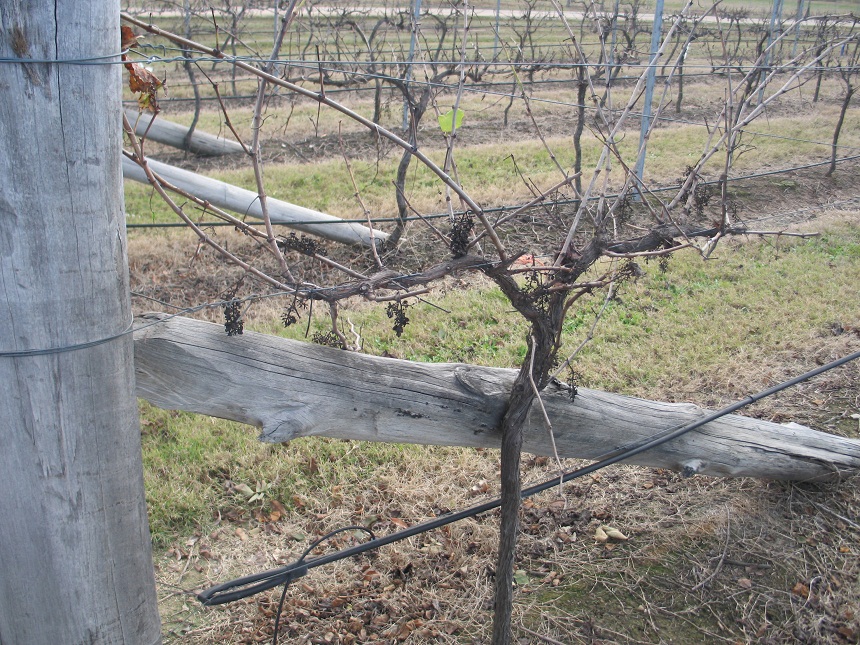
You could see a huge acreage of mummified berries still hanging on the vines. That made me feel a little better about abandoning my crop this year.
Our final stop was McWilliams Mt. Pleasant. Our main aim here was to track down their Anne Semillon which, thanks to Stirl's contacts in the wine industry, we had tasted some time ago and never been able to find commercially.
It lies, quality wise, between their well known 'Elizabeth' and the very expensive 'Lovedale' Semillons
There was a rumour that the 'Anne' was actually the overproduction of the 'Lovedale' under another label.
We tasted the two and the consensus was they are not the same wine although the reasonably priced 'Anne" is still a stunner.
Then it was time to head back to Umina. Winter days are short and the co driver who had now assumed driving duties due to our wine consumption, didn't want to tackle the freeway back south in the dark.
Saturday was the co driver's mall day (we don't have any around us) so Stirls and I enjoyed some time at the beach watching surfers carve up some pretty big waves from the warmth of a cafe at Avoca.
Sunday we hit the road home after a pleasant four days away.
Then I drove further north another ninety minutes to Umina on the Central Coast and Stirl's place.
We headed over to Patonga which is a small village near the mouth of the Hawkesbury River just before it empties into Broken Bay. There is a nice pub here overlooking the beach which serves an OK lunch and good beer.
The Hawkesbury is one of the major rivers of the coastal region of New South Wales. It and its tributaries virtually encircle the metropolitan region of Sydney and is dammed in many places to provide the city's water supply.

Later that evening, the co driver arrived by train and we settled down to a good dinner of roast lamb and vegetables and followed by strawberries and ice cream all washed down with some Knappstein Riesling and Bird in Hand Tempranillo.
After breakfast the next morning, we were on the road to the Hunter Valley, one of Australia's well known vineyard regions. We decided to take the Great Northern Road which follows the old convict road north instead of the Freeway. It's always a nice drive through some pretty farming land as well as some rugged sandstone gorges. Remnants of the convicts' work is still to be seen. Relics such as stone retaining walls, culverts, bridges and buttresses can still be seen along the entire length of the road, most hewn out of the sandstone by pick and shovel
Our first stop was at Wollombi for coffee.
The establishment of this township was directly connected with the construction and importance of the Great Northern Road. Wollombi is pretty small these days but has a number of 19th-century sandstone buildings and timber slab constructed cottages and sheds in a narrow valley junction containing Wollombi Brook and Congewai Creek.
From here it was onto Broke in the Broke Fordwich wine region of the Hunter and our destination for lunch, Margan Estate. This has long been a favourite winery of mine and I have bought much of their Semillon and Verdelho over the years.
We had a quick wine tasting, sampling a vertical tasting of their Semillons from 2011 to 2007.
Lunch was great. Seared tuna with piccalilli, buffalo mozzarella with beets, grilled barramundi, roast duck on lentils and a pepper risotto was accompanied by their Barbera.We finished off sharing a cheese plate.
From there we headed into the Pokolbin region of the Hunter. This is the main, best known and touristy area.
Our first stop was the Small Winemakers Centre which sells a selection of wine from makers too small (or not interested) to have their own cellar doors.
Here we picked up some Thomas Semillon which is always a good drop, even in not so good years.
During our travels around the vineyards it was obvious that a lot of grapes had not been picked this vintage due to the bad weather..
You could see a huge acreage of mummified berries still hanging on the vines. That made me feel a little better about abandoning my crop this year.
Our final stop was McWilliams Mt. Pleasant. Our main aim here was to track down their Anne Semillon which, thanks to Stirl's contacts in the wine industry, we had tasted some time ago and never been able to find commercially.
It lies, quality wise, between their well known 'Elizabeth' and the very expensive 'Lovedale' Semillons
There was a rumour that the 'Anne' was actually the overproduction of the 'Lovedale' under another label.
We tasted the two and the consensus was they are not the same wine although the reasonably priced 'Anne" is still a stunner.
Then it was time to head back to Umina. Winter days are short and the co driver who had now assumed driving duties due to our wine consumption, didn't want to tackle the freeway back south in the dark.
Saturday was the co driver's mall day (we don't have any around us) so Stirls and I enjoyed some time at the beach watching surfers carve up some pretty big waves from the warmth of a cafe at Avoca.
Sunday we hit the road home after a pleasant four days away.
Sunday, June 17, 2012
Autumn Colour
We don't get a lot of Autumn colour in Australia. Virtually none of our native trees are deciduous and are green all year round.
But people have planted exotics in their gardens including many deciduous trees. And of course various public parks and botanical gardens have many.
The previous owner of our property planted liquidambers (Liquidambar styraciflua) around the place.
This year they have been particularly colourful.
This rather tall example is on our western boundary and has evergreen natives on either side.
To the left is a silky oak (Grevillea robusta), the biggest of the Grevillea genus which runs to around 250 species. They vary in size from tiny alpine ground covers to this tree which can grow to 30m . This tree is covered in bright yellow toothbrush shaped flowers in spring which attract numerous species of honey eaters as well as parrots.
To the right is a Norfolk Island pine ( Araucaria hetereophylla). Coming from the small island which lies between Australia, New Zealand and New Caledonia, this is a popular tree along urban beach fronts, in parks and in large gardens. Araucaria is a small genus of about 18 species, three of which grow on the Australian mainland ie. the Hoop pine and the Bunya pine. The most famous member of this family is the recently discovered Wollemi Pine.
The rest are distributed around some pacific islands and South America.
But people have planted exotics in their gardens including many deciduous trees. And of course various public parks and botanical gardens have many.
The previous owner of our property planted liquidambers (Liquidambar styraciflua) around the place.
This year they have been particularly colourful.
This rather tall example is on our western boundary and has evergreen natives on either side.
To the left is a silky oak (Grevillea robusta), the biggest of the Grevillea genus which runs to around 250 species. They vary in size from tiny alpine ground covers to this tree which can grow to 30m . This tree is covered in bright yellow toothbrush shaped flowers in spring which attract numerous species of honey eaters as well as parrots.
To the right is a Norfolk Island pine ( Araucaria hetereophylla). Coming from the small island which lies between Australia, New Zealand and New Caledonia, this is a popular tree along urban beach fronts, in parks and in large gardens. Araucaria is a small genus of about 18 species, three of which grow on the Australian mainland ie. the Hoop pine and the Bunya pine. The most famous member of this family is the recently discovered Wollemi Pine.
The rest are distributed around some pacific islands and South America.
Subscribe to:
Posts (Atom)