Friday, June 26, 2020

Rural (Roadside) Mail Boxes

Rural properties around the country can be pretty remote and off the beaten track.
The outback stations (ranches) covering millions of acres usually get mail delivery by air.
The less distant may have a central mail collection point. See pic below of mail boxes at Mongarlowe, just over the mountains from us.
Even ones like ours just off a major highway don’t have a mail box at the gate, but rather one at the end of the access road grouped together with others from the valley.
In the past these were known as roadside mail boxes or RMBs. So an address would be, for example, RMB 300, which indicated it was 300km from some designated point. The disadvantage here was every one at a specific destination had the same address, in our case, seven of us.
So most people had their names on the post boxes or delivery person would have to know which one was which.
Also people on very long roads could have large numbers depending on the district borders.
All matters concerning addresses is under the control of the a Geographical Names Board of New South Wales. They have a 180 page manual covering this subject.
Pic: Gail Wild @theveranda.shop

Some time ago our address changed from a RMB to a four digit number plus an Alpha suffix.
The system for determining address numbers in rural and semi-rural areas is based on the distance of the access point from the a specific datum point ie. in our case a major bridge. This distance is measured in metres and then divided by 10 - after which the number is then rounded to the nearest odd number (for points on the left side of the road from the datum point), or nearest even number (for points on the right side of the road).
The suffix differentiates the various properties at the same number. So 1280A Pacific Hwy, Smithville would be the first property on an access road to the right off that main road 12.8km from a specified landmark in the Smithville district.
Sounds a bit complicated but emergency services have this in their data bases so police, fire and ambulance can find people quickly.
Pity almost all GPS car navigator devices don’t. Couriers, service people and sometimes even visitors have trouble finding us.

Thursday, June 25, 2020

COVID-19 / Victoria / Worrying Situation

Despite overall Australian infection figures looking ok, things in Victoria have taken a turn for the worst.
Yesterday, after the ninth day in a row of the state logging double digit infections, 33* in the last 24 hrs, the military has been called in to help.
1,000 Australian Defence Force troops are being sent to help with hotel quarantine and provide logistical support for testing. **


There has been a surge in the number of Victorians being tested, which has led to delays and in some cases, testing sites being swamped. The ADF is there to make things move a little smoother.
Meanwhile here in New South Wales there were 10 new cases (1 local, 9 returned overseas travellers who are in quarantine).
Despite warnings not to accept travellers from Victorian hotspots and to avoid heading to Melbourne, the NSW premier is keeping the border open.
For now.
This only confirms our decision to stay in self isolation for the time being as we expect a flood of Victorian tourists in our area, despite being told to stay away, during the upcoming July school holidays.

*Seven of those are in hotel quarantine.
  Nine are from known outbreaks.
  Six are from routine testing.
  Eleven are still under investigation.

** This situation was changed with a revised request for up to 200 specialist medical and support personnel.

Monday, June 22, 2020

Roast Leg of Lamb

When I was a kid, sheep were the main source of cheap meat for families.
Beef was very expensive and chicken was a real treat we got maybe once or twice a year.
Pork was very rare. I seem to remember it had a bad reputation as a source of some disease which name escapes me.


It was often said that Australia was ‘riding on the sheep’s back’.
For much of our history wool has been the basis of the national economy and the country’s major export. The first wool exports from Australia to Britain began in the 1820s and the industry boomed throughout the 19th century and beyond. Despite setbacks such as drought, world wars and depression, wool continued its traditional dominance until the mid-20th century.
Now wool has dropped to #18 on the export list, way behind minerals, coal/natural gas, beef and services like education and tourism.

Sheep meat is categorised according to age. Lamb is less than one year old, hogget is 1 to 2 years old and mutton is older than two years. The latter two have had a bit of a bad rap, said to be tough. But with slow cooking they can produce fall apart roasts and flavoursome stews.
Lamb is the most sought after and naturally the most expensive.
No longer is it cheap meat.
We occasionally have lamb fillets or back straps on special occasions but more often chops or cutlets and slow cooked shanks.
But the best is a leg roast, especially since you can get them deboned, rolled and tied. This makes carving so much easier.

Infused with some fresh rosemary tips and cooked together with potatoes, capsicum, carrots, beetroot and other root veges and served with nice gravy, it’s  a great winter meal.
And cold left over lamb the next day is good too either in a sandwich or by itself with Dijon mustard and a salad.
Gravy used to be made from the pan residues but it tends to be a bit fatty. Commercial instant gravies aren’t too bad and are simple and quick to make.
But make sure you check the ‘best by’ date before using.

Thankfully we had a fresh tin to substitute for this museum piece that had hidden itself at the back of the cupboard.

Sunday, June 21, 2020

COVID-19 / Australia / 21st June 2020 Update

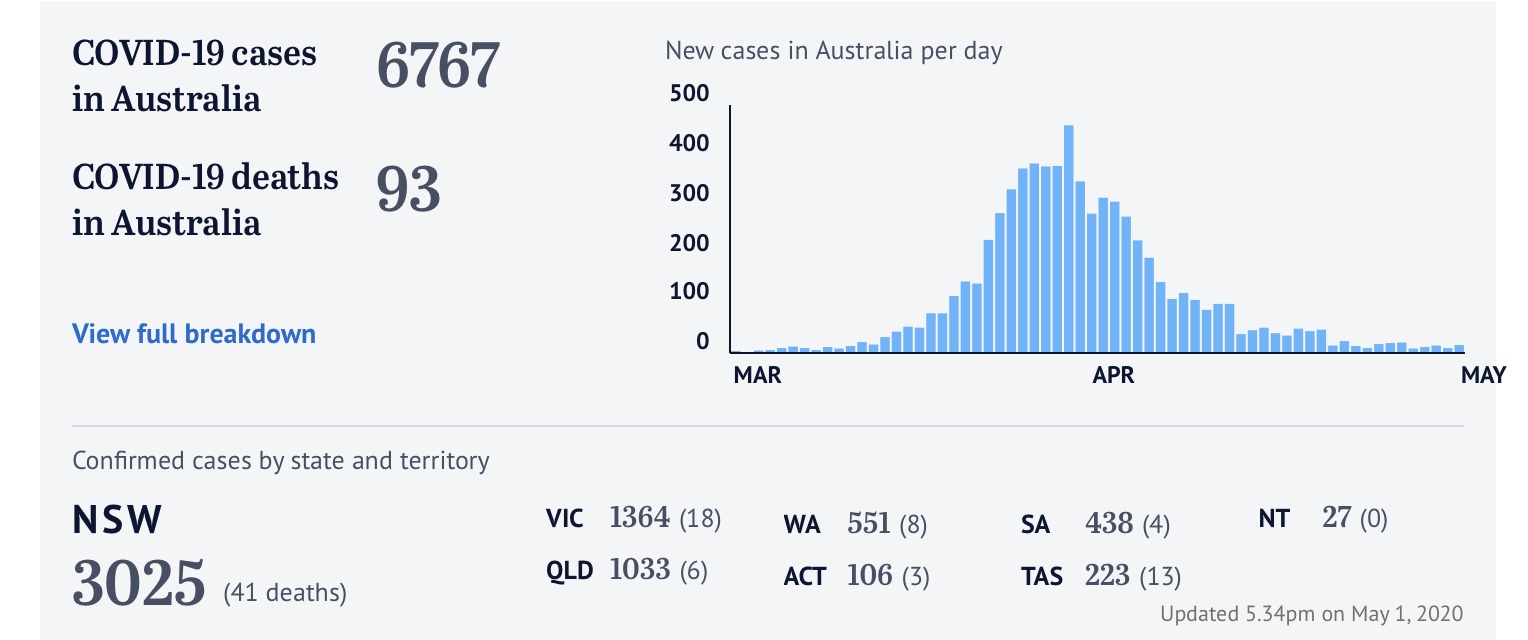
Australia and the state Victoria have suffered a significant reversal in containing the coronavirus as the number of active cases rises to 427 nationwide after months of steady declines.
A "disturbing trend" had been observed in Victoria over the past 14 days. The state has recorded 70 percent of cases reported nationally. 25 new cases of coronavirus were recorded in the past 24 hours alone, up from 13 on Friday, 18 on Thursday and 21 on Wednesday.
This concerning surge in cases has been blamed on families deliberately flouting the rules, including some Victorians who were visiting family members or going to work even after testing positive to the deadly virus.
More than half of the new cases since the end of April had come from family-to-family transmission with some family clusters blowing out to more than a dozen people.
Some of the family clusters were linked to a spate of cases among security guards at quarantine hotels, including the CBD's Stamford Plaza, where lax hygiene has been blamed for a cluster of 10 cases that medical experts expect to spread.
A cluster of 16 cases was also found to be connected to the state government's quarantine operation at Carlton's Rydges on Swanston hotel earlier this month.


Restrictions are now being tightened in Victoria as they are eased everywhere else in Australia.
Chief Health Officer Brett Sutton said the state was on the cusp of a second wave of infections if Victorians did not act now.

Meanwhile here in NSW, five new cases of COVID-19 were diagnosed bringing the total number of cases to 3149. All five are returned travellers in hotel quarantine.

Saturday, June 13, 2020

COVID-19 / Australia / 13th June 2020 Update

AUSTRALIA 


NEW SOUTH WALES


Figures continue to improve.
Restrictions continue to ease.
A major concern however is the huge number of people congregating for BLM protests in the major cities.
It is a waiting game now to see if that initiates a second wave.
We went to our doctor for flu shots last week. He confirmed that, for us, it’s a good idea to continue self isolation until at least the beginning of July.

Thursday, June 11, 2020

Bushfire Damage Demolition

At long last the government contractors delivered equipment to start the demolition of our bushfire damage.
We were, understandably, very low on the priority list with so many homes destroyed but it was nice to see the shed and other damaged structures gone.
Work started early on the Tuesday and finished midday on the Wednesday.
The site was cleared with minimum collateral damage which was great considering the size of the trucks used to haul the debris away.
Thanks to the New South Wales government for footing the bill, Laing O’Rourke for coordinating the project and the local contractors for doing the job.
We went from this:

To this:
Now for the rebuild.

Friday, June 05, 2020

Queen’s Birthday Long Weekend

This weekend is a three day holiday ‘celebrating’ the Queen’s birthday.
Despite being a foreigner living in a foreign country, Queen Elizabeth II is still our head of state. When this will change and we become a republic is anybody’s guess as there are a few more important matters going on at the moment.
But it does bring to mind that when the British arrived back in 1778 to establish a penal colony in what is now Sydney, the lives of Australia’s indigenous population changed forever and for the worse.
It’s estimated 800,000 Aboriginal and Torres Strait Islander people live in Australia, representing around 3% of the total population.
The death of George Floyd in Minneapolis has reignited the ‘Black Lives Matter’ movement in Australia, especially since it has been National Reconciliation Week.
432 Indigenous Australians have died in custody since 1991. 
Most recent data shows that although 3% of the Australian population identifies as Aboriginal or Torres Strait Islander Indigenous adults are 15 times more likely to be incarcerated than non-Indigenous Australians. Statistics also reveal that Indigenous juveniles are 26 times more likely to be incarcerated, while the fastest-growing prison population in Australia is Indigenous women.
In fact, on a per capita basis, we lock up Indigenous Australians at four times the rate of black Americans.

Many social media users are also drawing comparisons between what happened to George Floyd to the death of 26-year-old Dunghutti man David Dungay in a Sydney prison. Dungay died while being restrained by five prison guards at Long Bay jail in 2015. He said “I can’t breathe” 12 times before he died. To date, the five guards have not faced any disciplinary action.
So it’s little surprise that, despite COVID-19 social distancing rules, large protests have been planned for this weekend.
Hopefully they are peaceful.
Our Prime Minister, Scott Morrison said last Monday,
“As upsetting and terrible that the murder that took place–and it is shocking, that also just made me cringe–I just think to myself how wonderful a country is Australia. There's no need to import things happening in other countries here to Australia.
Australia is not the United States.”
Talk about head in the sand. 
But what do you expect from a evangelical (Hillsong) conservative leader? Thankfully he hasn’t done the ‘stand in front of a church with bible in hand thing’......as yet!
Update: 6th June 9am.
The Sydney protest has been declared illegal by the State Supreme Court on COVID-19 transmission grounds. 
This means trouble!
Update: 6th June 4 pm.
The NSW Court of Appeal has ruled that a Sydney rally held in support of the Black Lives Matter movement is an authorised public assembly, overturning a NSW Supreme Court decision on Friday which declined to make that declaration. The decision was delivered at about 2.45pm, 15 minutes before the planned start time of the demonstration. Crowds who had gathered for the protest cheered as the news filtered through.
Update: 6th June 6pm
Thousands protest in capital cities and regional towns.
Reports are all were peaceful.


20,000 in Sydney
30,000 in Melbourne
30,000 in Brisbane 

Friday, May 29, 2020

COVID-19 / Australia / 29th May 2020 Update

Australia 


New South Wales


Additional easing of restrictions in NSW will apply from 1st June.
Here’s hoping the community abides by the continuing social distancing rules to prevent a second wave of infections. Evidence so far in our town is that is not occurring. 
As a result we will be continuing to self isolate until the beginning of July.

Tuesday, May 26, 2020

Bushfires Royal Commission

The first round of the public hearings for the royal commission into national natural disaster arrangements, sometimes called the Bushfires Royal Commission, has begun in Canberra via video link. 
The inquiry has received more than 1,700 public submissions and 16,589 documents, totalling more than 200,000 pages. A further 159 notices to produce information or documents have not yet been answered, including from state and territory governments.
The commission is still planning to produce its final report and recommendations in August 2020.
This week the focus is on climate and the first witness, the Bureau of Meteorology’s head of climate modelling, Dr. Braganza, delivered a powerpoint presentation filled with many disturbing graphs about Australia’s worsening bushfire conditions.
Compared to 1950s, the start of the fire season has now been pushed back three months from November to August in Victoria and even July in parts of south-east Queensland and New South Wales. 

Climate change is exacerbating underlying weather events, causing even more extreme temperatures and drier conditions. Droughts are getting much hotter.
Braganza says the 2019-2020 fires were not a “one off event”:
Really since the Canberra 2003 fires, every jurisdiction in Australia has seen some really significant fire events that have challenged what we do to respond to them and have really challenged what we thought fire weather looked like preceding this period.
The frequency of these events, if we look at the historical record, seems to be increasing. These large fire events when you look back over the 19th and 20th century were not as frequent as they were this century.”
Source: Guardian Australia
Of course this will upset the climate change deniers club (cult?), many of whom sit in our federal government.
But anyone who lives on the land and is in tune with its environment knows that there is irrefutable evidence of change, whether it be how the seasons have altered, the increased intensity of weather events or even how plant life behaviour has adapted eg. grapevines shooting a month earlier than when planted nearly two decades ago, fruit trees flowering in winter.
More, obviously, to come in the months ahead.

Monday, May 25, 2020

Some Pre-winter Colour

Winter is just around the corner.
It’s been wet, cold and wild here for a few days and the first snow has fallen on the high country.
But the garden has responded to the rain.


Sunday, May 24, 2020

COVID-19 / Australia / 24th May 2020 Update


Victoria recorded 10 new cases on Saturday, but they are not believed to be linked to previously known outbreaks at Cedar Meats, Fawkner McDonalds or any aged care facilities.
NSW recorded just three new cases today.
The ACT, South Australia, Western Australia, Northern Territory and Tasmania have not reported a new case for more than a week.
Restrictions are being relaxed but social distancing is still in place.
Interstate travel apart from between Victoria and NSW is still not possible.  
Our international border is still closed.
Six million smart phone owners have downloaded the COVIDsafe app. Target is 6.5 million

Wednesday, May 20, 2020

War of the Weeds / Victory....sort of.

Today I finished the weed spraying.
It was the end of the second round cleaning up what I had missed the first time.
I also made a concerted effort on the remaining bracken using metsulfuron-methyl.
This was originally developed by DuPont and known as Brush-off®. It was very expensive although the addition rate is very low 10g/100L. But the patent expired and more and cheaper brands came on the market.
I use Associate from Nufarm.
For bracken (and blackberry) a non ionic surfactant needs to be added to improve penetration.
The chemical is systemic and works by inhibiting plant cell division eventually killing it.
This can take some time. With bracken it can be six weeks before ‘yellowing’ of the fronds is noticeable.
The loneliness of a long distance sprayer
As for the other weeds, generally there was success. However, where dense clusters have died off this has left the soil exposed to sunlight which has lead to a secondary explosion of seed germination and growth.
I will have to wait until these get a little more mature before attacking the second wave, maybe a month or so.
As frustrating as this is I always remember one of my horticultural lecturers saying “one year’s seeds, seven year’s weeds”.
I hate to think how many kilometres I have walked around the property doing this project. But with initial load of around 18kg of backpack sprayer to carry it sure has improved my fitness level.
And as I have said before, with the nice autumn weather, strolling in the bush for a few hours a day is not such a bad thing.

Monday, May 18, 2020

COVID-19 / Australia / Social Impacts

The Australian Bureau of Statistics (ABS) surveyed what has been stressing Australians in the last month.
Loneliness topped the list.
Women were more impacted then men, with 28% of women reporting feeling lonely, compared to 16% of men.
Around one in five people (19%) also reported that they were experiencing difficulties maintaining a healthy lifestyle, which was more of a problem for those aged 18 to 64 years (22%) than those aged 65 years and over (9%).
The survey also noted changes to people’s lifestyles during the period early-April to early-May, including:
—22 % who said they are eating more snack foods such as chips, lollies and biscuits.
—14% who said they are consuming more alcohol, and 10 per cent who said they are consuming less.
—58% who reported spending more time in front of their television, computer, phone or other device.
—29% who reported less frequent consumption of takeaway or delivered meals, while -38% spent more time cooking or baking.
Socialising on ‘First Freedom Weekend’ with 2m distance applied

The ABS also reported more people were slipping on the social distance requirements, compared to March.
Fewer people were taking the following precautions in late-April to early-May:
—keeping distance from people (94% compared with 98% in March).
—purchasing additional household supplies (21% compared with 47% in March).
—additional medical supplies (8% compared with 29% in March).
The proportion of Australians who said they were wearing a face mask remained about the same: 17% in March and 15% in late-April to early-May.
Almost half the nation, 46%, is working from home, while 89% of workers who aren’t working from home, report it is because they can’t due to the nature of their job.
Source: Guardian Australia 

Thursday, May 14, 2020

COVID-19 / Australia / Sport

The virus has knocked the stuffing out of Australian sport, both professional, amateur and recreational.
The virus ‘hit’ at the end of the cricket season which is predominantly played through summer.
The major domestic competition, the Sheffield Shield did not reach the finals stage. Luckily the Women’s T20 World Cup reached a final which Australia won. 
The domestic T20, the so called Big Bash, also was completed (but who really cares!) and various international Test matches involving the Australian men’s team were played without interruption.
There are four codes of football played across the nation, Australia Rules (AFL), Rugby League (NRL), Rugby Union (RA) and soccer (FFA).
The season had already got underway for all four when the competition came to a sudden halt. Some tried playing in empty stadiums but it wasn’t working and the travel ban made it impossible to play in other parts of the country.

The NRL will start a limited season at the end of May under some very unusual conditions.
The AFL are looking at end of June for their season to start again but quarantine issues have that date in doubt. Again, playing in empty stadiums for TV audiences only must be a downer.
Rugby Australia has announced an interim domestic men’s competition to replace the Southern Hemisphere wide Super Rugby tournament and hopes to kick off in July.
The FFA is set to resume in August.
The National Basketball League (NBL) men’s competition made it to the playoffs but they weren’t completed.  
A controversial decision was made to award the championship to the team leading the playoffs at the time of cancellation.
Of course the ordinary person hasn’t been able to participate in recreational sporting activities. Golf clubs, lawn bowls clubs and tennis clubs have been closed. And the lower grades of the above football codes have come to a standstill.
It seems that fishing, surfing and walking/jogging have been the only untouched pursuits although city beach goers had access problems.
So as the restrictions slowly come off we will probably see most sports returning but under a whole lot of new rules.
Of course the cancellation of the Tokyo Olympics is a major blow not only for the athletes who have trained years for their events, but also the armchair spectators. Hopefully we will see that event in 2021.

Saturday, May 09, 2020

COVID-19 / Australia / 9th May 2020 Update

Prime Minister Scott Morrison yesterday announced the details of a three-stage plan to wind back coronavirus restrictions in Australia.
It is, however, up to the individual state and territory governments to implement this in their own time and as appropriate to their local situation*.
There is currently no plan to reintroduce international travel outside of New Zealand.
 
Colourised pic of human cell (green) invaded by the virus (yellow)

STEP ONE
COVID safe reopening commences with physical distancing & hygiene.
Up to 5 visitors to your home.
Gatherings of up to 10 outside of home.
Work from home if it works for you and your employer.
Libraries, community centres playgrounds and boot camps open.
Australians can do more: 

· Shopping
· Restaurants and cafés
· Home sales & auctions
· Local playground
· Outdoors boot camps
· Local and regional travel

STEP TWO
Most business reopen with physical distancing & hygiene.
Gatherings of up to 20 outside of home.
Work from home if it works for you and your employer.
Australians can do even more in gatherings of up to 20:
· Gyms
· Beauty therapists
· Cinemas, theatres or amusement parks
· Galleries and museums
· Some interstate travel

STEP THREE
All Australians return to work with physical distancing and hygiene.
Gatherings up to 100
Return to workplace
Consider cross-Tasman, Pacific Island travel and international student travel
Australians can do even more in gatherings of up to 100:
· Food Courts
· Saunas and bathhouses
· All interstate travel

Despite a few new clusters in some states, our figures are still looking reasonable.

As stated previously, we won’t be going ‘extra social’ any time soon. We shall wait to see what the new restrictions bring. Some are fearing a spike in cases. 
One of our neighbours had a visit from the police the other night (unannounced gun cabinet security visit) who said there are seven cases in town all doing mandatory self isolation. They are all a result of the Ruby Princess. The cops visit the houses every day to make sure they are conforming.
*Update: 10th May
From Friday next NSW residents will be permitted to have outdoor gatherings of up to 10 people, visits to a household of up to five people, while cafes and restaurants can seat 10 patrons at any one time.
Children can return to the playground and people can work out on the outdoor gym equipment in parks, but caution is urged. 
Outdoor pools can reopen with restrictions, which are expected to include no change rooms and a cap of 10 people using the pool at one time.
Religious gatherings and places of worship will be allowed up to 10 people, weddings can host up to 10 guests, while funerals can have up to 20 mourners indoors and 30 outdoors.
A ban on regional travel and use of libraries and community centres will be maintained.


Thursday, May 07, 2020

War of the Weeds

As already posted the fire ground has produced a myriad of dense weeds.
Here are the worst offenders:
Thorn Apple

Wandering Jew

Paddy’s Lucerne 

Cobblers Pegs

Wild Tobacco


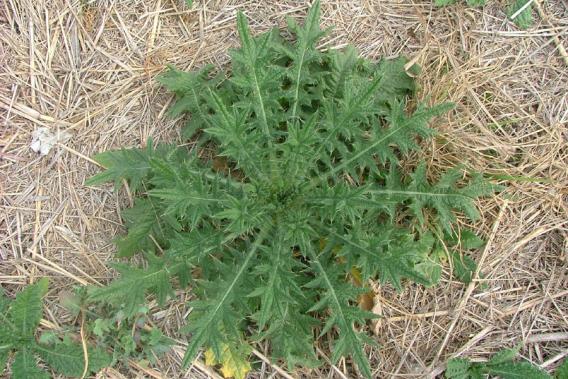
Thistles

Thankfully our five year offensive against the poa tussock and the bracken fern has not been adversely affected. There are small patches of bracken and the odd tussock appearing but they are easily dealt with by spot spraying.
There are some other strange ones which I have been unable to identify so far but they are not of major concern.
Herbicide metsulfuron-methyl (Associate from Nufarm) with a wetting agent used for bracken, glyphosate for the rest.
Poa Tussock                                           Bracken                 

Tuesday, May 05, 2020

Prosecco

Prosecco is a very popular wine it seems. A light, low alcohol white with a bit of fizz, it’s easy drinking. 
The co-driver’s friends drink a lot of it and we decided to take the plunge and bought a bottle of Brown Brothers who produce it from grapes grown in the cool climate of the King Valley in Victoria.
Prosecco is a white grape variety of Slovenian origin which was brought to the village of Prosecco (Slovene: Prosek) from Slovenia's Karst region.
It is believed to be a very old variety and it has been suggested that it was cultivated already back in Roman times.
Prosecco was traditionally used as the name for both the grape variety and the sparkling wine produced primarily from it.

When the Italian wine industry’s DOCG status was sought for Prosecco di Conegliano e Valdobbiadene, it became complicated as the the grape (which had become cultivated over a larger area) and the protected designation of origin had the same name.
To resolve the issue, the old synonym Glera was officially adopted as the name of the grape within the EU.
This change was also made to reduce the possibility of sparkling wines of other origin being labelled "Prosecco" by using the grape variety's name.
The name change was rejected by Australian wine producers who continue to refer to the grape variety and the wine made from it as 'Prosecco'.
This has become a bone of contention when trade deals between the EU and Australia are discussed.

In the past, Australia has changed the generic name of many locally produced wines to comply with EU rulings eg. Champagne, Hermitage, Port, Burgundy, Chablis, Sauterne, Moselle etc are no longer used in this country.
But it seems we are ‘holding out’ when it comes to Prosecco!
Unlike Champagne, Prosecco is usually produced using the alternative Charmat method, in which secondary fermentation takes place in large stainless steel tanks rather than in each individual bottle. This  makes the wine less expensive to produce and reduces the minimum production time to 30 days.
The wine we drank was pleasant enough as a quaffer, but is certainly no Champagne / méthode champenoise sparkling white wine.

Saturday, May 02, 2020

COVID-19 /Australia / 2nd May 2020 Update

Figures are improving every day.
Over three million have downloaded the Covidsafe app.
But the target of 50% of the population downloading is still a little distant.
Restrictions related to COVID-19 have been eased in a number of states and territories from this weekend and national rules could be eased next Friday ie. a week earlier than was originally expected.

In NSW and ACT, two adults are now allowed to visit other households.
ACT residents are also allowed to travel to NSW and shop for non-essential items.
The Northern Territory has removed restrictions on the size of social gatherings. Queenslanders are now allowed to travel up to 50km from their homes and shop for non essential items, in what is a two week trial.
Gatherings of up to 10 people are now allowed in Western Australia, up from the previous limit of 2 people.
A 10-person limit on gatherings remains in place in South Australia and density restrictions still apply.
However restrictions are unchanged in Victoria and Tasmania.
The calamitous border failure that is the Ruby Princess is now responsible for over 850 cases and over 30 deaths. It is also responsible for the significant outbreak in Tasmania.
The inquiry into this matter continues.
The government has now released more detailed information about infections.

Our post code (zip code) has registered 6 with a recovery rate of 4 so far. Considering the large area covered by the code, this is not a significant figure.
Despite the easing of the restrictions we will continue to socially distance just in case it is too early to celebrate.